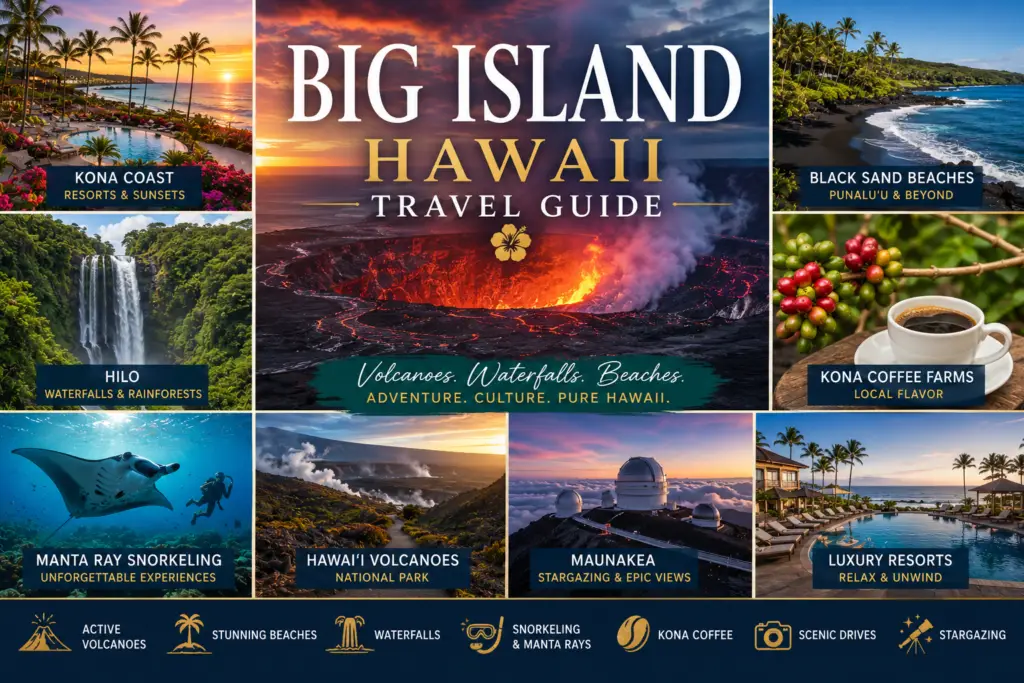
Big Island Hawaii is one of the most unique islands in the Hawaiian chain because it feels bigger, wilder, and more varied than many travelers expect.
This is the island for volcanoes, black sand beaches, Kona coffee farms, waterfalls, manta ray snorkeling, stargazing, scenic drives, lava fields, and wide-open adventure. It can still include beautiful resorts and beach time, but the Big Island is not just a resort vacation. It is an island you explore.
The Big Island is not the best choice for every Hawaii traveler. If you want a compact resort vacation where everything feels close together, Maui or Oahu may feel easier. But if you want volcanoes, road trips, dramatic landscapes, and a deeper sense of how the Hawaiian Islands were formed, Big Island can be incredible.
This Big Island Hawaii travel guide breaks down where to stay, how to compare Kona and Hilo, what to do, when to go, whether you need a rental car, and how the Big Island fits into a larger Hawaii vacation.
Big Island Hawaii Quick Rating
Best For: Volcanoes, road trips, adventure travelers, Kona coffee, waterfalls, black sand beaches, snorkeling, manta rays, stargazing, national parks, and repeat Hawaii visitors.
Not Best For: Travelers who want everything close together, nightlife-heavy trips, the easiest first Hawaii vacation, or a resort-only trip with minimal driving.
Best Areas to Compare: Kona for resorts, drier weather, beaches, snorkeling, sunsets, and coffee farms; Hilo for waterfalls, rainforests, local character, and easier access to Hawaiʻi Volcanoes National Park.
Overall Fit: Best for travelers who want a more adventurous Hawaii trip with volcanoes, scenic driving, nature, culture, and one-of-a-kind landscapes.
Why Visit Big Island Hawaii?
Big Island is officially called the island of Hawaiʻi, and it is the youngest and largest island in the Hawaiian chain. It is larger than the other major Hawaiian Islands combined, which is why travelers should plan it differently than Maui, Oahu, or Kauai.
The island’s biggest strength is variety. You can visit Hawaiʻi Volcanoes National Park, snorkel along the Kona Coast, tour coffee farms, see waterfalls near Hilo, walk on black sand, explore lava fields, and experience high-elevation stargazing near Maunakea.
Big Island is a strong fit for travelers who want more than a beach vacation. It rewards people who like exploring, driving, learning, and seeing places that feel completely different from one another.
For the broader Hawaii planning picture, start with the Ultimate Hawaii Travel Guide or the main Hawaii travel planning page.
Who Big Island Hawaii Is Best For
The Big Island is best for travelers who want space, scenery, adventure, and a vacation that feels different from the classic beach-resort rhythm.
| Traveler Type | Is Big Island a Good Fit? | Why |
|---|---|---|
| Adventure Travelers | Excellent fit | Volcanoes, waterfalls, manta rays, black sand beaches, stargazing, and long scenic drives create a more active trip. |
| Repeat Hawaii Visitors | Excellent fit | The island feels different from Oahu, Maui, and Kauai, making it a strong return-trip choice. |
| Families | Good fit with the right plan | Families who enjoy volcanoes, beaches, waterfalls, snorkeling, and road trips can love it, but drive times matter. |
| Couples | Good fit | Couples can combine resorts, coffee farms, sunsets, manta rays, volcanoes, and scenic exploring. |
| Resort-Only Travelers | Maybe | The Kohala Coast has strong resorts, but travelers wanting the easiest beach-resort trip may prefer Maui. |
Kona vs. Hilo: Which Side Should You Stay On?
The biggest Big Island planning decision is whether to stay near Kona, Hilo, the Kohala Coast, Volcano, or split time between more than one area.
These areas feel very different. Choosing the wrong base can add a lot of driving, so this decision matters more here than on some other Hawaiian Islands.
Kona Side
The Kona side is drier, sunnier, and more vacation-oriented. This is where many travelers stay if they want beaches, snorkeling, sunsets, restaurants, coffee farms, resorts, and easier access to the west coast.
Kona is usually the better fit for first-time Big Island visitors who want a more traditional vacation base. It also works well for couples, families, snorkelers, coffee lovers, and travelers who want a stronger mix of lodging and dining.
Hilo Side
The Hilo side is greener, wetter, and more local-feeling. Hilo is better for waterfalls, botanical gardens, rainforests, local food, and access to Hawaiʻi Volcanoes National Park.
Hilo is not as resort-heavy as Kona, but it is a smart base for travelers who care more about nature, volcanoes, and the east side of the island than beaches and resort amenities.
Kohala Coast
The Kohala Coast is one of the Big Island’s strongest areas for a polished resort vacation. It offers resorts, golf, beaches, pools, ocean views, and a more relaxed high-end vacation base.
This area is a good fit for travelers who want comfort but still plan to explore the island by rental car.
Volcano Area
The Volcano area is useful for travelers who want easier access to Hawaiʻi Volcanoes National Park. It is not a traditional beach-resort base, but it can work well as part of a split stay.
This area can be especially helpful if the park is one of your top priorities and you do not want to do a long round-trip drive from Kona.
Should You Split Your Stay?
For many Big Island trips, splitting time between the west side and the east side can make sense. The island is large, and driving back and forth too often can eat up valuable vacation time.
If you only have a short trip, pick one base and plan carefully. If you have a week or more, a split stay can help you experience both sides without constant long drives.
Best Big Island Area by Travel Style
| Travel Style | Best Big Island Area | Why It Works |
|---|---|---|
| First-Time Big Island Trip | Kona / Kohala Coast | Better resort options, drier weather, restaurants, beaches, snorkeling, and easier vacation flow. |
| Volcanoes and Waterfalls | Hilo / Volcano area | Closer to Hawaiʻi Volcanoes National Park, waterfalls, rainforest scenery, and east-side exploring. |
| Resort Vacation | Kohala Coast | Best for larger resorts, beaches, golf, pools, and a more polished vacation setup. |
| Adventure Trip | Split Kona and Hilo / Volcano | Reduces drive time and gives better access to west-side water activities and east-side volcanoes. |
| Coffee, Snorkeling, and Sunsets | Kona | Strong access to coffee farms, manta ray tours, snorkeling, restaurants, and sunset views. |
Hawaiʻi Volcanoes National Park
Hawaiʻi Volcanoes National Park is the centerpiece of many Big Island trips. The park protects Kīlauea and Mauna Loa and offers one of the most powerful landscapes in Hawaii.
This is not a place to rush. Conditions can change, volcanic activity can shift, trails may close, and viewing opportunities depend on current park updates. Always check the official park status before visiting.
What to Do in Hawaiʻi Volcanoes National Park
- Stop at the visitor center for current conditions.
- Drive Crater Rim Drive when open.
- View Kīlauea Caldera and Halemaʻumaʻu area from safe overlooks.
- Walk through Nāhuku, also known as Thurston Lava Tube, if open.
- Hike Kīlauea Iki Trail if conditions and ability allow.
- Explore steam vents and volcanic landscapes safely.
- Drive Chain of Craters Road when time allows.
- Stay on marked trails and obey closure signs.
Important Volcano Safety Tips
Do not assume lava viewing is guaranteed. Volcanic activity changes often. Some visits may include visible glow or eruption activity, while others may focus on craters, steam vents, lava fields, geology, and dramatic scenery.
Stay out of closed areas, avoid cliff edges, respect warning signs, and be mindful of volcanic gases, uneven ground, and changing conditions. This is a national park, but it is also an active volcanic environment.
Maunakea: Stargazing and High-Elevation Planning
Maunakea is one of the most memorable Big Island experiences, but it requires careful planning. The mountain is culturally significant, extremely high in elevation, and not something travelers should treat casually.
The Maunakea Visitor Information Station sits at about 9,200 feet. Travelers going above the visitor station toward the summit need to understand altitude, road conditions, vehicle requirements, weather, safety concerns, and cultural respect before attempting the drive.
What to Know Before Visiting Maunakea
- Altitude can affect visitors quickly.
- Pregnant travelers, people in poor health, and children under 13 should not go above the visitor station.
- Travel above the visitor station requires a true 4WD vehicle.
- The summit road is steep, rough, and not suitable for standard rental cars.
- Warm layers are essential because temperatures can be very cold.
- Guided tours are often the better choice for many visitors.
- Respect cultural guidance and restricted areas.
For many travelers, a guided stargazing tour is safer and less stressful than trying to handle the summit logistics independently.
Best Big Island Beaches
Big Island beaches are beautiful, but they are different from the long resort beaches many people imagine when they think of Hawaii. The island has black sand, lava rock, reef areas, white sand pockets, rugged shorelines, and beaches where ocean conditions matter a lot.
Punaluʻu Black Sand Beach
Punaluʻu Black Sand Beach is one of the island’s most famous beaches. The black sand, palm trees, and ocean contrast make it visually stunning.
Hawaiian green sea turtles may sometimes be seen resting in the area. Always keep a respectful distance and never touch, chase, feed, or crowd wildlife.
Hāpuna Beach
Hāpuna Beach is one of the better white sand beach options on the Big Island. It is popular for swimming and beach time when ocean conditions are safe.
Maniniʻowali Beach at Kua Bay
Kua Bay is known for clear water and white sand, but conditions can change. It can be a great beach day when the surf is calm.
Richardson Ocean Park
Near Hilo, Richardson Ocean Park can be a good option for travelers staying on the east side. It offers ocean access and a different feel than the Kona beaches.
Papakōlea Green Sand Beach
Papakōlea is one of the rare green sand beaches in the world, but it requires a hot, exposed hike and is not the right fit for every traveler.
Respect the land and avoid illegal or damaging transportation practices. This is not a casual beach stop, and travelers should be honest about their fitness, timing, and comfort level before attempting it.
Best Things to Do on Big Island Hawaii
Big Island is best when you plan around meaningful experiences instead of trying to do everything. The island is too large for a rushed checklist.
Visit Hawaiʻi Volcanoes National Park
This is the signature Big Island experience for many travelers. Even when active lava viewing is not available, the park can still be powerful because of its craters, lava fields, steam vents, cultural significance, and dramatic volcanic landscape.
Snorkel with Manta Rays
The Kona Coast is famous for manta ray night snorkel and dive experiences. This is one of the most unique activities in Hawaii and can be unforgettable for travelers who are comfortable in the water at night.
Choose a reputable operator, follow guide instructions, and be honest about swimming ability before booking.
Visit Kona Coffee Farms
Kona coffee is one of the island’s signature experiences. Coffee farm tours can be a nice break from beach and volcano activities, especially for travelers who enjoy local food, agriculture, and slower scenic stops.
See Waterfalls Near Hilo
The Hilo side is better for waterfalls and lush scenery. Popular stops may include ʻAkaka Falls, Rainbow Falls, botanical gardens, and scenic drives depending on your route.
Explore the Kohala Coast
The Kohala Coast is one of the better areas for resorts, golf, beaches, and a more polished stay. It is a strong base for travelers who want comfort but still plan to explore.
Drive Across the Island
Driving across Big Island shows how quickly the landscape changes. You may move from dry lava fields to green rainforest, open ranch land, coastlines, and high-elevation terrain in one day.
The scenery is part of the trip, but the distances are real. Plan driving days carefully.
Big Island for Families
Big Island can be a strong family vacation for families who enjoy nature, science, beaches, road trips, and hands-on experiences.
Hawaiʻi Volcanoes National Park can be educational and memorable. Kona coffee farms, waterfalls, black sand beaches, snorkeling, and scenic drives can also make the island feel varied and exciting.
However, families should be realistic about drive times. This is not the easiest island for families who want short transfers, quick beach access every day, and minimal planning. If the kids do not handle long drives well, the itinerary needs to be built carefully.
Big Island for Couples
Big Island can be excellent for couples who want a trip that feels adventurous, scenic, and different from a standard resort vacation.
Couples can stay along the Kona or Kohala Coast for resorts and sunsets, then add coffee farms, manta ray snorkeling, volcanoes, waterfalls, and stargazing. This combination can feel romantic without being predictable.
For couples who want pure luxury resort polish, Maui may still be the stronger first comparison. For couples who want adventure and contrast, Big Island is a serious contender.
Do You Need a Rental Car on Big Island?
Yes, most travelers need a rental car on Big Island. This is one of the least convenient Hawaiian Islands to visit without your own transportation.
The island is large, attractions are spread out, and rideshare or taxi options may be limited or expensive outside certain areas. Tours can help, but a rental car gives much more control.
Rental Car Tips
- Book early during busy travel periods.
- Confirm pickup location and hours.
- Understand where rental cars are not allowed.
- Do not drive to Maunakea summit unless your vehicle and rental agreement allow it.
- Plan fuel stops before long drives.
- Do not underestimate distance between Kona, Hilo, and Volcano.
How Many Days Do You Need on Big Island?
Big Island deserves more time than many travelers first expect. Because the island is large and spread out, a short stay can feel rushed.
| Trip Length | Best For | What to Expect |
|---|---|---|
| 3 Nights | Quick Kona-based stop | Enough for a short west-side trip, but you will miss a lot of the island. |
| 5 Nights | Basic Big Island vacation | Better for Kona plus one or two major day trips. |
| 7 Nights | Balanced Big Island trip | Strong for Kona, Volcano, Hilo, beaches, snorkeling, and a more realistic pace. |
| 8+ Nights | Split stay or deeper exploring | Best for experiencing both sides of the island without rushing. |
If Big Island is part of a multi-island Hawaii trip, be careful not to shortchange it. This island does not reward rushing.
Best Time to Visit Big Island Hawaii
Big Island can be visited year-round, but the best timing depends on your goals, budget, crowds, ocean conditions, and itinerary.
Spring and fall can be useful windows for many travelers because they often sit outside the biggest holiday and school-break rushes. Winter is popular for escaping cold weather, while summer works well for families with school calendars.
Weather also depends heavily on where you stay. Kona is generally drier, while Hilo is greener and wetter. That difference is part of the island’s appeal, but it also affects packing and expectations.
| Season | Best For | What to Know |
|---|---|---|
| Winter | Escaping cold weather, resort trips, seasonal whale watching windows | Higher demand around holidays and winter breaks. |
| Spring | Balanced weather, fewer crowds, flexible travelers | A strong time for many travelers if avoiding major school breaks. |
| Summer | Family travel and beach time | Popular school-break season; book early for better options. |
| Fall | Value, fewer crowds, couples trips | Often a useful window before holiday demand rises. |
What to Pack for Big Island Hawaii
Big Island has several climates, so pack for more than beaches. If your trip includes Volcano, Hilo, Maunakea, waterfalls, beaches, and snorkeling, you will need a wider range of clothing than you might expect.
Big Island Packing Essentials
- Swimsuits and beachwear
- Lightweight casual clothing
- Comfortable walking shoes
- Water shoes for rocky areas if needed
- Rain jacket for Hilo, Volcano, and waterfall areas
- Warm layers for Maunakea or higher elevations
- Reef-safe sun protection
- Hat and sunglasses
- Reusable water bottle
- Daypack
- Waterproof phone pouch
- Camera or extra phone storage
- Motion sickness help if doing boat tours
Big Island vs. Other Hawaiian Islands
The Big Island is the best Hawaiian island for travelers who want volcanoes, road trips, manta rays, coffee farms, waterfalls, and a more rugged adventure feel. However, it is not always the easiest island for every traveler.
| Island | Choose This Island If You Want | How It Compares to Big Island |
|---|---|---|
| Big Island | Volcanoes, manta rays, black sand beaches, coffee farms, waterfalls, stargazing, and road trips | Most adventurous and geographically varied. |
| Oahu | Waikiki, Pearl Harbor, food, shopping, nightlife, and first-time variety | Easier and more active, but less rugged and spacious. |
| Maui | Luxury resorts, romance, beaches, snorkeling, scenic drives, and a polished vacation feel | More resort-polished and romantic, but less volcano-focused. |
| Kauai | Waterfalls, cliffs, lush scenery, hiking, and a quieter pace | Greener and more peaceful, but less diverse in landscapes and volcanic experiences. |
If you are not sure whether Big Island should be a land stay or part of a broader itinerary, compare the full Hawaii Cruise vs. Land Vacation guide.
Common Big Island Planning Mistakes
Big Island is incredible, but it can be frustrating when planned poorly. Avoid these common mistakes.
Staying in One Area and Driving Too Much
Kona and Hilo are not close enough to casually bounce between every day. If your itinerary includes both sides, consider a split stay or plan fewer long-drive days.
Trying to See Everything
The island is too large for a rushed checklist. Pick the experiences that matter most: volcanoes, beaches, waterfalls, manta rays, coffee, stargazing, or scenic driving.
Not Renting a Car
Most Big Island trips are much harder without a rental car. Tours can help, but they do not replace the flexibility most travelers need.
Ignoring Weather Differences
Kona and Hilo can feel like different worlds. Pack for sun, rain, cool evenings, and high-elevation cold if your plans require it.
Assuming Maunakea Is an Easy Drive
Maunakea summit access is not a casual drive. Altitude, road conditions, vehicle requirements, weather, and cultural respect all matter.
Expecting Big Island to Feel Like Maui
Big Island is more rugged and spread out. It is not always the easiest resort island, but it is one of the most rewarding islands for travelers who want adventure and nature.
Need Help Planning a Big Island Hawaii Vacation?
Big Island can be amazing for volcanoes, road trips, snorkeling, waterfalls, coffee farms, manta rays, and adventure, but it is not the right fit for every traveler.
Sehlmeyer Travel can help you compare Big Island with Maui, Oahu, Kauai, and Hawaii cruise options so the trip matches your travel style, budget, and pace.
Start Planning Your Big Island Trip
Have a quick question first? Contact Sehlmeyer Travel.
Final Thoughts on Big Island Hawaii
Big Island Hawaii is one of the best choices for travelers who want volcanoes, adventure, nature, and a deeper sense of how the Hawaiian Islands were created.
It is bigger, more rugged, and more spread out than many visitors expect, but that is exactly what makes it special. Kona is usually better for resorts, beaches, snorkeling, sunsets, and coffee farms. Hilo is better for waterfalls, rainforests, local character, and easier access to Hawaiʻi Volcanoes National Park.
If you want a Hawaii trip that feels active, scenic, and different from a standard resort vacation, Big Island deserves a serious look.
Helpful Hawaii Travel Resources
Use these guides next if you are still comparing Hawaii islands or trip styles:
- Hawaii Travel Planning Page
- Ultimate Hawaii Travel Guide
- Hawaii Cruise vs. Land Vacation
- Oahu Travel Guide
- Maui Travel Guide
- Kauai Travel Guide
- Browse All Hawaii Travel Guides
- USA Travel Planning Page
- Travel Guide Library
Frequently Asked Questions About Big Island Hawaii
Is Big Island Hawaii worth visiting?
Yes. Big Island is worth visiting for Hawaiʻi Volcanoes National Park, Kona coffee, black sand beaches, waterfalls, manta ray snorkeling, stargazing, scenic driving, and a more adventurous Hawaii experience.
Is Kona or Hilo better to stay in?
Kona is usually better for resorts, beaches, drier weather, snorkeling, restaurants, and sunsets. Hilo is better for waterfalls, rainforests, local character, and access to Hawaiʻi Volcanoes National Park.
How many days do you need on Big Island?
Five nights can work for a basic Big Island trip, but seven nights is better. If you want to experience both Kona and Hilo without rushing, a week or more is ideal.
Do you need a rental car on Big Island?
Yes, most travelers need a rental car on Big Island because the island is large and attractions are spread out. Tours can help, but a rental car gives much more flexibility.
What is Big Island best known for?
Big Island is best known for Hawaiʻi Volcanoes National Park, Kīlauea, Mauna Loa, Maunakea, Kona coffee, black sand beaches, manta rays, waterfalls, and dramatic volcanic landscapes.
Can you visit Hawaiʻi Volcanoes National Park from Kona?
Yes, but it is a long day trip from Kona. Many travelers prefer staying near Volcano or Hilo for easier access if the park is a major priority.
Is Maunakea worth visiting?
Maunakea can be worth visiting for stargazing and high-elevation scenery, but travelers need to respect altitude risks, vehicle requirements, cultural guidance, and weather conditions.
Is Big Island good for families?
Big Island can be good for adventurous families who enjoy volcanoes, beaches, snorkeling, waterfalls, and scenic drives. Families wanting the easiest resort-style Hawaii trip may prefer Maui or Oahu.
What is the best time to visit Big Island Hawaii?
Big Island can be visited year-round. Spring and fall often offer a good balance of weather, value, and crowds, while winter and summer are popular travel periods.
Is Big Island better than Maui?
Big Island is better for volcanoes, manta rays, coffee farms, black sand beaches, waterfalls, stargazing, and road trips. Maui is usually better for polished resorts, romance, beaches, snorkeling, and an easier classic Hawaii vacation.