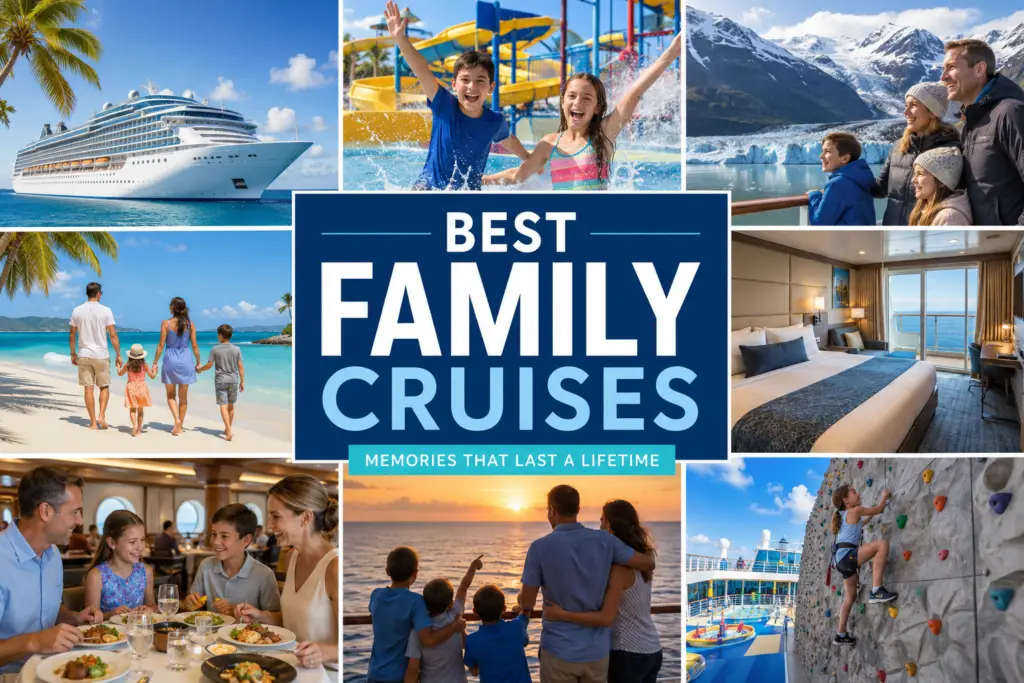
Planning a family cruise can feel overwhelming fast. Every cruise line says it is family-friendly. Every ship looks exciting online. Every itinerary sounds good until you start comparing flights, cabins, dining, kids’ clubs, excursions, gratuities, drink packages, Wi-Fi, and the total cost for the whole family.
The best family cruise is not always the biggest ship, the cheapest fare, or the sailing with the loudest marketing. The best family cruise is the one that fits your kids’ ages, your travel dates, your budget, your cabin needs, your departure port, and the kind of vacation your family actually wants.
Some families need nonstop activities, waterslides, shows, sports areas, and teen spaces. Others need easy dining, calmer port days, connecting cabins, good service, and a ship that does not feel like too much. A family with toddlers should not automatically book the same cruise as a family with teenagers.
This family cruise guide breaks down the best cruise lines, ship styles, itineraries, cabin choices, age-group considerations, and budget factors so you can compare options with more confidence before booking.
Best Family Cruises: Quick Comparison
There is no single best family cruise for everyone. The right choice depends on your family’s travel style. This quick comparison gives you a starting point before looking deeper at cruise lines, ships, and itineraries.
| Family Type | Best Cruise Fit | Why It Works |
|---|---|---|
| Families with younger kids | Disney Cruise Line or highly family-focused ships | Strong kids’ programming, character-style experiences, easy family dining, and a polished onboard flow. |
| Families with tweens and teens | Royal Caribbean, Norwegian, or activity-packed ships | More independence, more entertainment, more casual food, and more high-energy activities. |
| First-time cruise families | Short Caribbean or Bahamas sailing | Lower commitment, warm weather, simple ports, and a good way to test whether cruising fits your family. |
| Multigenerational families | Large ships with broad dining, activities, and cabin options | Grandparents, parents, kids, and teens can all find something to enjoy without planning every hour together. |
| Value-focused families | MSC, select Norwegian sailings, older Royal Caribbean ships, or well-priced mainstream cruises | Better pricing may be available, but families need to compare inclusions, ship age, cabin size, and extras carefully. |
| Adventure-focused families | Alaska cruise or active Caribbean itinerary | Wildlife, glaciers, snorkeling, zip lines, beaches, and scenic ports can create a more memorable trip. |
What Makes a Cruise Good for Families?
A good family cruise is not just a ship with a pool. The best family cruises balance entertainment, cabin comfort, dining flexibility, kids’ programming, itinerary quality, and total cost.
Before choosing a cruise, compare these details:
- Kids’ ages: Toddlers, elementary-age kids, tweens, and teens all need different things onboard.
- Ship size: Larger ships usually offer more activities, while smaller or mid-size ships can feel easier to navigate.
- Cruise line style: Disney, Royal Caribbean, Norwegian, MSC, Princess, and Carnival all feel different.
- Cabin layout: Connecting rooms, family staterooms, balconies, and suites can change the trip dramatically.
- Dining: Traditional dining, flexible dining, buffets, quick-service options, and specialty restaurants all matter with kids.
- Itinerary: Bahamas, Caribbean, Alaska, Europe, and Hawaii cruises create very different family vacations.
- Extras: Gratuities, drinks, Wi-Fi, excursions, specialty dining, photos, and pre-cruise hotels can add up quickly.
The goal is not to find the cruise with the most features. The goal is to find the cruise your family will actually enjoy.
Best Cruise Lines for Families
Most major cruise lines can work for families, but they are not interchangeable. Each line has a different personality, price structure, dining style, activity level, cabin setup, and onboard rhythm.
Disney Cruise Line: Best for Younger Kids, Disney Fans, and Premium Family Magic
Disney Cruise Line is often one of the strongest options for families with younger kids, Disney fans, first-time cruisers, and multigenerational groups that want a polished, family-first experience.
Disney stands out for themed dining, character experiences, kids’ clubs, family entertainment, service, storytelling, and attention to detail. It can feel easier for families who want the cruise itself to be part of the magic instead of just transportation between ports.
The tradeoff is price. Disney cruises often cost more than many mainstream cruise options. For families who will fully enjoy the Disney experience, the value can be strong. For families who do not care much about Disney characters, themed entertainment, or that specific atmosphere, the premium may not be worth it.
Best fit: younger kids, Disney fans, grandparents traveling with kids, families who value service, and travelers who want a highly organized cruise experience.
Think twice if: your family wants the lowest possible price, late-night adult energy, casinos, or a less Disney-focused atmosphere.
Royal Caribbean: Best for Active Families, Tweens, Teens, and Big-Ship Fun
Royal Caribbean is one of the best cruise lines for families who want a lot to do onboard. Its larger ships can include water slides, surf simulators, rock climbing, sports courts, shows, casual dining, pools, splash areas, teen spaces, and private island-style itineraries.
This is often a strong fit for families with older kids or teens because the ships give everyone room to spread out. Parents can relax while kids and teens enjoy activities, food, entertainment, and spaces designed for their age group.
The tradeoff is size. Newer Royal Caribbean ships can be busy, large, and activity-heavy. That can be perfect for some families and overwhelming for others. Cabin location, dining reservations, show planning, and onboard expectations matter more on the biggest ships.
Best fit: active families, tweens, teens, groups, multigenerational trips, and travelers who want the ship to be a major part of the vacation.
Think twice if: your family wants a quiet ship, small-ship atmosphere, very simple logistics, or a slower vacation pace.
Norwegian Cruise Line: Best for Flexible Families and Casual Cruising
Norwegian Cruise Line can be a good fit for families who want flexibility. Its freestyle-style approach can appeal to travelers who do not want every dinner, show, and daily rhythm to feel overly structured.
Norwegian works well for families who like casual dining options, entertainment, water slides on many ships, flexible schedules, and a less formal cruise experience. It can also be helpful for families with older kids who want freedom around meals and activities.
The tradeoff is that flexibility can require planning. Families should compare the ship, dining expectations, included perks, kids’ programming, cabin layout, and total cost. Some packages look attractive upfront but still need to be reviewed carefully.
Best fit: families who want flexibility, casual dining, entertainment, warm-weather itineraries, and a less formal onboard feel.
Think twice if: your family wants a highly themed experience, traditional dining every night, or a ship where everything feels very structured.
MSC Cruises: Best for Value-Focused Families Open to a Different Cruise Style
MSC Cruises can be worth comparing for families who want a modern ship, competitive pricing, kids’ programming, warm-weather itineraries, and a more international cruise atmosphere.
MSC may offer strong value on select sailings, especially when families are comparing total cost. Newer MSC ships can be attractive for families who want pools, kids’ areas, entertainment, and Bahamas or Caribbean-style itineraries without automatically paying premium prices.
The tradeoff is expectation-setting. MSC can feel different from some U.S.-focused cruise brands. Families should compare dining style, service expectations, cabin choices, drink packages, included items, and the specific ship before booking.
Best fit: value-focused families, beach-focused itineraries, groups, and travelers open to a more international cruise feel.
Think twice if: your family wants a very traditional American cruise atmosphere or you are choosing only because the base price looks low.
Princess Cruises: Best for Alaska, Multigenerational Families, and a More Relaxed Pace
Princess can be a strong option for families who want Alaska, scenic itineraries, better destination focus, and a calmer onboard style than the biggest activity-packed ships.
Princess is usually not the first line I would choose for families who need waterslides, nonstop sports, and teen-heavy energy. However, it can work very well for multigenerational families, grandparents, parents, and older kids who care more about scenery, ports, food, service, and a less chaotic ship experience.
Best fit: Alaska cruises, older kids, multigenerational trips, scenic itineraries, and families who want a more relaxed cruise.
Think twice if: your kids need constant high-energy activities, huge waterparks, or a ship that feels like a floating theme park.
Carnival Cruise Line: Best for Budget-Conscious Families Who Choose Carefully
Carnival can work for families who want a fun, budget-friendly cruise with casual dining, entertainment, pools, and warm-weather itineraries. It is especially popular for shorter cruises and families looking for a lower entry price.
The key is choosing carefully. Carnival ships and itineraries can vary widely. A newer or better-suited ship on the right itinerary may be a good value. A short party-heavy sailing during the wrong dates may not be the best fit for every family.
Best fit: budget-conscious families, shorter cruises, casual travelers, and families who want a fun, lower-cost vacation.
Think twice if: your family wants a premium feel, quieter ship atmosphere, or more polished service style.
Best Family Cruise Lines by Age Group
Kids’ ages should drive the cruise decision more than most families realize. A ship that is perfect for a 7-year-old may bore a 16-year-old. A ship that is great for teens may feel overwhelming with toddlers.
| Kids’ Ages | Best Cruise Style | What to Prioritize |
|---|---|---|
| Babies and toddlers | Easy ships, family cabins, simple itineraries, and nursery/splash-area details | Nap schedule, stroller movement, nursery rules, splash areas, cabin location, early dining, and short flights. |
| Preschool and early elementary | Disney, Royal Caribbean, or ships with strong kids’ clubs and simple dining | Kids’ clubs, pools, character-style experiences, easy meals, bedtime routines, and manageable port days. |
| Elementary-age kids | Activity-friendly ships with pools, shows, beaches, and kids’ programming | A balanced mix of ship activities, family entertainment, beach days, and excursions that are not too long. |
| Tweens | Bigger ships with sports areas, slides, casual food, and hangout spaces | Independence, activities, clear family rules, walkie-talkie/app planning, and plenty of food options. |
| Teens | Royal Caribbean, Norwegian, or destination-heavy cruises with real activities | Teen spaces, Wi-Fi expectations, sports, late-night activities, exciting ports, and enough freedom without chaos. |
| Mixed ages | Large ships or premium family lines with broad appeal | Different activity levels, cabin setup, dining flexibility, grandparents’ mobility, and time together versus time apart. |
Best Family Cruise Itineraries
The ship matters, but the itinerary matters too. A great ship on the wrong itinerary can still disappoint. A simple ship on the right route can sometimes be the better family vacation.
Caribbean Cruises: Best Overall for Many Families
Caribbean cruises are often the best overall fit for families because they combine warm weather, beaches, island stops, private-island-style days, and a relaxed vacation rhythm.
They work especially well for first-time cruisers, families with younger kids, spring break trips, winter escapes, and travelers who want a good mix of sea days and port days.
Caribbean cruises can be easy or active depending on the itinerary. Some families want beach time and simple excursions. Others want snorkeling, catamarans, waterfalls, food tours, or adventure parks. The right ports matter.
Helpful resource: Ultimate Caribbean Travel Guide
Bahamas Cruises: Best for Short First Cruises
Bahamas cruises are often a good first step for families who are not ready for a full seven-night cruise. Many Bahamas sailings are shorter, easier to fit into school schedules, and convenient from Florida departure ports.
The tradeoff is that shorter cruises can feel rushed. They may also have fewer ports and more limited itinerary variety. Still, for a family testing cruising for the first time, a short Bahamas sailing can make sense.
Alaska Cruises: Best for Older Kids, Teens, and Scenic Family Trips
Alaska cruises are excellent for families who want wildlife, glaciers, mountains, scenery, and a trip that feels bigger than a beach vacation.
Alaska is often best for older kids, teens, grandparents, and families who enjoy nature. It is less about pools and waterslides and more about whales, glaciers, trains, national parks, kayaking, dog sledding-style excursions, and once-in-a-lifetime scenery.
The planning is more important because excursions can be expensive, weather matters, and the right route makes a difference.
Helpful resources: Alaskan Cruise Guide and Ultimate Alaska Travel Guide
Europe Cruises: Best for Culture, History, and Older Kids
Europe cruises can be incredible for families with older kids and teens who are ready for more walking, sightseeing, culture, food, museums, and historic cities.
These cruises are usually more port-intensive than Caribbean cruises. That can be exciting, but it can also be tiring. Families should be realistic about pace, excursions, jet lag, and how much sightseeing their kids will actually enjoy.
Hawaii Cruises: Best for Island Variety Without Changing Hotels
Hawaii cruises can work well for families who want to see multiple islands without packing and unpacking between hotels. This can be appealing for families comparing Oahu, Maui, Kauai, and the Big Island.
The tradeoff is that a Hawaii cruise is a very different experience from a Hawaii land vacation. Families should compare port time, flights, total cost, and how much beach or resort time they want.
Helpful resource: Hawaii Cruise vs. Land Vacation
Short Cruises: Best for Testing the Waters
Short cruises can be useful for families who are unsure whether cruising is a good fit. They lower the commitment and can be easier to schedule around school, sports, and work.
The downside is that short cruises can feel crowded or fast-paced depending on the ship, date, and itinerary. They are not always the best representation of what a longer family cruise can feel like.
Best Family Cruise Ships: What to Look For
Do not choose a family cruise by cruise line alone. The ship can change the entire experience. Within the same cruise line, one ship may be perfect for your family while another feels like the wrong match.
Large Activity-Packed Ships
Large ships are often best for families with tweens, teens, and active kids. They may offer water slides, sports courts, surf simulators, ropes courses, laser tag, large theaters, many dining options, teen spaces, arcades, and private-island-style itineraries.
These ships are exciting, but they can also be busy. Families should think about crowd tolerance, walking distance, elevator wait times, cabin location, and whether everyone will actually use the ship’s features.
Disney-Style Family Ships
Disney-style family ships work well when the ship experience matters as much as the ports. These ships are built around storytelling, character experiences, family entertainment, themed dining, kids’ clubs, and service.
They are especially strong for younger kids, Disney fans, and multigenerational families who want a polished cruise with clear family structure.
Flexible Dining and Casual Ships
Some families do better with casual ships that allow more flexibility around meals and schedules. This can be helpful for families with older kids, picky eaters, different bedtimes, or travelers who do not want a traditional cruise rhythm.
The key is understanding what is included, what requires reservations, and what costs extra.
Destination-Focused Ships
For Alaska, Europe, and more scenic itineraries, the best family ship may not be the one with the biggest waterslide. It may be the ship with better viewing spaces, better port times, smoother excursions, and a calmer onboard experience.
This is especially important for multigenerational families and families with older kids who care more about the destination than the onboard thrill factor.
Family Cruise Cabins: Do Not Treat This as an Afterthought
Cabin choice can make or break a family cruise. Families often focus on the ship and itinerary first, but the room is where the real-life comfort issues show up.
Interior Cabins
Interior cabins can save money, especially for families trying to keep the total cost lower. They can work for families who plan to spend most of their time outside the room.
The downside is space and natural light. With kids, luggage, bedtime routines, and multiple people getting ready, an interior cabin can feel tight quickly.
Oceanview Cabins
Oceanview cabins add natural light and can be a nice middle ground when a balcony is not in the budget. They can work well for families who want a little more comfort without a major price jump.
Balcony Cabins
Balcony cabins can be very helpful for families, especially when younger kids go to bed earlier. Parents can sit outside while kids rest, and everyone gets more breathing room.
For Alaska, a balcony can be especially appealing because scenery is such a big part of the experience. For warm-weather cruises, it can be a relaxing upgrade if the budget allows.
Connecting Cabins
Connecting cabins can be one of the best options for families with older kids, teens, or larger groups. They give everyone more space, more bathrooms, and more privacy than trying to squeeze into one room.
These cabins can sell quickly, especially during school breaks. Families should plan early if connecting rooms are important.
Family Suites
Family suites can offer excellent space, but they are not always the best value. Sometimes two connecting cabins cost less and function better. Other times, a suite makes sense because of added perks, location, or comfort.
This is where comparing the real total cost matters.
Family Cruise Dining: What Parents Should Know
Dining is one of the biggest reasons cruises can work well for families. Meals are built into the vacation rhythm, and families do not have to research a new restaurant every night.
Still, dining styles vary by cruise line and ship. Before booking, families should compare:
- Traditional dining versus flexible dining
- Early dining availability for younger kids
- Buffet and casual food options
- Specialty dining costs
- Kids’ menus and picky-eater options
- Dining reservations and show schedules
- Allergy handling and dietary needs
Families with toddlers may care most about early dining and quick food. Families with teens may care more about casual options, late-night snacks, and freedom to eat without a full sit-down meal every time.
Kids’ Clubs, Teen Spaces, and Family Rules
Kids’ clubs can be a major benefit of cruising, but parents should not assume every ship handles them the same way. Ages, hours, registration, check-in rules, nursery availability, capacity, and programming can vary by cruise line and ship.
Before booking, ask practical questions:
- What ages are accepted in the kids’ club?
- Is there a nursery, and does it cost extra?
- Are teen spaces supervised or more casual?
- Do kids need to be potty trained for certain areas?
- Are splash areas available for younger kids?
- How does check-in and check-out work?
- Are kids’ clubs open during port days?
- Does your child actually want structured programming?
For tweens and teens, family rules matter. Decide ahead of time how much independence they have, where they can go, whether they can check themselves out of activities, how you will communicate, and when everyone needs to meet back up.
Need Help Choosing the Right Family Cruise?
A family cruise should fit your kids’ ages, budget, cabin needs, departure port, itinerary style, and comfort level. The right ship can make the trip feel easy. The wrong ship can make the same vacation feel stressful.
Sehlmeyer Travel helps families compare cruise lines, ships, cabins, dining, ports, packages, flights, transfers, and total trip value before booking.
Have a quick question first? Contact Sehlmeyer Travel.
How to Compare Family Cruise Cost
Family cruise pricing can be tricky because the cruise fare is only one part of the budget. A sailing that looks cheaper upfront may not be the better value once you add flights, hotels, transfers, gratuities, drinks, Wi-Fi, excursions, specialty dining, and travel protection.
For families, the biggest cost drivers are usually:
- Travel dates: Spring break, summer, Christmas, New Year’s, and holiday weeks usually price higher.
- Ship age and popularity: Newer, larger, more feature-packed ships often cost more.
- Cabin type: Interior, oceanview, balcony, suite, and connecting cabins can change the price quickly.
- Departure port: Flights, hotels, parking, and transfers can make one port more expensive than another.
- Itinerary length: Longer cruises usually increase fare, gratuities, and onboard spending.
- Excursions: Alaska, Europe, and adventure-heavy Caribbean ports can add significant cost.
- Packages: Drink packages, Wi-Fi, specialty dining, and photo packages should be compared before assuming value.
For a deeper breakdown of cruise inclusions and add-ons, read Cruise Packages Explained: What’s Included, What Costs Extra, and How to Book Smarter.
Budget-Friendly Family Cruises
Budget-friendly family cruises usually involve older ships, shorter itineraries, interior or oceanview cabins, less expensive travel dates, or value-focused cruise lines.
MSC, select Carnival sailings, some Norwegian cruises, and older Royal Caribbean ships may offer strong pricing for families. However, lower fare does not always mean better value. Families still need to compare ship condition, cabin size, dining expectations, package costs, port quality, and flights.
A cheap cruise that does not fit your family can feel expensive once you are onboard.
Mid-Range Family Cruises
Mid-range family cruises are often the sweet spot. These trips may include better ships, stronger itineraries, improved cabin options, more activities, and a better overall fit without jumping into premium pricing.
Many families find good value with Royal Caribbean, Norwegian, Princess, and select Disney or MSC sailings depending on the date, ship, and itinerary.
Premium Family Cruises
Premium family cruises cost more, but they can be worth it when the added value matches your family’s priorities. Disney is the clearest family example because the onboard experience, service, entertainment, and kids’ programming are central to the cruise.
Premium can also mean choosing a better cabin, a stronger itinerary, a more convenient departure port, better flights, or a cruise line with a calmer experience. Premium does not always mean luxury. It means the trip is better matched to your family.
For travelers comparing upscale options, the Luxury Travel guide can help frame the difference between paying more and actually getting more value.
Family Cruise Planning Mistakes to Avoid
Family cruises can be smooth, fun, and memorable, but small planning mistakes can create unnecessary stress. These are the big ones to avoid.
Choosing Only by Lowest Price
The lowest advertised fare rarely tells the full story. Families need to compare total trip cost, not just the cruise fare.
Ignoring the Kids’ Ages
A ship that looks amazing online may not fit your kids. Toddlers, elementary-age kids, tweens, and teens all need different experiences.
Booking the Wrong Cabin
Cabin location, size, bathroom setup, balcony access, and connecting-room availability matter more when traveling with kids.
Flying in the Same Day the Cruise Leaves
Flying in the day of the cruise can be risky. Delays, cancellations, weather, luggage issues, and missed connections can cause serious stress. For most families, arriving the day before is the smarter move.
Forgetting About Extras
Gratuities, drinks, Wi-Fi, excursions, specialty dining, airport transfers, hotels, parking, and travel protection can change the budget quickly.
Picking the Wrong Ship for the Itinerary
For Caribbean cruises, the ship may be a huge part of the vacation. For Alaska or Europe, the itinerary and excursions may matter more. Match the ship to the trip style.
Waiting Too Long for School-Break Travel
Family cruise inventory can tighten during spring break, summer, and holidays. Waiting too long can mean higher prices, weaker cabin choices, and fewer connecting-room options.
Who a Family Cruise Is Best For
A family cruise can be a great fit when you want built-in entertainment, easier dining, multiple destinations, and a vacation that keeps different ages engaged without changing hotels.
A cruise may be a strong fit if your family wants:
- Activities for kids, teens, parents, and grandparents
- Simple meals without planning every restaurant
- Multiple destinations in one trip
- A balance of structure and flexibility
- Easy unpack-once logistics
- Options for both family time and separate activities
- A trip that can work well for groups or multigenerational travel
When a Family Cruise May Not Be the Best Fit
Cruises are not perfect for every family. A cruise may not be the best choice if you want a completely flexible schedule, quiet seclusion, long days in one destination, or a highly customized land-based itinerary.
Some families dislike crowds, set dining times, limited port hours, or the feeling of being on a schedule. Others prefer resorts, road trips, national parks, or custom land vacations.
That is not a bad thing. The goal is not to force every family into a cruise. The goal is to choose the vacation style that actually fits.
If your family is still comparing vacation types, the Travel Planning page is a helpful place to start.
Best Family Cruise Planning Timeline
Family cruises are easier when you plan early, especially during school breaks and holidays. Here is a practical timeline.
| Timing | What to Do |
|---|---|
| 12 to 18 months out | Best for holidays, spring break, Alaska, Europe, Disney, suites, and connecting cabins. |
| 6 to 12 months out | Good window for many Caribbean and Bahamas cruises, depending on dates and cabin needs. |
| 3 to 6 months out | Possible for flexible families, but cabin choice and pricing may be more limited. |
| Last minute | Best only if you are very flexible on ship, cabin, dates, flights, and departure port. |
How Sehlmeyer Travel Helps Families Choose the Right Cruise
Choosing a family cruise is not just about finding a ship with waterslides. It is about matching the cruise line, ship, itinerary, cabin, flights, transfers, dining style, budget, and activity level to the way your family actually travels.
Sehlmeyer Travel helps families compare the details that matter: kids’ ages, school schedules, departure ports, cabin comfort, ship layout, included versus extra costs, port quality, private-island days, Alaska versus Caribbean options, and whether a cruise is truly the best fit.
That kind of planning can save time, reduce stress, and help your family avoid booking a cruise that looked good online but was not right in real life.
Helpful Cruise Planning Resources
Keep planning with these related travel guides:
- Cruise Line Guide
- Cruise Travel Guides
- Cruise Packages Explained
- Ultimate Caribbean Travel Guide
- Alaskan Cruise Guide
- Alaska Cruise vs. Land Tour
- Hawaii Cruise vs. Land Vacation
- Travel Guide Library
Family Cruise FAQ
What is the best cruise line for families?
The best cruise line for families depends on your kids’ ages, budget, and travel style. Disney Cruise Line is strong for younger kids and Disney fans, Royal Caribbean is strong for active families and teens, Norwegian is good for flexibility, MSC can be a value-focused option, and Princess can work well for Alaska and multigenerational trips.
Are cruises good for families with kids?
Yes, cruises can be excellent for families because they offer dining, entertainment, kids’ clubs, pools, activities, and multiple destinations without changing hotels. The key is choosing the right cruise line, ship, cabin, and itinerary.
What is the best first cruise for a family?
A shorter Bahamas or Caribbean cruise is often a good first cruise for families. It gives everyone a chance to experience cruising without committing to a longer itinerary. Families who already love travel may also enjoy a seven-night Caribbean cruise as a first cruise.
Are Disney cruises worth it for families?
Disney cruises can be worth it for families who value Disney service, entertainment, character experiences, themed dining, kids’ clubs, and a polished family atmosphere. They usually cost more, so the value depends on how much your family will use and enjoy the Disney-specific experience.
Is Royal Caribbean good for families?
Royal Caribbean can be excellent for families, especially those with tweens, teens, active kids, and multigenerational groups. Its larger ships offer a wide range of activities, dining, entertainment, and onboard spaces, but the biggest ships can feel busy for families who prefer a calmer pace.
What is the best cruise for teenagers?
The best cruises for teenagers are usually activity-packed ships with teen spaces, casual dining, sports areas, Wi-Fi options, entertainment, and exciting ports. Royal Caribbean and Norwegian are often strong choices for families with teens, depending on the ship and itinerary.
What cabin is best for a family cruise?
The best cabin depends on family size and budget. Connecting cabins often work well for families who need more space and bathrooms. Balcony cabins can be helpful with younger kids and scenic itineraries. Interior cabins can save money, but they may feel tight with multiple family members.
Should families fly in the day before a cruise?
In most cases, yes. Families should strongly consider flying in the day before the cruise departs. Flight delays, weather, missed connections, and luggage issues can create major stress if you arrive the same day the ship leaves.
Are Alaska cruises good for families?
Alaska cruises can be excellent for families with older kids, teens, grandparents, and travelers who enjoy wildlife, glaciers, scenery, and outdoor excursions. They are usually less beach-focused and more destination-focused than Caribbean cruises.
Can Sehlmeyer Travel help plan a family cruise?
Yes. Sehlmeyer Travel can help compare cruise lines, ships, cabins, itineraries, departure ports, flights, transfers, packages, and total trip value so your family can choose a cruise with more confidence.