Alaska is not one vacation.
It can be a week cruising past glaciers and coastal towns, a rail-and-lodge journey into Denali, an independent road trip through the interior, a wildlife-focused adventure, a small-ship expedition, or a two-week combination of coast and land.
That variety is what makes Alaska extraordinary—and what makes choosing the right trip more important than simply choosing the destination.
The best Alaska vacation starts by deciding which version of Alaska you actually want to experience. From there, you can choose the right cruise route, glacier day, ports, Denali time, transportation, excursions, lodging, cruise line, and overall pace.
This Ultimate Alaska Travel Guide is designed to be your starting point. You do not need to understand every ship, rail route, glacier, national park, or cruise-tour package before planning. You need to identify the experiences that matter most and make the major decisions in the right order.
Alaska can look complicated from the outside. With the right structure, it becomes much easier to plan.
Alaska Quick Decision
Best for an easier first trip: A well-chosen 7-night Alaska cruise with strong ports and a meaningful glacier day.
Best for a bigger bucket-list trip: A one-way cruise combined with meaningful land time in Anchorage, Talkeetna, Denali, Seward, Fairbanks, or another carefully chosen interior route.
Best for more independence: A land-based itinerary using rail, rental vehicle, transfers, hotels, lodges, day cruises, and guided experiences.
Best for wildlife and remote nature: A thoughtfully built land itinerary, small-ship cruise, expedition-style trip, or combination route.
Best for a family or multigenerational group: A cruise or carefully paced cruise-plus-land itinerary that lets different travelers choose different activity levels without repeatedly changing the entire group’s lodging.
Biggest mistake: Trying to see too much Alaska in too little time.
Best planning order: Decide the trip style → choose the must-see experiences → determine realistic trip length → build the route → choose cruise, lodging and transportation → add excursions.
Quick Answer: What Is the Best Way to Visit Alaska for the First Time?
For many first-time visitors, an Alaska cruise is the easiest starting point because it combines lodging, transportation, meals, coastal scenery, ports, entertainment, and glacier viewing into one trip.
But that does not make cruising automatically best for everyone.
If Denali, rail travel, interior Alaska, extended wildlife viewing, road-trip freedom, or deeper national-park time are major priorities, compare a cruise-plus-land itinerary or a land-focused vacation before booking a round-trip cruise.
The most useful first question is:
What would you be most disappointed to come home from Alaska without experiencing?
If the answer is glaciers and coastal scenery, start with the cruise.
When the answer is Denali and the interior, protect enough land time.
If the answer is both, build the entire trip around connecting those experiences instead of trying to squeeze one onto the end of the other.
Start Here: Which Alaska Planning Question Are You Trying to Answer?
You do not need to read every Alaska article before planning your trip. Start with the decision you are actually trying to make.
| Your Question | Best Guide | What It Helps You Decide |
|---|---|---|
| Should I cruise, travel by land, or do both? | Alaska Cruise vs Land Tour | Trip structure, time, pace, cost and whether Denali belongs in the vacation. |
| Which cruise line is best for my 2027 Alaska trip? | Best Alaska Cruise Lines for 2027 | Princess vs Holland America vs Celebrity vs Norwegian vs Royal Caribbean, including glaciers, ships, Denali options, families, couples and total trip fit. |
| How do I choose the Alaska cruise itself? | Alaska Cruise Guide | Routes, glacier days, cabins, excursions, cruise styles and itinerary priorities. |
| Which ports and glacier stops are best? | Alaska Cruise Ports Guide | Juneau, Skagway, Ketchikan, Sitka, Icy Strait Point, glacier stops and usable port time. |
| How do I see glaciers and Denali on one trip? | Alaska Glaciers & Denali | Connecting coastal Alaska with meaningful interior time without rushing. |
| What should I pack? | Alaska Cruise Packing List | Layers, rain protection, shoes, glacier days, excursions and land-tour luggage. |
| I know Alaska is the trip. How do I start planning it? | Alaska Vacation Planning | Moves from research into actual vacation planning. |
Why Alaska Feels Different From a Typical Vacation
Alaska is famous for glaciers, wildlife, mountains, and national parks, but its scale may be the biggest thing first-time travelers underestimate.
Destinations that look reasonably close on a map can involve hours of transportation. Coastal communities may connect more naturally by cruise ship, boat, or air than by road. Interior destinations may require rail, motorcoach, rental vehicles, hotels, and carefully timed transfers.
That means a great Alaska itinerary is not necessarily the one with the most destination names.
It is the one that spends enough time in the right places.
A slower itinerary with fewer stops can deliver far more meaningful glacier viewing, wildlife, national-park time, and memorable excursions than a trip constantly moving to the next hotel.
Understand Alaska in Three Big Travel Areas
You do not need to memorize Alaska geography. Understanding three broad travel regions is enough to make most planning choices considerably easier.
Southeast Alaska and the Inside Passage
This is the Alaska many cruise travelers experience.
Major itinerary names include:
- Juneau
- Skagway
- Ketchikan
- Sitka
- Icy Strait Point
- Glacier Bay
- Tracy Arm
- Endicott Arm
This area is excellent for coastal mountains, marine wildlife, cruise ports, glaciers, fjords, Alaska Native culture, Gold Rush history, and excursions.
Southcentral Alaska
This region connects many cruise and land itineraries.
Important destinations include:
- Anchorage
- Seward
- Whittier
- Girdwood
- Prince William Sound
- Kenai Fjords
Southcentral Alaska can connect the cruise with rail travel, glacier day cruises, wildlife experiences, and the route toward Denali.
Interior Alaska
This is where trips may include:
- Talkeetna
- Denali
- Fairbanks
- Alaska Railroad journeys
- National park touring
- Tundra and interior wildlife
This is a completely different side of Alaska from the Inside Passage.
Travelers who want both coast and interior should plan the two areas as one itinerary from the beginning.
Four Main Ways to Experience Alaska
| Trip Style | Best For | Main Tradeoff |
|---|---|---|
| Alaska Cruise | First-timers, families, couples, groups, easier logistics, coastal Alaska | Cruise-only trips generally do not include Denali or much interior Alaska. |
| Cruise + Land | Bucket-list trips, Denali, rail travel, coast + interior | Requires more time, money and transportation planning. |
| Land-Only | Independent travelers, road trips, parks, rail, fishing, hiking | More hotel changes and logistics, with less classic cruise scenery. |
| Small Ship / Expedition | Nature-focused travelers, adventure, remote access, smaller groups | Higher pricing and fewer big-ship amenities in many cases. |
How Many Days Do You Really Need in Alaska?
Available vacation time should shape the itinerary before you start collecting destinations.
| Trip Length | Strong Starting Point | Planning Reality |
|---|---|---|
| 7 Nights | Alaska cruise | Excellent for coastal Alaska, ports and glaciers. Do not force Denali into the same timeframe. |
| 9–10 Days | Cruise + compact land extension or focused land trip | Possible, but transportation timing and destination choices require discipline. |
| 11–14 Days | Cruise + meaningful interior Alaska | Excellent range for glaciers, Denali, rail and a more complete first Alaska trip. |
| 15+ Days | Deeper custom Alaska itinerary | Creates room for extra nights, slower pacing, Seward, Fairbanks or additional land experiences. |
Trying to turn seven days into a two-week itinerary does not create better value.
It usually creates more packing, more transportation, and less actual Alaska.
Alaska Cruises: Choose the Itinerary Before the Deal
An Alaska cruise is one of the easiest ways to experience coastal Alaska, but Alaska cruises are not interchangeable.
Before choosing by price or ship, compare:
- round-trip versus one-way route,
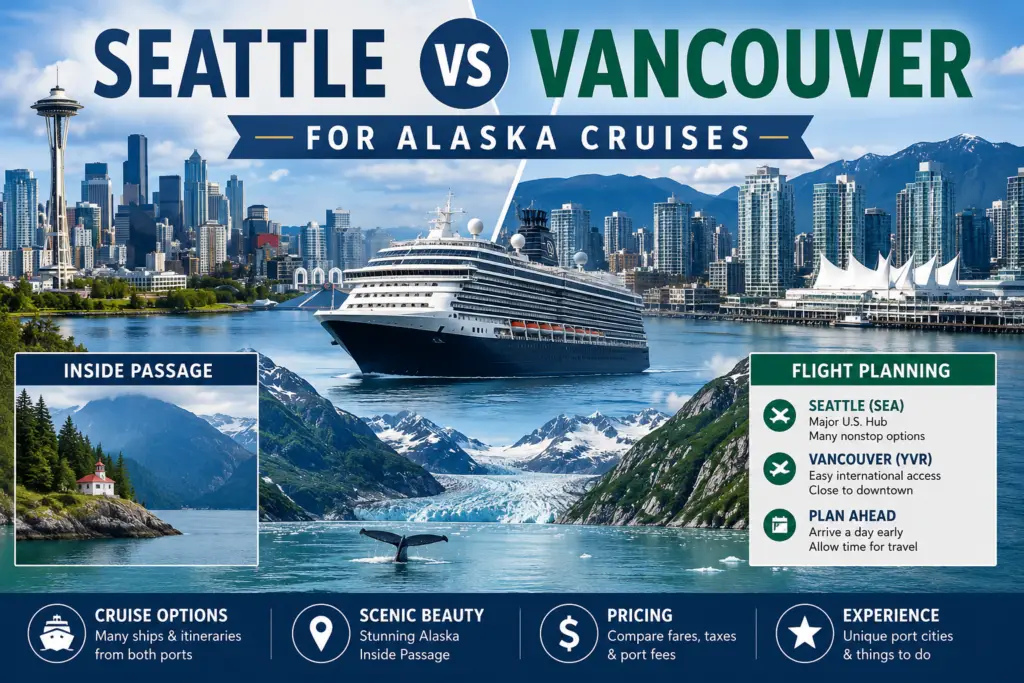
- Seattle versus Vancouver departure,
- glacier or scenic-cruising day,
- ports,
- usable time in port,
- cruise line,
- ship style,
- cabins,
- excursions,
- and whether the cruise needs to connect with a land itinerary.
A cheaper sailing with weak port times or the wrong glacier experience can be worse value than a slightly more expensive cruise that delivers the Alaska experiences you actually wanted.
The Alaska Cruise Guide explains the full selection process.
If you are already planning for 2027 and trying to decide among Princess, Holland America, Celebrity, Norwegian, and Royal Caribbean, use Best Alaska Cruise Lines for 2027.
Alaska Cruise Ports: Think About What You Can Actually Do
A cruise itinerary may show Juneau, Skagway, and Ketchikan, but simply having the port name on the schedule does not tell you how valuable that day will be.
Compare:
- arrival time,
- departure time,
- docking location,
- transportation time,
- available excursions,
- and whether the schedule provides enough usable time for what you want to experience.
At a high level:
- Juneau is strong for whales, glaciers, flightseeing and outdoor experiences.
- Skagway is strong for Gold Rush history and the White Pass Railway.
- Ketchikan is strong for Alaska Native culture, rainforest, fishing and Misty Fjords.
- Sitka is strong for wildlife, history, culture and variety.
- Icy Strait Point is strong for whales, wildlife, nature and adventure activities.
Use the Alaska Cruise Ports Guide when you are ready to compare two real itineraries port by port.
Glacier Bay, Hubbard Glacier and Alaska’s Scenic Days
Glacier experiences are one of the biggest differences between Alaska cruise itineraries.
Glacier Bay
Glacier Bay National Park is not a normal cruise port. You remain aboard while the ship travels deep into the national park.
The National Park Service says cruise ships typically spend approximately 9–10 hours inside Glacier Bay, including time near a major tidewater glacier, while park rangers board participating ships to provide interpretation.
If Glacier Bay is a major priority, verify that the exact sailing lists it by name.
Hubbard Glacier
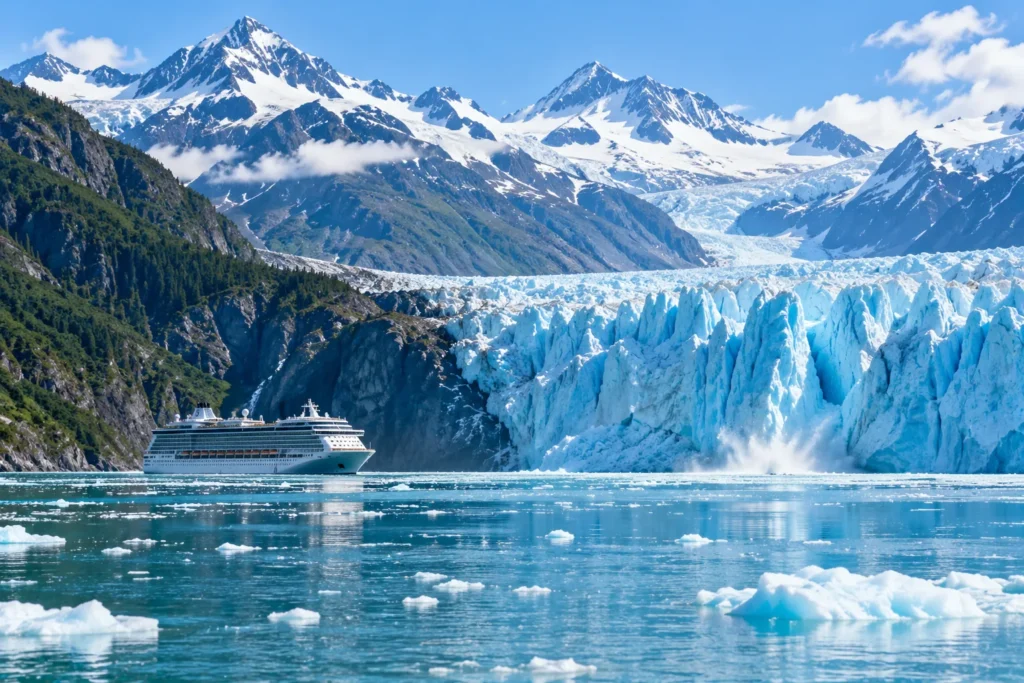
Hubbard Glacier offers enormous scale and can become a spectacular centerpiece of a Gulf of Alaska itinerary.
Actual viewing always depends on weather, ice, and safe navigation conditions.
Tracy Arm and Endicott Arm
These areas emphasize fjord scenery: narrow waterways, high cliffs, waterfalls, floating ice, and glacier views.
They can create a dramatically different scenic day from Glacier Bay or Hubbard Glacier.
If glaciers are becoming one of your biggest priorities, continue to Alaska Glaciers & Denali.
Denali and Interior Alaska: Do Not Add It as an Afterthought
Denali is one of the most recognizable names in Alaska travel, but simply seeing “Denali” printed on a package does not tell you how much of the destination you will actually experience.
Compare:
- number of nights,
- arrival and departure times,
- lodging location,
- included park transportation,
- amount of usable free time,
- rail or motorcoach schedules,
- and current park operations.
A one-night Denali stop can provide surprisingly little usable park time when transportation consumes large portions of both travel days.
Important 2027 Denali Update
The Pretty Rocks Bridge was completed in September 2026, restoring the physical connection across the landslide area that has restricted Denali Park Road access since 2021.
The National Park Service says full bus service along the length of Denali Park Road is expected to resume for the 2027 visitor season.
That is a major planning development for travelers comparing 2027 Alaska cruisetours and Denali stays. Exact 2027 routes, bus schedules, facilities, seasonal dates and packaged tour inclusions should still be verified before choosing the trip. Check the
current Denali National Park conditions
before finalizing plans.
Also remember that Denali—the mountain—is never guaranteed to appear simply because you visit the park. Clouds can hide it.
A strong Denali itinerary should still be worthwhile for wildlife, tundra, national-park scenery, and the overall experience of interior Alaska.
Alaska Railroad, Motorcoach or Independent Travel?
Transportation in Alaska should be treated as part of the itinerary rather than an inconvenience between destinations.
Alaska Railroad
The railroad can create a memorable scenic connection among destinations such as Anchorage, Talkeetna, Denali, Fairbanks, and Seward depending on route and schedule.
It works particularly well for travelers who enjoy scenery and prefer not to drive.
Motorcoach
Motorcoach transportation is common in organized cruise tours and can simplify luggage handling and hotel-to-hotel connections.
The tradeoff is less control over the schedule.
Independent Transportation
Rental vehicles, private transfers, rail segments, and independently chosen hotels can create much greater flexibility.
They also require a realistic understanding of Alaska distances and timing.
Which Alaska Trip Fits Which Traveler?
| Traveler | Strong Starting Point | Why |
|---|---|---|
| First-Time Alaska Traveler | Strong 7-night cruise | Provides a broad introduction with easier logistics. |
| Once-in-a-Lifetime / Bucket-List Trip | Cruise + meaningful land portion | Combines coastal glaciers with interior Alaska and Denali. |
| Family / Multigenerational Group | Family-friendly cruise or carefully paced cruise tour | Keeps meals and lodging simpler while allowing several excursion levels. |
| Couples / Anniversary Trip | Premium-mainstream cruise or slower cruise + rail itinerary | Balances scenery, dining, private time and memorable experiences. |
| Wildlife-Focused Traveler | Cruise + selected wildlife excursions or deeper land itinerary | Creates several opportunities instead of relying on one wildlife sighting. |
| Adventure Traveler | Small ship, expedition or custom land trip | Better suited to kayaking, hiking, fishing and more remote experiences. |
Alaska Can Be an Outstanding Group or Multigenerational Trip
Alaska is one of the destinations where group travel can genuinely make sense without requiring everyone to spend every minute together.
A cruise works particularly well because the group can share the same ship, dining opportunities, glacier days, and major destinations while individual families or travelers choose different excursions and activity levels.
That makes Alaska a strong possibility for:
- multigenerational family vacations,
- retirement celebrations,
- milestone birthdays,
- anniversary groups,
- friends traveling together,
- clubs or organizations,
- and families who have decided to make one major trip together.
The planning becomes more important as the group grows.
Cabin locations, deposits, flights, budgets, accessible accommodations, excursion capacity, cruise-tour pacing, and different traveler expectations should be considered before everyone simply books whatever room happens to be available.
If Alaska is becoming a group trip, visit the Group Travel Planning page.
Ready for the next step?
Build Alaska Around What You Would Hate to Miss
Already know the Alaska cruise, route, or vacation you want? Start searching on your own. Still comparing cruise versus land, Glacier Bay, Denali, cruise lines, rail travel, groups, excursions, flights, or total trip pacing? Matt can help narrow the choices.
Search independently, ask for help when you need it, or have Sehlmeyer Travel handle the Alaska planning from the beginning.
Which Cruise Lines Should You Compare for Alaska?
The exact itinerary still matters more than the logo on the ship.
But once you understand the route and Alaska experiences you want, several cruise lines become useful starting points:
- Princess Cruises for a deep Alaska cruise-and-land ecosystem, Glacier Bay options, Denali, rail, and wilderness lodges.
- Holland America Line for destination-focused itineraries, Glacier Bay, wildlife emphasis, and a generally calmer onboard atmosphere.
- Celebrity Cruises for couples and travelers wanting a polished modern premium ship experience.
- Norwegian Cruise Line for flexible dining, Seattle options, solo travelers, families, and selected Glacier Bay itineraries.
- Royal Caribbean for families, teenagers, groups, and travelers placing more value on onboard activities.
For 2027 specifically, the new Best Alaska Cruise Lines for 2027 guide compares those five lines by glacier access, ships, families, couples, Denali options, departure ports, and complete trip fit.
Choose a Few Trip-Defining Alaska Experiences
One reason Alaska budgets can grow quickly is the temptation to book an expensive excursion in every port.
You do not need to do that.
Instead, decide which two or three experiences could define the trip.
Wildlife
Whale watching, wildlife cruises, bear-viewing experiences, Denali touring, and marine-wildlife excursions can all be memorable.
Wildlife is never guaranteed, so creating several reasonable opportunities is often smarter than expecting one specific sighting.
Glaciers
You may experience glaciers from:
- a cruise ship,
- a smaller day boat,
- a helicopter,
- a flightseeing tour,
- a road-accessible viewing area,
- or a guided excursion.
You do not necessarily need the most expensive glacier excursion at every opportunity.
Rail Travel
The White Pass Railway in Skagway and Alaska Railroad routes on the land portion create completely different rail experiences, but both can become trip highlights.
Flightseeing
Flightseeing can provide extraordinary perspectives over glaciers, Denali, and remote landscapes.
It is expensive and weather-dependent, so understand cancellation policies and avoid building the entire emotional success of the vacation around one weather-sensitive excursion.
Alaska Native Culture and History
Alaska is more than scenery.
Cultural centers, museums, totem sites, local guides, historic districts, and community-based experiences can add important context to the places you are seeing.
When Is the Best Time to Visit Alaska?
The primary Alaska travel season runs from May through September.
There is no universally perfect month.
| Month | Potential Strengths | Tradeoffs |
|---|---|---|
| May | Early-season atmosphere, possible value, fewer peak crowds | Cooler weather and some seasonal experiences still ramping up. |
| June | Very long daylight and strong overall seasonal access | Summer demand and pricing continue increasing. |
| July | Peak seasonal operations and family travel | Strong demand, more visitors and often higher pricing. |
| August | Excellent summer access and wildlife opportunities | Rain becomes more common in some coastal areas. |
| September | Late-season atmosphere, possible value, fall color, darker nights | Cooler weather, shorter daylight, and some seasonal operations winding down. |
Instead of choosing a month from a generic “best time” list, compare your dates against:
- school and work schedules,
- budget,
- wildlife interests,
- daylight,
- weather tolerance,
- desired excursions,
- and cruise or lodging availability.
How Much Does an Alaska Vacation Really Cost?
Alaska is difficult to compare using one advertised starting price because the final vacation can contain many separate pieces.
Your total trip cost can include:
- cruise fare,
- taxes and port fees,
- gratuities,
- flights,
- hotels,
- rail or motorcoach transportation,
- rental vehicles or private transfers,
- shore excursions,
- glacier day cruises,
- Denali tours,
- meals during the land portion,
- beverage or Wi-Fi packages,
- and travel protection.
That is why the cheapest cruise fare is not automatically the cheapest—or best-value—Alaska vacation.
Sometimes paying more for the right route eliminates another hotel night, improves the flight plan, creates longer port time, or includes the glacier experience you actually wanted.
Compare the entire trip.
Mobility and Pacing Should Shape the Alaska Itinerary
Alaska can work extremely well for families, retirees, and multigenerational groups, but the itinerary needs to match the people actually traveling.
A cruise is comparatively easy because the hotel moves with you.
A cruise tour or land trip may involve:
- hotel changes,
- early mornings,
- rail boarding,
- motorcoaches,
- long national-park bus rides,
- walking on uneven surfaces,
- boats and ramps,
- and repeated luggage handling.
A trip with more destinations is not automatically more impressive if someone spends the second half exhausted.
Good Alaska planning includes enough activity to make the vacation memorable and enough breathing room to actually enjoy it.
What Should You Pack for Alaska?
The most important packing principle is simple:
Pack for your itinerary, not just the word Alaska.
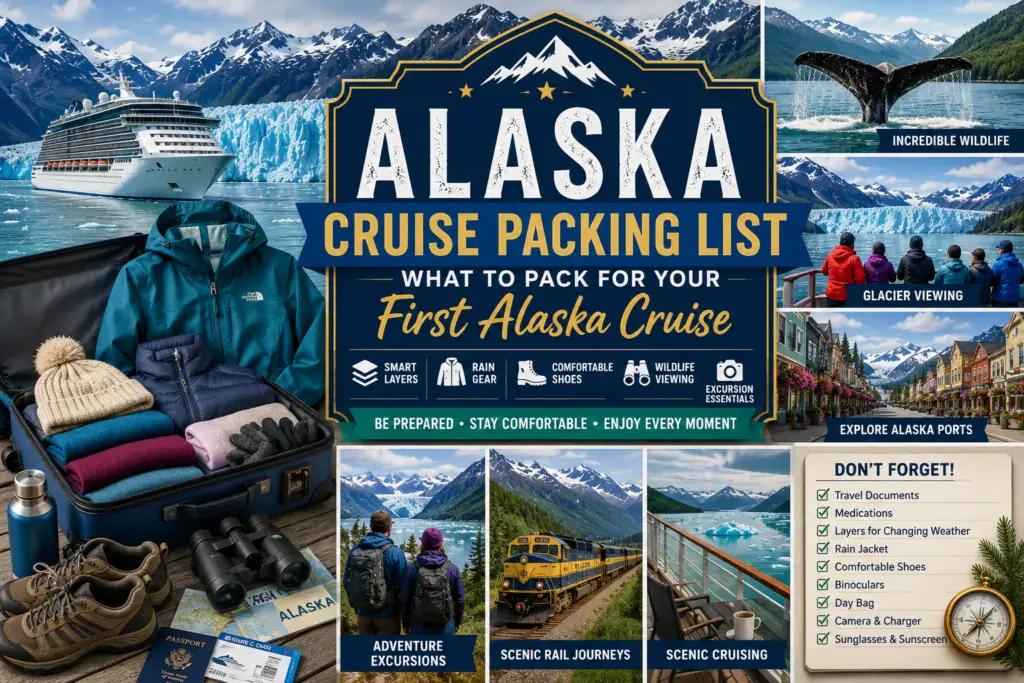
A typical Alaska trip calls for:
- flexible layers,
- rain protection,
- comfortable shoes,
- water-resistant footwear when appropriate,
- hat and light gloves,
- binoculars,
- day bag,
- sun protection,
- medications,
- and required travel documents.
A whale-watching day, glacier landing, White Pass Railway trip, and Denali land extension all create different packing priorities.
The Alaska Cruise Packing List breaks this down by itinerary and excursion type.
Common Alaska Planning Mistakes
Trying to See Everything
Alaska rewards focus. Too many destinations can turn the vacation into a transportation schedule.
Choosing an Alaska Cruise Only by Price
Compare glacier day, port hours, docking logistics, itinerary, cruise line, and complete trip cost.
Assuming Every Cruise Includes Glacier Bay
It does not. Verify Glacier Bay National Park by name if it is a priority.
Choosing the Newest Ship Before the Alaska Itinerary
The newest ship can be fantastic and still offer the wrong glacier day or ports for your priorities.
Adding Denali After Booking the Wrong Cruise Structure
If Denali matters, compare one-way cruise and land options before locking into a round-trip sailing.
Seeing “Denali” on a Package and Assuming That Is Enough
Check nights, usable time, lodging, included park experience, and transportation.
Waiting Too Long for Important Experiences
Popular cabins, cruise-tour combinations, accessible rooms, rail segments, lodges, group space, and limited-capacity excursions can become harder to secure.
Building Every Port Around an Expensive Excursion
A few meaningful experiences usually create better value and pacing than purchasing a bucket-list tour in every port.
Ignoring Flight and Embarkation Logistics
An Alaska vacation can represent a substantial investment. Do not let an unnecessarily tight same-day flight threaten the cruise.
Packing for One Kind of Weather
Alaska weather changes. Layers and rain protection usually outperform packing one enormous coat and hoping for the best.
Three Realistic First Alaska Trips
“We Have One Week and Want the Easiest Alaska Experience.”
Start with: a strong 7-night round-trip Alaska cruise.
Prioritize itinerary quality, glacier day, port time, and a cruise line that fits the travelers.
“This May Be Our Only Alaska Trip and We Want Denali Too.”
Start with: approximately 11–14 days and compare one-way cruise-plus-land options.
Protect meaningful Denali time rather than trying to collect as many destination names as possible.
“We Love Alaska, but We Don’t Think We Want a Traditional Cruise.”
Start with: a land-focused itinerary using Anchorage as a gateway, then compare Seward or Whittier glacier experiences, rail travel, Denali, and other interior destinations.
A traditional cruise is not required to experience extraordinary Alaska scenery.
Final Thoughts: Build the Alaska Trip Around the Experience
Alaska is one of those destinations where the right trip can feel much bigger than a normal vacation.
But the goal should not be to see the most places.
The goal is to experience the version of Alaska that matters most to you.
For one traveler, that may be waking up to Glacier Bay and watching whales from the deck.
For another, it may be riding the Alaska Railroad toward Denali.
Someone else may remember a helicopter glacier landing, the White Pass Railway, a sea otter in Sitka, an afternoon in Kenai Fjords, or simply standing outside while an enormous Alaska landscape moves past.
Start with what you would hate to miss.
Then give that experience enough time, choose the route that supports it, and let the rest of the vacation build around it.
Alaska is majestic. It is enormous. And yes, there are more moving pieces than a typical beach vacation.
But with the right planning, it is absolutely manageable.
That is the point of the process: not to make Alaska smaller, but to make the decisions clearer so you can enjoy how big the experience really is.
Frequently Asked Questions About Alaska Travel
What is the best way to visit Alaska for the first time?
For many first-time travelers, a well-chosen 7-night Alaska cruise offers the easiest introduction to coastal Alaska. Travelers who strongly want Denali or interior Alaska should compare cruise-plus-land itineraries before deciding.
How many days should I spend in Alaska?
Seven nights works well for a cruise-focused trip. Roughly 10–14 days is a stronger starting point when combining coastal Alaska with Denali or another meaningful land portion.
Is an Alaska cruise worth it?
Yes for travelers who value glaciers, coastal scenery, wildlife, ports, and easier logistics. Itinerary selection matters because Alaska cruises do not all visit the same ports or glacier areas.
Which Alaska cruise line is best for 2027?
There is no universal winner. Princess is an excellent overall starting point, Holland America is strong for destination depth, Celebrity for modern premium cruising, Norwegian for flexibility, and Royal Caribbean for families. Use Best Alaska Cruise Lines for 2027 for the full comparison.
Should I choose an Alaska cruise or land tour?
Choose a cruise for coastal Alaska, scenic waterways, ports, and simpler logistics. Choose land for deeper interior access, Denali, and more independence. Combine both when each experience is important enough to justify the additional time and cost.
Is Glacier Bay worth prioritizing?
For many travelers, yes. Glacier Bay provides a full national-park scenic-cruising experience, and cruise ships typically spend much of the day inside the park. It is not included on every Alaska itinerary.
Will Denali Park Road reopen for 2027?
The Pretty Rocks Bridge was completed in September 2026, and the National Park Service expects full bus service along the length of Denali Park Road to resume for the 2027 visitor season. Exact routes, schedules, facilities, and seasonal operations should still be verified before travel.
Is Denali worth adding to an Alaska cruise?
Yes when interior Alaska, wildlife, national-park scenery, and rail travel are important enough to justify additional vacation days. It is less worthwhile when the itinerary rushes through Denali simply to add the name to the trip.
Which Alaska cruise ports are best?
Juneau, Skagway, and Ketchikan provide an excellent classic mix for many first-time travelers. Sitka and Icy Strait Point can add wildlife and variety. The best combination depends on excursion priorities and the actual time available in each port.
When is the best time to visit Alaska?
The primary travel season runs from May through September. June through August provide broad seasonal access, while May and September offer different pricing, crowd, daylight, and weather tradeoffs.
Can you see the Northern Lights on an Alaska cruise?
It is possible, especially later in the season as nights become darker, but it is never guaranteed. Cloud cover, latitude, darkness, solar activity, and ship location all affect visibility.
Is Alaska good for a multigenerational family or group?
Yes. Cruises are particularly useful for multigenerational Alaska trips because travelers can share the same ship and major destinations while choosing excursions that match different ages, interests, and activity levels.
What should I pack for Alaska?
Pack flexible layers, rain protection, comfortable footwear, warm accessories, binoculars, a day bag, and whatever your actual excursions require. Use the Alaska Cruise Packing List for the complete itinerary-based checklist.
Where should I go next in planning my Alaska vacation?
If you are choosing the trip structure, use Alaska Cruise vs Land Tour. If you know you want to cruise in 2027, use Best Alaska Cruise Lines for 2027. If you are comparing actual ports and glacier stops, use the Alaska Cruise Ports Guide. If you already know Alaska is the trip and want to move toward planning, visit the Alaska Vacation Planning page.