A European river cruise can be one of the easiest ways to experience Europe for the first time. You unpack once, sail directly into historic towns and major cities, enjoy guided sightseeing, and avoid many of the hotel changes, train logistics, and daily decision fatigue that can make a land trip feel overwhelming.
But here is the honest part: river cruising is not the same as booking the cheapest ocean cruise deal you can find. A good European river cruise is more about value than lowest price. The value comes from location, included meals, guided touring, smaller ships, smoother logistics, cultural access, and the ability to see several places without constantly repacking.
If you recently read the River Cruise vs Ocean Cruise guide, this article is the next step. Instead of only comparing the styles, this guide helps first-time river cruisers understand which European rivers are best, how cruise lines differ, what is usually included, and how to avoid choosing the wrong itinerary.
Why European River Cruises Work So Well for First-Timers
European river cruising works because it simplifies Europe without watering it down. Instead of bouncing between hotels, train stations, rental cars, and luggage transfers, your ship becomes your floating base. Each day brings a new town, city, vineyard region, castle view, market square, or historic site.
For many travelers, that balance is the appeal. You still get Europe. You still get culture, architecture, food, history, and scenery. But you get it with a smoother rhythm and more built-in support.
That makes European river cruises especially strong for travelers who want:
- A more relaxed way to see multiple European destinations
- Smaller ships and fewer crowds than many large ocean cruises
- Included or easy-to-arrange sightseeing
- More time in towns, cities, and cultural regions
- A premium experience without needing to plan every detail alone
- Good food, regional wine, scenic sailing, and comfortable pacing
This is also why river cruising can be a smart bridge for travelers who like cruising but are ready for something more destination-focused. If you enjoy the ease of cruising but want fewer sea days, smaller ports, and deeper local experiences, Europe is where river cruising really starts to make sense.
River Cruise vs Ocean Cruise: The Simple Difference
The biggest difference is the purpose of the trip. Ocean cruises often focus on the ship, entertainment, big resort-style amenities, and a wide range of onboard activities. River cruises focus more on the destination, daily sightseeing, scenery, food, culture, and ease of access.
Neither style is automatically better. They are built for different travelers.
| Category | European River Cruise | Ocean Cruise |
|---|---|---|
| Ship Size | Small and intimate, often around 100–200 guests depending on the ship. | Much larger, often with thousands of guests. |
| Trip Focus | Destination, culture, scenery, food, history, and daily touring. | Ship amenities, entertainment, ports, dining, shows, and onboard variety. |
| Ports | Often docks close to towns, historic centers, or walkable riverfront areas. | Often uses larger cruise terminals that may require transfers into town. |
| Excursions | Often more included or built into the rhythm of the trip. | Often optional and priced separately depending on the cruise line. |
| Entertainment | Low-key, local, cultural, or enrichment-focused. | Bigger shows, casinos, water parks, music venues, and nightlife options. |
| Best For | Couples, mature travelers, culture-focused travelers, premium cruisers, and first-time Europe visitors who want ease. | Families, multi-generational groups, entertainment lovers, beach seekers, and travelers who want a resort at sea. |
For a deeper comparison before choosing, start with River Cruise vs Ocean Cruise. If you are still deciding whether cruising in general is right for you, the Why Take a Cruise? guide can also help.
Who Should Consider a First European River Cruise?
A European river cruise is not the right fit for every traveler, but it is excellent for the right traveler.
European River Cruises Are Best For
- First-time Europe travelers who want an easier way to see several places
- Couples who want culture, food, scenery, and a premium pace
- Mature travelers who want comfort without feeling rushed every day
- Retirees who want guided sightseeing and simplified logistics
- Ocean cruisers ready to level up from big-ship vacations into more destination-focused travel
- Food and wine travelers who enjoy regional meals, vineyards, markets, and local specialties
- History and culture travelers who want castles, cathedrals, museums, villages, and iconic cities
European River Cruises May Not Be Best For
- Travelers who want water slides, casinos, Broadway-style shows, or late-night nightlife
- Families with young children who need constant kid-focused entertainment
- Travelers who want the lowest possible cruise fare and do not care much about inclusions
- People who want a beach vacation more than a cultural trip
- Travelers who dislike walking tours, historic towns, or slower evenings onboard
If you are planning for older adults, retirees, or travelers who want a comfortable but meaningful cruise style, also compare the Best Cruise Lines for Retirees and Mature Travelers.
Best European River Cruises for First-Timers
For a first European river cruise, the route matters more than most travelers realize. The right river can make the trip feel easy, scenic, and memorable. The wrong river for your travel style can feel too quiet, too busy, too wine-focused, too history-heavy, or too logistically complicated.
Here are the best first-time European river cruise routes to consider.
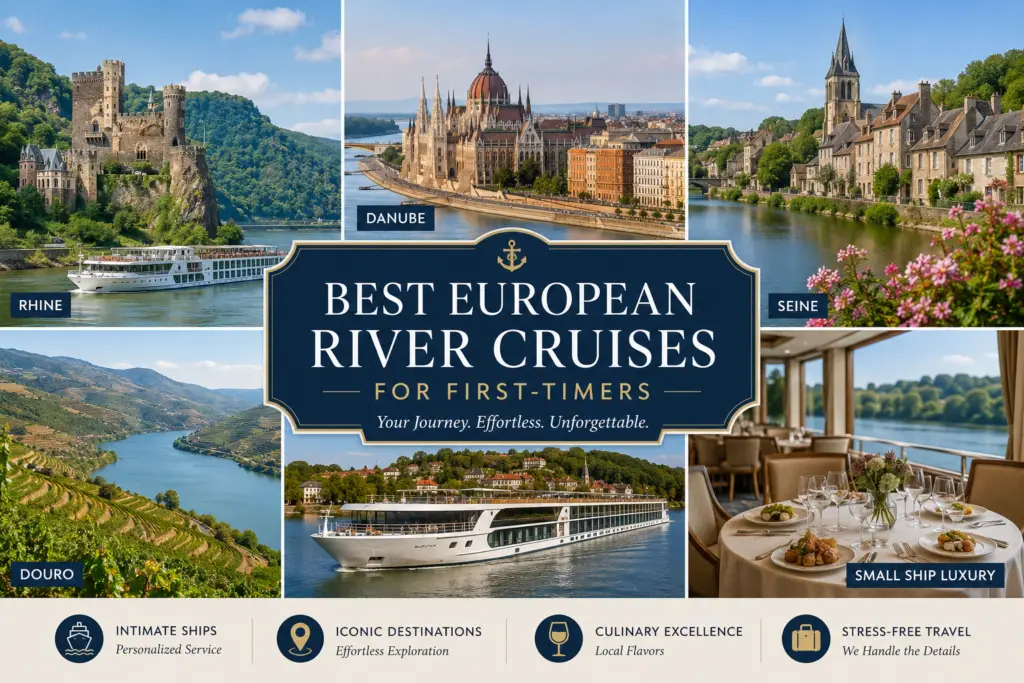
1. Rhine River Cruise
The Rhine is one of the strongest first-time river cruise choices in Europe. It delivers the classic river cruise image many travelers have in mind: castles, vineyards, medieval towns, scenic sailing, and major gateway cities.
A typical Rhine cruise may include places such as Amsterdam, Cologne, Rüdesheim, Strasbourg, and Basel, depending on the itinerary. The Middle Rhine is especially known for castle views and vineyard scenery.
Best for: First-time river cruisers, couples, castle lovers, wine travelers, mature travelers, and travelers who want a classic Europe feel.
Why it works: The Rhine gives you variety without feeling too complicated. It is scenic, historic, easy to understand, and offered by many major river cruise lines.
2. Danube River Cruise
The Danube is another excellent first European river cruise, especially for travelers who want grand cities, music, culture, and Central European history. Depending on the itinerary, a Danube cruise may include Budapest, Vienna, Bratislava, Passau, Linz, or other towns and cities.
The Danube often feels more elegant and city-focused than the Rhine. Vienna and Budapest give the itinerary strong cultural weight, while smaller towns add charm and scenery.
Best for: First-time Europe travelers, music lovers, history travelers, couples, retirees, and travelers who want iconic cities with easy logistics.
Why it works: The Danube has some of Europe’s best city stops for river cruising. It feels polished, cultural, and very approachable for a first trip.
3. Seine River Cruise
A Seine River cruise is a beautiful choice for travelers who love France, art, food, history, and village scenery. Many itineraries begin or end in Paris and travel through Normandy, giving travelers a mix of city, countryside, cathedrals, gardens, and World War II history.
The Seine is not as castle-heavy as the Rhine and not as city-packed as the Danube. It is softer, more romantic, and more French in feel.
Best for: Couples, France lovers, art and history travelers, Paris-focused travelers, and travelers interested in Normandy.
Why it works: It pairs Paris with small-town France in a way that feels easy, charming, and deeply cultural.
4. Douro River Cruise
The Douro River in Portugal is one of Europe’s most scenic river cruise options. It is known for vineyard-covered hills, port wine, dramatic landscapes, Porto, and a slower, more relaxed rhythm.
The Douro can be outstanding, but it is not always the most obvious first river cruise for every traveler. It tends to be more wine, scenery, and regional culture focused. That is a positive if you want Portugal and a more relaxed pace, but less ideal if you want to hit several major European cities.
Best for: Wine lovers, couples, Portugal travelers, scenery-focused travelers, and travelers who want a slower premium experience.
Why it works: The Douro feels intimate and scenic. It is less about checking off a long list of cities and more about enjoying place, landscape, and regional flavor.
5. Main and Moselle River Cruises
The Main and Moselle are often part of longer or more specialized itineraries, sometimes connecting with the Rhine or Danube. These routes can include charming German towns, vineyards, castles, and quieter scenery.
They can be excellent for travelers who already know they like the European river cruise style or want a deeper dive into Germany, wine regions, and smaller towns.
Best for: Repeat Europe travelers, wine travelers, Germany-focused travelers, and those who want a quieter pace.
Why it works: These routes feel more tucked away and less obvious than the headline Rhine or Danube choices.
6. Christmas Market River Cruises
Christmas market river cruises are a special category. They are festive, charming, and very popular, especially on the Rhine and Danube. Travelers can visit decorated town squares, shop for ornaments and gifts, enjoy seasonal food, and experience Europe during Advent.
They are not the warmest or most scenic in the summer sense, but they can be magical when planned with the right expectations.
Best for: Couples, mature travelers, holiday travelers, gift shoppers, Christmas lovers, and travelers who do not mind colder weather.
Why it works: Christmas markets give the river cruise a clear theme and make each stop feel festive and memorable.
Best First-Time European River Cruise Routes Compared
| River / Route | Best For | First-Timer Fit |
|---|---|---|
| Rhine | Castles, vineyards, villages, classic Europe scenery | Excellent first choice |
| Danube | Vienna, Budapest, music, history, grand cities | Excellent first choice |
| Seine | Paris, Normandy, art, history, French countryside | Great for France-focused travelers |
| Douro | Portugal, wine, scenery, slower pace | Great for couples and wine travelers |
| Main / Moselle | Germany, wine towns, quieter river scenery | Better for travelers who like a deeper regional focus |
| Christmas Markets | Holiday charm, markets, seasonal food, festive towns | Excellent if you want a themed trip |
Best River Cruise Lines for First-Time Europe Travelers
Choosing the river is only part of the decision. The cruise line matters just as much. River cruise lines can look similar at first glance, but the onboard tone, inclusions, activity level, dining style, pricing structure, and guest profile can feel different.
AmaWaterways
AmaWaterways is a strong choice for travelers who want a premium river cruise experience with good food, active excursion options, warm service, and a slightly more flexible feel. It can work especially well for couples, active mature travelers, wine travelers, and travelers who want more than one pace option on some guided tours.
AmaWaterways also has strong appeal for travelers who want a polished experience without feeling overly stiff. Many itineraries include guided sightseeing, regional dining, and options such as walking tours, hiking, biking, wine-focused experiences, and wellness touches depending on the ship and route.
For a deeper look, read the AmaWaterways River Cruise Guide.
Viking
Viking is one of the most recognized names in river cruising and is often one of the first brands travelers hear about. Viking tends to appeal to travelers who want a destination-focused, adult-oriented, structured, culturally rich river cruise with clear inclusions and a more consistent product style across ships and itineraries.
Viking can be a strong match for mature travelers, first-time river cruisers, retirees, and travelers who appreciate a quieter onboard atmosphere with lectures, local culture, and guided touring instead of big-ship entertainment.
For more detail, compare the Viking Cruise Line Guide.
Other Premium and Luxury River Cruise Options
AmaWaterways and Viking are two of the biggest names to compare first, but they are not the only options. Depending on budget, travel style, itinerary, and preferred inclusions, other premium and luxury river cruise brands may be worth considering.
Some travelers want the best value in a premium category. Others want a more elevated luxury experience with more inclusions, higher-end service, larger suites, or more personalized touches. That is where the line-by-line comparison matters.
If you are comparing river cruising against luxury ocean or small-ship options, the Luxury Cruise Lines Guide can help put the options into perspective.
What Is Usually Included on a European River Cruise?
One of the biggest mistakes first-time river cruisers make is comparing river cruise prices to ocean cruise prices without comparing what is included. River cruises often cost more up front, but they may include more of the things travelers would otherwise pay for separately.
Common inclusions may include:
- Onboard meals
- Some beverages with meals, depending on the cruise line
- Guided shore excursions or walking tours
- Port charges and taxes, depending on the fare structure
- Wi-Fi, depending on the cruise line and connectivity
- Onboard enrichment, local entertainment, lectures, or cultural programming
- Destination-focused service from cruise managers, guides, and onboard staff
That said, not every river cruise line includes the same things. Airfare, gratuities, transfers, premium beverages, optional excursions, pre- and post-cruise hotels, travel insurance, and certain specialty experiences may cost extra depending on the brand and promotion.
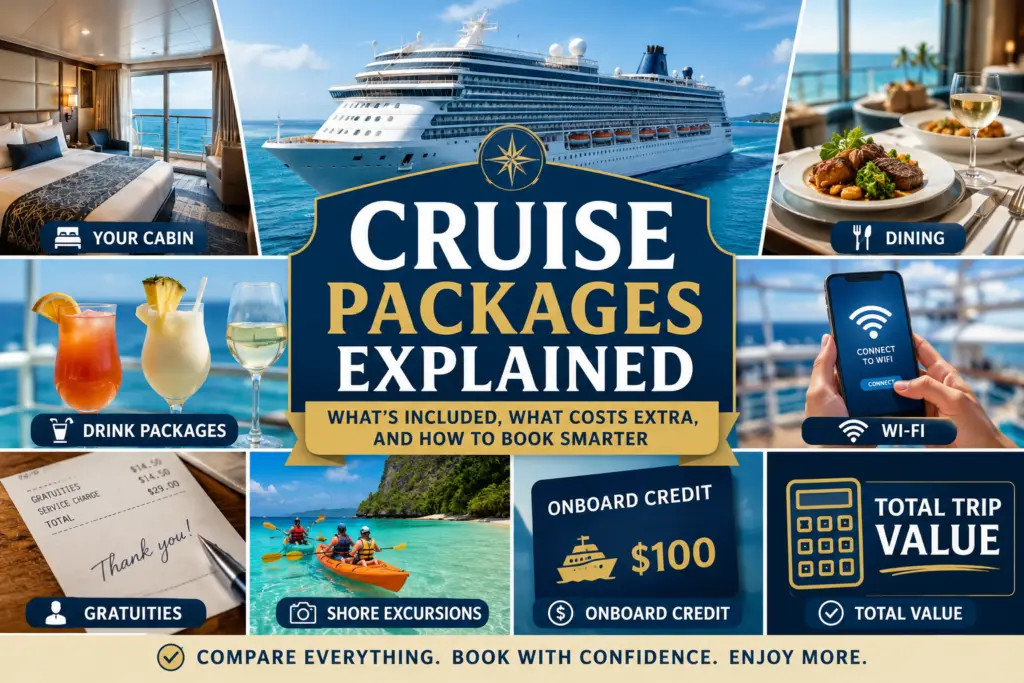
Before choosing a sailing, compare the cruise fare against the full trip cost. The Cruise Packages Explained guide is a good next read if you want to understand what is included, what costs extra, and how to avoid surprise expenses.
How Long Should Your First European River Cruise Be?
Most first-time European river cruisers should look closely at 7-night river cruises, often paired with one or two hotel nights before or after the sailing.
A 7-night cruise is long enough to settle in, enjoy several ports, and understand the rhythm of river cruising without committing to a longer and more expensive itinerary. For many travelers from Ohio and the Midwest, adding at least one pre-cruise night is smart because international flights, jet lag, and river cruise embarkation timing can be unforgiving.
| Trip Length | Best For | Planning Notes |
|---|---|---|
| 7 Nights Cruise Only | Travelers with limited time | Efficient, but add a pre-night if flying from the U.S. |
| 9–10 Days Total | Most first-time river cruisers | Allows time for flights, one pre-night, and a smoother start. |
| 12–14 Days Total | Travelers adding Paris, Prague, Amsterdam, Lucerne, or Budapest | Great if you want a richer Europe experience before or after the cruise. |
| 14+ Days | Retirees, longer vacationers, and experienced Europe travelers | Best for grand routes or deeper land-and-river combinations. |
Best Time of Year for a European River Cruise
European river cruises operate through much of the year, but the best season depends on your route, budget, weather preference, and crowd tolerance.
Spring
Spring can be a beautiful time for tulips, flowers, cooler weather, and fewer summer crowds. The Netherlands and Belgium are especially popular for tulip-focused river cruises. Spring can also work well on the Rhine, Danube, and Seine.
Summer
Summer offers long days, warmer weather, and strong sightseeing conditions. It is also one of the busier and more expensive times to travel. For travelers tied to school calendars, summer may still be the most practical choice.
Fall
Fall is one of the best overall seasons for European river cruising. Weather can be comfortable, crowds may be lower than peak summer, and wine regions can be especially appealing. Rhine, Danube, Moselle, and Douro itineraries can be very attractive in fall.
Christmas Market Season
Late November through December brings Christmas market sailings, especially along the Rhine and Danube. These cruises are festive and memorable, but travelers should expect colder weather, shorter daylight, and packed markets in popular cities.
Important Travel Document Notes for Europe
European travel documents are changing, so this is not an area to guess on.
U.S. travelers should have a valid passport, and many European countries follow passport validity rules that require extra validity beyond your travel dates. For river cruises that enter multiple countries, your documents need to match the full itinerary, not just the first city you fly into.
As of 2026, Europe’s Entry/Exit System is also part of border processing for many non-EU travelers entering participating European countries. ETIAS, the European travel authorization system for visa-exempt travelers, is expected to begin in late 2026. Requirements can depend on nationality, destination countries, and timing, so travelers should verify their exact situation before departure.
For a practical pre-trip checklist, use the Travel Documents Checklist. For protection against trip disruptions, medical emergencies, delays, and other travel issues, also read Travel Insurance Explained.
Need Help Choosing Your First European River Cruise?
European river cruises can look similar online, but the right choice depends on the river, cruise line, season, pace, included tours, stateroom style, flights, and how much help you want before and during the trip.
Sehlmeyer Travel is a locally owned, full-service travel agency based in Defiance, Ohio. Matt personally helps travelers compare cruise options and plan trips that fit their budget, comfort level, and travel style.
Start Planning Your River Cruise
Have a quick question first? Contact Sehlmeyer Travel.
Common Mistakes First-Time River Cruisers Should Avoid
Only Comparing the Price
The lowest fare is not always the best value. Look at what is included, the itinerary quality, stateroom category, flight schedule, excursions, transfers, and the overall ease of the trip.
Choosing the Wrong River
A traveler who dreams of castles and vineyards may be happier on the Rhine than the Seine. A traveler who wants Vienna and Budapest should look hard at the Danube. A wine-focused couple may love the Douro. Route fit matters.
Skipping the Pre-Cruise Hotel Night
Flying from the United States and boarding a cruise the same day can be risky. Flight delays, missed connections, jet lag, and luggage issues can create a rough start. A pre-cruise hotel night is often worth it.
Assuming Every Excursion Is Easy
Many river cruise excursions involve walking, cobblestones, stairs, hills, uneven streets, or standing during guided tours. Some cruise lines offer different activity levels, but travelers should still choose carefully.
Expecting Big-Ship Entertainment
River cruises are quieter. That is part of the appeal. Expect conversation, scenery, local performances, lectures, meals, and early starts more than casinos, production shows, and loud nightlife.
Forgetting About Water Levels
River cruising depends on river conditions. High or low water can occasionally affect sailing schedules, docking locations, or transportation between ports. Good planning and the right expectations help.
How to Choose the Right First European River Cruise
Start with the experience you want, not the cruise line commercial you saw first.
Ask yourself these questions:
- Do I want castles, vineyards, and classic scenery? Consider the Rhine.
- Do I want Vienna, Budapest, music, and grand European cities? Consider the Danube.
- Do I want Paris, Normandy, art, and French villages? Consider the Seine.
- Do I want Portugal, wine, and dramatic vineyard scenery? Consider the Douro.
- Do I want a holiday-themed trip? Compare Rhine and Danube Christmas market cruises.
- Do I want a more active trip with hiking or biking options? Compare lines carefully.
- Do I want the most inclusive experience possible? Look beyond the base fare.
- Do I want a quieter, mature, adult-focused cruise? Consider Viking or similar lines.
- Do I want a premium but flexible river cruise feel? Compare AmaWaterways and other premium brands.
If you are still early in the process, browse the broader Cruise Line Guide to understand how different cruise brands fit different travelers. If you prefer personal help instead of sorting through endless tabs, read Travel Advisor vs Booking Online.
European River Cruise vs Land Tour
A river cruise is not the only way to see Europe. A land tour can be better for travelers who want more time in one region, more flexibility, or a very specific custom itinerary. But river cruising has clear advantages for travelers who want comfort and simplicity.
| Travel Style | Best For | Tradeoff |
|---|---|---|
| River Cruise | Travelers who want multiple destinations, guided sightseeing, unpack-once convenience, and a smoother pace. | Less flexibility than a fully custom land trip. |
| Land Tour | Travelers who want deeper time in fewer places or a more customized route. | More hotel changes, transfers, luggage movement, and daily logistics. |
| Independent Europe Trip | Experienced travelers who enjoy planning trains, hotels, restaurants, and local details. | More freedom, but more work and more room for mistakes. |
For many first-time Europe travelers, a river cruise is the sweet spot between independent travel and a fully escorted land tour. You get structure without feeling trapped, and you get variety without constantly moving hotels.
Is a European River Cruise Worth It?
A European river cruise is worth it when you value ease, access, included sightseeing, smaller ships, cultural experiences, regional food, and a smoother way to see several destinations.
It may not be worth it if your main goal is the lowest possible trip price, nonstop nightlife, beach time, or big-ship entertainment. River cruising is more refined, quieter, and more destination-driven.
The best way to think about it is this: you are not just buying a cabin on a ship. You are buying a structured way to experience Europe with lodging, transportation, meals, touring, and logistics tied together.
Related Cruise and Travel Planning Guides
These guides can help you compare river cruising with other premium and mainstream cruise options:
- River Cruise vs Ocean Cruise
- AmaWaterways River Cruise Guide
- Viking Cruise Line Guide
- Luxury Cruise Lines Guide
- Best Cruise Lines for Retirees and Mature Travelers
- U.S. River and Coastal Cruises Guide
- Expedition Cruise Guide
- Cruise Packages Explained
- Cruise Packing Guide
- Ultimate Travel Planning Guide
Final Thoughts on the Best European River Cruises for First-Timers
For most first-time European river cruisers, the Rhine and Danube are the safest starting points. They offer the clearest mix of scenery, culture, history, cities, and classic river cruise atmosphere. The Seine is excellent for travelers drawn to Paris, Normandy, and French culture. The Douro is beautiful for couples and wine lovers who want Portugal and a slower scenic pace.
The real key is matching the river, cruise line, season, and pace to the traveler. A good European river cruise should feel easy, enriching, and well-paced — not like you paid more just to be confused by the choices.
That is where planning matters. When the itinerary, flights, pre-cruise hotel, stateroom, excursions, documents, and travel protection are handled correctly, a first European river cruise can be one of the smoothest and most memorable ways to experience Europe.
Frequently Asked Questions About European River Cruises for First-Timers
What is the best European river cruise for first-timers?
The Rhine and Danube are usually the best European river cruises for first-timers. The Rhine is excellent for castles, vineyards, and classic river scenery. The Danube is excellent for Vienna, Budapest, music, culture, and major Central European cities.
Is a European river cruise good for first-time Europe travelers?
Yes. A European river cruise can be a great fit for first-time Europe travelers because it simplifies hotels, transportation, touring, and daily logistics while still offering a strong cultural experience.
Which is better for a first river cruise, Rhine or Danube?
The Rhine is usually better if you want castles, villages, vineyards, and classic scenery. The Danube is usually better if you want grand cities like Vienna and Budapest, music, history, and a more elegant Central European feel.
Are European river cruises worth the money?
European river cruises can be worth the money when you value included sightseeing, smaller ships, convenient docking locations, meals, cultural access, and simplified logistics. They are not usually the cheapest way to see Europe, but they can offer strong total value.
What is included on a European river cruise?
Inclusions vary by cruise line, but many European river cruises include onboard meals, guided sightseeing, some beverages, port charges, Wi-Fi, and destination-focused programming. Airfare, gratuities, transfers, optional excursions, and travel insurance may cost extra depending on the cruise line and fare.
Are European river cruises good for seniors?
Yes, European river cruises can be excellent for seniors and mature travelers because they reduce hotel changes, simplify transportation, and offer guided sightseeing. Travelers should still consider walking difficulty, cobblestones, stairs, and excursion activity levels.
Do European river cruises have entertainment?
European river cruises usually have quieter entertainment than ocean cruises. Expect local performers, lectures, music, cultural programs, scenic sailing, and relaxed evenings rather than casinos, large theaters, or big production shows.
When is the best time to take a European river cruise?
Spring, summer, and fall are all popular for European river cruises. Fall is especially strong for wine regions and comfortable weather. Christmas market cruises in late November and December are popular for travelers who want a festive holiday experience.
Should I arrive early before a European river cruise?
Yes. For travelers flying from the United States, arriving at least one day before embarkation is usually wise. It gives you a buffer for flight delays, luggage issues, jet lag, and international travel stress.
Do I need travel insurance for a European river cruise?
Travel insurance is strongly worth considering for a European river cruise because the total trip cost can be significant and international travel can involve flight delays, medical issues, missed connections, lost luggage, and other disruptions.