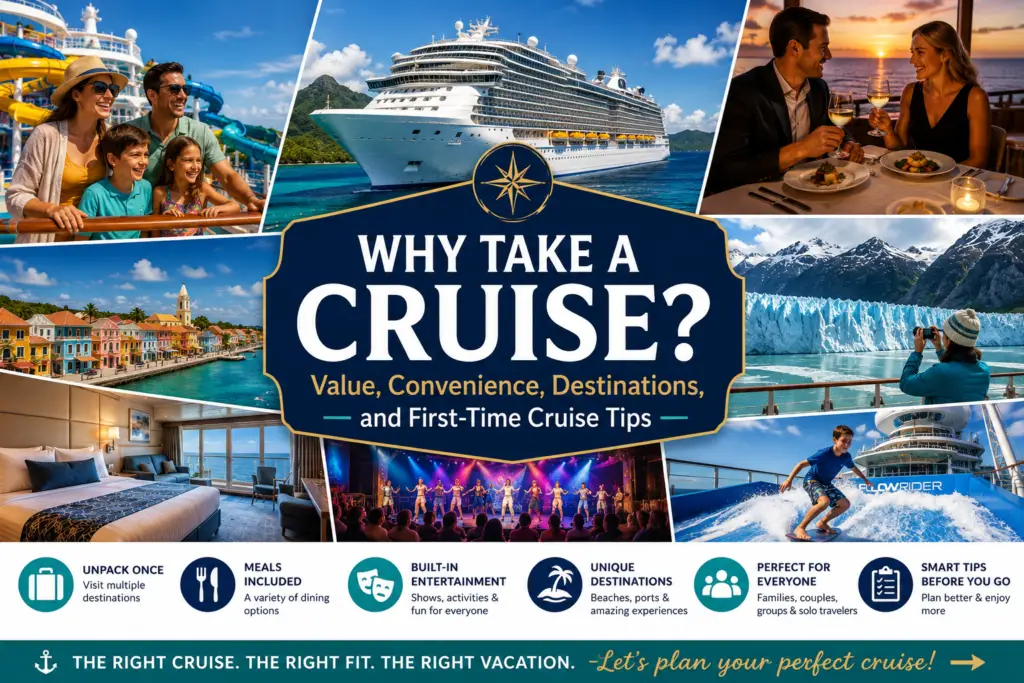
A cruise can be one of the easiest ways to take a real vacation because it combines lodging, transportation, meals, entertainment, destinations, and daily structure into one trip.
Instead of booking multiple hotels, rental cars, transfers, restaurants, tours, and activities separately, a ship gives you one floating home base. You unpack once, visit different places, enjoy onboard dining and entertainment, and let the itinerary create the rhythm of the trip.
That is the simple answer to why take a cruise: it makes travel easier while still giving you variety. For many families, couples, friend groups, multigenerational travelers, and first-time cruisers, that combination is hard to beat.
Still, cruising is not perfect for everyone. The right sailing can feel easy, fun, and valuable. The wrong one can feel crowded, expensive, rushed, or mismatched. The difference usually comes down to choosing the right cruise line, ship, itinerary, cabin, travel dates, and total budget.
This guide explains the biggest benefits, where cruises can disappoint, who they fit best, and what travelers should know before booking.
What Makes a Cruise Worth Considering?
The biggest advantage is convenience. A cruise pulls several major parts of a trip into one package: your room, transportation between ports, many meals, entertainment, activities, and a planned route.
That does not mean every sailing is cheap or fully all-inclusive. Cruise lines vary widely, and extras can add up quickly. However, compared with planning every hotel, meal, transfer, and activity separately, the overall structure can make travel much easier.
For travelers who want a vacation that feels organized without planning every hour from scratch, this style of travel can be a strong fit.
Is a Cruise a Good Vacation Choice?
Best for: Families, couples, groups, first-time travelers, multigenerational trips, destination sampling, built-in entertainment, and easier logistics.
Not best for: Travelers who dislike schedules, crowds, sea days, ship rules, limited port time, or paying extra for drinks, Wi-Fi, excursions, specialty dining, and premium experiences.
Best styles to compare: Family sailings, Caribbean itineraries, Alaska routes, river cruises, adults-only trips, luxury options, short getaways, and premium mainstream ships.
Overall fit: Strong for travelers who want convenience, destination variety, entertainment, dining, and a structured trip without building every detail from scratch.
The Biggest Benefits of Cruising
Cruising works because it solves several common travel headaches at once. It gives travelers structure, variety, and convenience while still leaving room to choose how active or relaxed each day feels.
You Unpack Once
This is one of the best parts of the experience. You check into your cabin, settle in, and let the ship move you from destination to destination.
That is especially helpful for families and groups. Instead of repacking every few days, changing hotels, managing luggage, and coordinating transportation repeatedly, the ship becomes your home base.
Meals Are Built Into the Trip
Most cruise fares include main dining rooms, buffet-style dining, casual options, snacks, and basic drinks such as water, coffee, or tea. Specialty restaurants, premium drinks, and some dining experiences may cost extra, but the everyday meal structure is already built into the trip.
As a result, families and groups usually have an easier time managing different tastes, schedules, and hunger levels. There is normally something available without having to research restaurants every single night.
Entertainment Is Easy to Access
Modern ships can include live music, theater shows, comedy, pools, kids clubs, sports areas, trivia, game shows, lounges, nightlife, and family activities.
Larger ships may also add waterslides, surf simulators, ropes courses, go-karts, ice shows, Broadway-style productions, or major stage entertainment. Meanwhile, smaller and premium ships may focus more on dining, service, music, enrichment, scenery, and destination depth.
That variety is one reason this style of travel works well for multigenerational groups. Different people can enjoy different things without splitting the entire vacation apart.
You Can Sample Multiple Destinations
A ship-based itinerary is a great way to try several places without committing to a full week in one destination. This can be useful in the Caribbean, Alaska, Europe, Hawaii, and other regions where travelers want a taste of different ports.
For example, a Caribbean sailing might include beach days, snorkeling, private destination stops, and island culture. An Alaska itinerary might include glaciers, wildlife, scenic sailing, and port towns like Juneau, Skagway, or Ketchikan.
This does not replace every kind of land vacation. However, it is one of the easiest ways to experience multiple places in one trip.
There Are Options for Many Travel Styles
Cruising is not one-size-fits-all. A Disney sailing, Royal Caribbean mega-ship, Celebrity itinerary, Viking river route, Virgin Voyages adults-only trip, Holland America Alaska sailing, and AmaWaterways river journey can feel completely different.
That variety is a strength, but it also creates a challenge. Choosing the wrong cruise line can lead to disappointment. The goal is not just to book a sailing. The goal is to book the right one.
When a Cruise Is Worth It
A cruise is worth it when the total vacation value matches what you actually want from the trip.
The value is not just the fare. It is the combination of lodging, meals, entertainment, transportation between destinations, onboard activities, itinerary, service, and convenience.
This type of vacation may be worth it if you want:
- Multiple destinations without changing hotels
- Built-in dining and entertainment
- Activities for different ages and interests
- A trip that works for families or groups
- A structured vacation that still gives you choices
- A way to try new places before planning a longer land trip
- A simpler alternative to coordinating hotels, transfers, meals, and tours separately
On the other hand, it may not feel worth it if you dislike crowds, want unlimited time in one destination, prefer complete schedule freedom, or are frustrated by extra costs for drinks, Wi-Fi, excursions, gratuities, and premium experiences.
Where Cruises Can Disappoint
A good travel guide should be honest. Cruises can be excellent, but they are not perfect. Most disappointment comes from mismatched expectations.
Extras Can Add Up
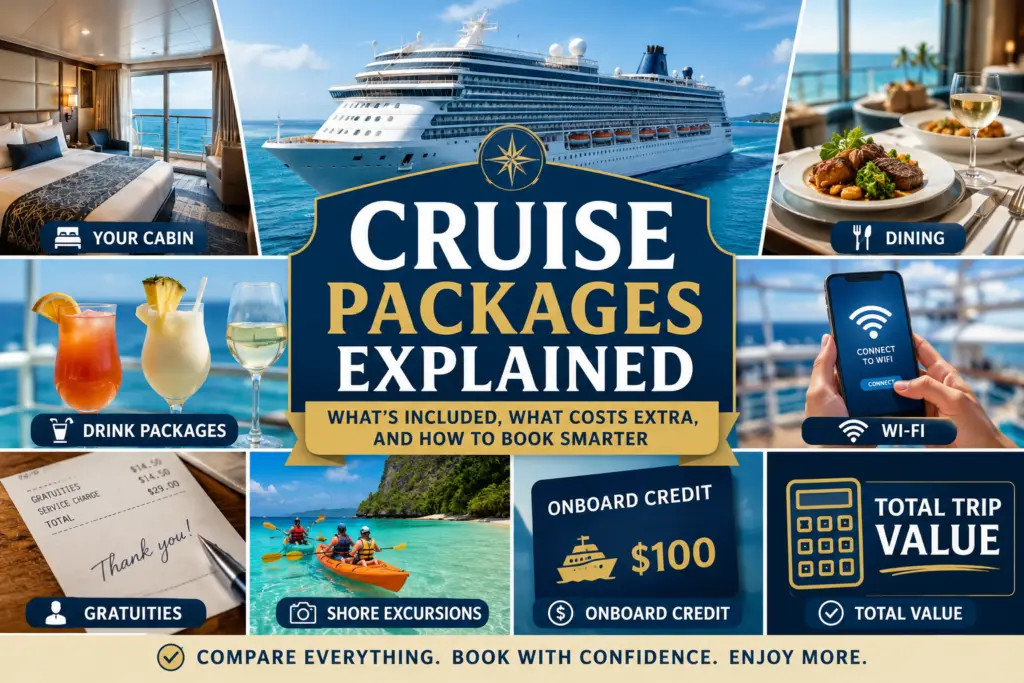
The fare often includes a lot, but it usually does not include everything. Travelers may still pay extra for drink packages, Wi-Fi, shore excursions, specialty dining, spa treatments, casino spending, gratuities, photos, private destination upgrades, and some onboard activities.
Therefore, the cheapest fare is not always the best value. The final cost matters more than the starting price.
Helpful resource: Cruise Packages Explained
Port Time Can Be Limited
A cruise is a great way to sample destinations, but it usually does not give the same depth as a land-based trip. You may only have several hours in port before returning to the ship.
That can be perfect for first-time exposure. However, travelers who want deeper cultural immersion may prefer a land vacation, river itinerary, longer sailing, or pre- and post-cruise hotel stay.
Ships Can Feel Crowded
Large ships can carry thousands of passengers. Crowds may show up around elevators, buffets, pools, tenders, embarkation, disembarkation, and popular shows.
Choosing the right ship, sailing date, cabin location, dining strategy, and cruise line can help. Still, travelers who strongly dislike crowds should compare smaller ships, premium lines, river cruises, luxury options, or destination-focused routes.
The Wrong Ship Can Ruin the Fit
Ship choice matters. A family expecting waterslides and teen activities may be disappointed by a quiet older ship. A couple wanting calm luxury may dislike a party-heavy short getaway. A first-time cruiser who chooses only by price may end up on a ship that does not match their style.
For that reason, smart planning starts with the traveler, not the sale price.
Who Cruises Are Best For
Cruises can work for many types of travelers, but some groups benefit more than others.
Families
Families often like cruises because the ship combines lodging, meals, activities, entertainment, pools, kids programming, and destinations in one trip.
The best fit depends on kids ages, budget, ship style, cabin needs, and itinerary. Disney Cruise Line is strong for younger kids and Disney fans. Royal Caribbean is strong for active families and teens. Norwegian Cruise Line can be a good choice for flexible dining and casual schedules. MSC Cruises can be worth comparing for value-focused families.
For a deeper family comparison, start with the Best Family Cruises Guide.
Couples
Couples can enjoy easy dining, entertainment, beaches, adults-only spaces, spa options, balcony cabins, nightlife, and a wide range of destinations.
Some couples want a lively ship. Others want something calmer, more refined, or adults-only. Celebrity Cruises, Princess Cruises, Holland America Line, Virgin Voyages, and Viking can all make sense depending on the preferred pace.
For more help, read Romantic Cruise Planning for Couples.
Groups and Multigenerational Travelers
Cruises are often easier for groups because everyone can share the same ship while still doing different activities. Grandparents can relax, kids can join youth programming, parents can enjoy a show, and the group can still meet for dinner.
The biggest mistake is choosing a ship that only fits one part of the group. A good match balances kids, adults, budget, mobility, dining, cabin setup, and departure port convenience.
First-Time Travelers
Cruising can be a friendly entry point for travelers who are nervous about international travel. The ship gives structure, onboard support, planned excursions, and a clear schedule.
For first-timers, shorter Bahamas or Caribbean sailings can be useful ways to test the experience before booking a longer or more expensive itinerary.
Solo Travelers
Solo travelers can also enjoy cruising, especially when the ship has solo cabins, social programming, flexible dining, and a comfortable onboard atmosphere.
Before booking, solo travelers should compare single supplement pricing, studio cabin availability, onboard spaces, dining comfort, and itinerary style.
Helpful resource: Best Cruise Lines for Solo Travelers
Best Cruise Styles to Compare
The style of trip matters as much as the cruise line. A family mega-ship, river cruise, luxury ship, and adults-only sailing are completely different experiences.
| Cruise Style | Best For | What to Know |
|---|---|---|
| Family Mega-Ship | Families, teens, active travelers | Lots to do, but crowds and extra costs can be higher. |
| Premium Mainstream | Couples, adults, relaxed travelers | More refined, but usually less flashy than the biggest mega-ships. |
| Adults-Only | Couples, friend groups, kid-free travel | Great for adults, but not an option for families with kids. |
| River | Culture, history, food, scenery | Smaller ships and destination depth, but less onboard entertainment. |
| Luxury | Travelers wanting service, space, and more inclusions | Higher price, but often more included and less crowded. |
| Short Getaway | First-timers and quick escapes | Easy to try, but some short sailings can feel more party-heavy. |
| Destination-Focused | Alaska, Europe, Panama Canal, Hawaii, scenic travel | Ports and excursions may matter more than waterslides or nightlife. |
Best Cruise Lines to Compare
Choosing the right cruise line should come down to travel style, not just price. Here is a quick overview of how several major cruise lines fit different travelers.
| Cruise Line | Best For | Why Travelers Choose It |
|---|---|---|
| Royal Caribbean | Families, teens, first-timers, groups | Big ships, major activities, entertainment, private destination experiences, and broad family appeal. |
| Disney Cruise Line | Families, younger kids, Disney fans | Service, storytelling, characters, kids clubs, themed dining, and family polish. |
| Norwegian Cruise Line | Flexible travelers, families, solo travelers, casual groups | Flexible dining, casual atmosphere, entertainment, solo cabin options, and The Haven upgrades on select ships. |
| MSC Cruises | Value-focused families, couples, newer-ship shoppers | Competitive pricing, newer ships, international feel, private island-style options, and Yacht Club upgrades. |
| Celebrity Cruises | Couples, adults, premium mainstream travelers | Modern ships, elevated dining, stylish spaces, and a more adult-friendly atmosphere. |
| Princess Cruises | Alaska, couples, adults, relaxed travelers | Destination focus, premium mainstream comfort, good pacing, and strong Alaska appeal. |
| Holland America Line | Adults, Alaska, culture, relaxed cruising | Calmer ships, good dining, live music, destination depth, and a more classic cruise style. |
| Virgin Voyages | Adults-only, couples, friend groups | Kid-free ships, modern design, included dining approach, nightlife, and wellness-focused spaces. |
| Viking | Adults, rivers, culture, destination-focused travel | Adults-focused travel, destination depth, enrichment, quieter ships, and a more refined pace. |
| AmaWaterways | Active river cruising, food, wine, Europe | Boutique river ships, included touring options, active excursions, and strong dining. |
| Carnival Cruise Line | Budget-focused travelers, short getaways, casual fun | Often competitive pricing, a casual fun-first atmosphere, shorter itineraries, and broad departure-port availability. |
Best Destinations for First-Time Cruisers
Some destinations are easier for first-time travelers than others. The right choice depends on budget, flight access, travel dates, comfort level, and how adventurous the traveler wants to be.
Caribbean
The Caribbean is one of the easiest regions for first-timers because there are many ships, many departure ports, warm weather, beaches, and itinerary options.
These trips can work well for families, couples, groups, and travelers who want a mix of beach time, ship time, and relaxed port days.
Helpful resource: Best Caribbean Cruise Ports
Bahamas
Bahamas itineraries are often short, accessible, and beginner-friendly. They can work well for families, first-timers, and travelers who want a quick warm-weather getaway.
Depending on the cruise line, these sailings may include Nassau, private island-style beach days, or other easy warm-weather stops.
Alaska
Alaska is best for travelers who want scenery, wildlife, glaciers, and a very different type of ship-based trip. It is not mainly about beaches or pool decks. It is about views, nature, ports, and excursions.
For more Alaska planning, read the Alaskan Cruise Guide and the Ultimate Alaska Travel Guide.
Mediterranean
Mediterranean routes are best for travelers who want history, culture, food, architecture, and famous cities without changing hotels every few nights.
These itineraries can be incredible. However, they are often more port-intensive than Caribbean trips. First-timers should be realistic about walking, heat, travel time, jet lag, and excursion pace.
Hawaii
Hawaii sailings can help travelers see multiple islands without changing hotels several times. They can make island-hopping feel easier, especially for travelers comparing Oahu, Maui, Kauai, and the Big Island.
Still, a Hawaii cruise is not the same as a Hawaii land vacation. Compare port time, resort time, flights, and total trip cost carefully.
Helpful resource: Hawaii Cruise vs. Land Vacation
First-Time Cruise Tips
A first cruise is much better when expectations are clear before boarding. These tips can prevent common mistakes.
Do Not Pick Only by Price
The cheapest option is not always the best option. Ship age, cabin location, itinerary, dining, included perks, onboard style, and total trip cost all matter.
Compare the Ship, Not Just the Cruise Line
Two ships from the same cruise line can feel very different. A newer ship may have more dining, better entertainment, larger family spaces, or more premium areas than an older ship.
Understand What Is Included
Know what your fare includes before booking. Meals, entertainment, kids clubs, and many basic activities may be included, but Wi-Fi, specialty dining, alcohol, excursions, gratuities, and premium experiences often cost extra.
Choose the Right Cabin
Cabin choice affects sleep, comfort, motion, noise, and convenience. Families may need connecting rooms or larger cabins. Couples may prefer a balcony. Budget travelers may be happy with an inside cabin if they plan to spend little time in the room.
Arrive the Day Before the Ship Departs
For most travelers flying to a port city, arriving the day before departure is the safer move. Flight delays, weather, missed connections, and luggage issues can create serious stress if you arrive the same day.
Book Popular Dining and Activities Early
Many cruise lines allow reservations before sailing. Popular shows, specialty restaurants, excursions, spa appointments, and private destination upgrades can sell out.
Plan Port Days Carefully
Do not overpack every port day. Leave room for rest, meals, transportation, and unexpected delays. First-timers may want to use some cruise-line excursions for simplicity, especially in unfamiliar ports.
Pack a Small First-Day Bag
Your checked luggage may not arrive at your cabin immediately. Keep medication, travel documents, swimsuits, chargers, sunscreen, a change of clothes, and other essentials with you on embarkation day.
Thinking About Trying a Cruise?
A cruise can be a great vacation, but the best choice depends on the traveler, ship, itinerary, cabin, budget, and travel style. The right one can feel easy and exciting. The wrong one can feel mismatched fast.
Sehlmeyer Travel helps compare cruise lines, ships, cabins, destinations, packages, flights, transfers, and total trip value so you can choose with more confidence.
Have a quick question first? Contact Sehlmeyer Travel.
When Is the Best Time to Cruise?
The best time depends on the destination. Weather, crowds, school breaks, hurricane season, wildlife viewing, and pricing can all affect the right choice.
| Destination | Common Best Time | Planning Notes |
|---|---|---|
| Caribbean | December to April | Popular weather window, but pricing can be higher. Late summer and fall require hurricane-season awareness. |
| Bahamas | Winter and spring | Short trips are available often. Compare weather, pricing, ship style, and private island plans. |
| Alaska | May to September | June through August are popular. May and September can offer value and fewer crowds. |
| Mediterranean | April to June and September to October | Shoulder seasons can be better for weather, crowds, and touring comfort. |
| Europe Rivers | Spring, summer, fall, and Christmas market season | River levels, seasonal themes, and itinerary focus can affect the experience. |
| Hawaii | Year-round, with seasonal pricing and flight differences | Compare ship-based and land-based Hawaii trips carefully because the experience is very different. |
Cruise vs. Land Vacation
A cruise and a land vacation can both be excellent. The better choice depends on how you want the trip to feel.
Choose a Cruise If You Want
- To unpack once and visit multiple destinations
- Built-in dining, entertainment, and activities
- A trip that works for different ages and interests
- A structured vacation that still allows choices
- A good first taste of a region like the Caribbean, Alaska, Europe, or Hawaii
- Simpler planning compared with coordinating hotels, meals, transportation, and tours separately
Choose a Land Vacation If You Want
- More time in one destination
- More flexible daily scheduling
- Deeper cultural immersion
- No ship schedule or port-time limits
- More control over restaurants, hotels, and activities
- A quieter or more private vacation style
For some destinations, the comparison matters a lot. Alaska and Hawaii are two good examples where ship-based and land-based vacations feel very different.
Helpful resources: Alaska Cruise vs. Land Tour and Hawaii Cruise vs. Land Vacation
Common Planning Mistakes
Most disappointments come from mismatched expectations. Avoid these mistakes before booking.
Choosing the Wrong Cruise Line
A family that wants big activities should not accidentally book a quiet premium line. A couple wanting calm should not accidentally choose a party-heavy short getaway. Match the line to the traveler.
Choosing the Wrong Ship
Ship age, size, layout, activities, dining, and cabin categories matter. Do not assume every ship from the same cruise line is equal.
Ignoring the Total Cost
Look beyond the fare. Add gratuities, drinks, Wi-Fi, excursions, specialty dining, flights, hotels, transfers, parking, travel protection, and onboard extras.
Overplanning Port Days
Trying to do too much in one port can make the trip stressful. Pick the best experience instead of cramming in everything.
Skipping Travel Protection
Cruises involve flights, ports, weather, medical considerations, missed connections, and cancellation rules. Travel protection is worth considering, especially for expensive trips, international itineraries, Alaska, Europe, or hurricane-season sailings.
Not Reading the Fine Print
Promotions can be helpful, but the details matter. Understand deposits, final payment, cancellation penalties, package rules, gratuities, Wi-Fi, drink packages, and excursion deadlines before booking.
How Sehlmeyer Travel Helps First-Time Cruisers
First-time cruisers often do not know what they do not know. That is normal. Cruise planning has a learning curve, and the online options can feel endless.
Sehlmeyer Travel helps compare the real decision points: cruise line, ship, itinerary, cabin type, dining style, included perks, extra costs, flights, hotels, transfers, excursions, travel protection, and total trip value.
The goal is simple: help you avoid choosing a cruise that only looks good online and instead choose one that fits how you actually want to travel.
Helpful Cruise Planning Resources
Keep planning with these related guides:
- Cruise Line Guide
- Cruise Travel Guides
- Best Family Cruises
- Expedition Cruise Guide: Antarctica, Arctic, Galápagos, Alaska, and Remote Destinations
- Cruise Packages Explained
- Best Cruise Lines for Solo Travelers
- Best Caribbean Cruise Ports
- Alaskan Cruise Guide
- Ultimate Caribbean Travel Guide
- Travel Guide Library
Final Thoughts: Should You Take a Cruise?
A cruise is worth considering if you want an easier way to combine destinations, dining, entertainment, and travel logistics into one vacation.
It can be especially strong for families, couples, groups, first-time travelers, and anyone who wants to unpack once while seeing more than one place.
The key is fit. The right choice can feel easy, exciting, and valuable. The wrong one can feel crowded, expensive, or mismatched. That is why comparing the cruise line, ship, itinerary, cabin, and total cost matters so much.
For travelers who want convenience, variety, and a vacation structure that still leaves room for choice, cruising can be one of the smartest ways to travel.
Frequently Asked Questions About Taking a Cruise
Why take a cruise instead of a regular vacation?
A cruise combines lodging, meals, transportation between destinations, entertainment, and activities into one trip. It can be easier than booking hotels, restaurants, transfers, and activities separately.
Are cruises good for first-time travelers?
Yes. Cruises can be good for first-time travelers because they provide structure, onboard support, planned excursions, and a clear schedule. Short Caribbean or Bahamas itineraries are often good starter options.
Are cruises good for families?
Yes. Cruises can work very well for families because they offer meals, entertainment, pools, kids clubs, activities, and destinations in one trip. The best cruise line depends on the kids ages, budget, and travel style.
Are cruises all-inclusive?
Most cruises are not fully all-inclusive. The fare often includes lodging, many meals, entertainment, and basic activities, but drinks, Wi-Fi, excursions, specialty dining, gratuities, spa treatments, and premium experiences may cost extra.
What is the best cruise line for first-time cruisers?
The best cruise line depends on the traveler. Royal Caribbean is strong for families and activities, Disney is strong for younger kids, Norwegian is strong for flexibility, MSC can offer value, and Celebrity, Princess, or Holland America may fit adults wanting something more refined.
What is the best destination for a first cruise?
The Caribbean and Bahamas are often strong first choices because they offer warm weather, beaches, many ships, shorter itineraries, and easier departure options. Alaska is also excellent for travelers who want scenery and wildlife.
How do I choose the right cruise?
Start with the traveler, not the sale price. Compare cruise line, ship, itinerary, cabin, dates, departure port, total cost, onboard atmosphere, and what is included.
What mistakes should first-timers avoid?
First-time cruisers should avoid choosing only by price, ignoring ship differences, underestimating extra costs, overplanning port days, skipping travel protection, and booking a cruise line that does not match their travel style.
Can Sehlmeyer Travel help plan a first cruise?
Yes. Sehlmeyer Travel can help compare cruise lines, ships, cabins, destinations, packages, flights, transfers, excursions, and total trip value so first-time cruisers can book with more confidence.