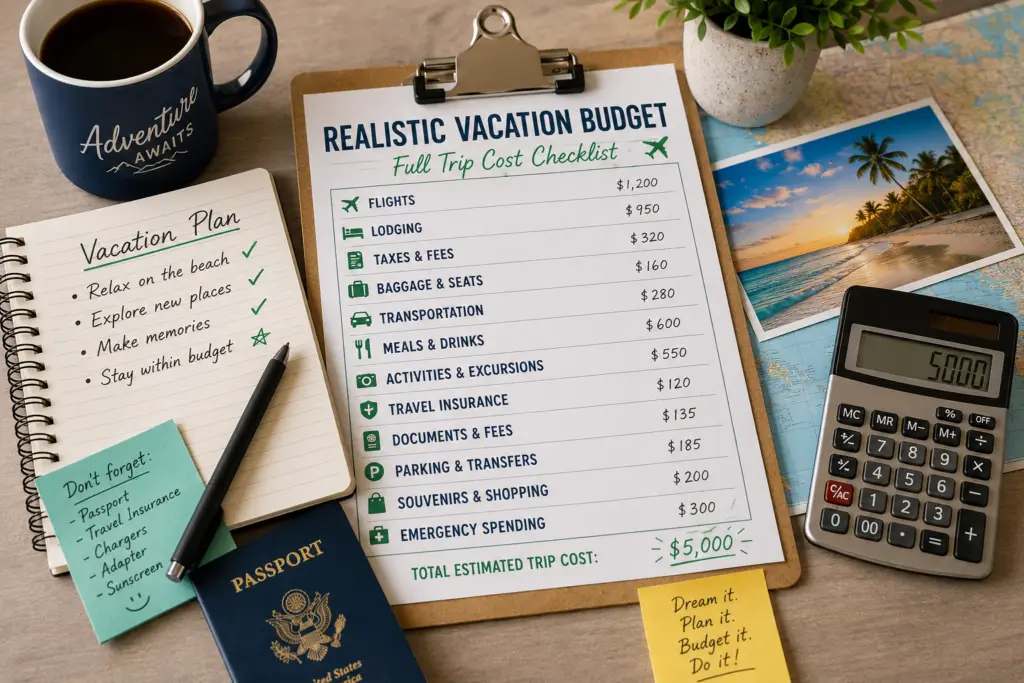
A realistic vacation budget should answer a more useful question than “What is the advertised price?” It should show what the complete trip will likely cost after transportation, accommodations, required fees, meals, activities, preparation, and the expenses that are easy to forget.
This guide is for travelers who want to understand the full cost before committing to a trip. It will help you identify each major expense, compare different vacation styles, and adjust the plan without automatically cutting the experiences that matter most.
Budgeting is one step in the larger planning process. The Ultimate Travel Planning Guide explains how budget, dates, destination, transportation, lodging, documents, and preparation fit together.
The key idea:
A realistic vacation budget is the total amount required to take the trip—not merely the price of the resort, cruise, hotel, flight, or tour that first caught your attention. It should separate required expenses, experience-improving costs, optional extras, and appropriate spending flexibility.
The Three Vacation Prices Travelers Often Confuse
Before calculating anything, separate the advertised starting price from the complete trip cost. Those numbers can be very different.
| Price | What It Means | What May Still Be Missing |
|---|---|---|
| Advertised Starting Price | The base fare, room, cabin, rental, or package used to attract attention. | Taxes, transportation, baggage, seats, gratuities, meals, activities, protection, and upgrades. |
| Booked Reservation Total | The confirmed cost of the room, cruise, flights, taxes, and options included in that reservation. | Parking, transfers, travel-day meals, excursions, pet care, documents, shopping, and emergency flexibility. |
| Complete Trip Cost | The total amount needed to leave home, take the vacation, return, and manage the expenses created by the trip. | Ideally very little, because the full framework has already exposed the major costs. |
Complete Trip Cost Framework
Transportation + accommodations or cruise fare + required fees + daily expenses + activities + preparation and protection + personal extras + emergency spending room = a realistic vacation budget
Define the Trip Before Estimating the Cost
A budget cannot be evaluated in isolation. The same dollar amount may be realistic for one type of vacation and completely mismatched for another.
Before gathering prices, write down:
- The number of adults and children traveling
- Preferred dates and any date flexibility
- The number of nights or travel days
- The departure airport or driving origin
- The destination or type of trip being considered
- The number of rooms, cabins, or rental bedrooms needed
- Transportation needs at the destination
- The three experiences that matter most
- Any mobility, dietary, medical, or sleeping-arrangement needs
Target Budget Versus Maximum Comfortable Budget
It is helpful to establish two numbers.
Your target budget is the amount you would prefer to spend. Your maximum comfortable budget is the amount you could spend without regretting the decision or creating financial stress after the trip.
Those numbers should not be confused with the amount you hope the vacation costs after seeing one attractive advertisement.
A realistic plan may fall below the target, between the two numbers, or require changes to the destination, dates, duration, transportation, accommodations, or activities.
If you are still deciding what kind of vacation fits your travelers, use the guide to choosing the right vacation type before comparing detailed prices.
The Complete Vacation Cost Checklist
Not every vacation will use every expense below. Reviewing each category, however, makes forgotten costs much less likely.
Getting to the Destination
- Airfare or other major transportation
- Checked baggage and carry-on fees
- Seat selection or seating upgrades
- Airport parking
- Rideshare or transportation to the airport
- Pre-flight airport hotel
- Meals and snacks during travel
- Overnight costs created by the schedule
- Fuel and tolls when driving to the airport
Accommodations, Cruise Fare, or Tour Cost
- Hotel, resort, vacation rental, cruise, or tour package
- Taxes and mandatory fees
- Resort fees
- Cleaning or property-management fees
- Port taxes and cruise fees
- Mandatory service charges
- Additional rooms or cabins
- Pre- and post-trip accommodations
- Room, cabin, or view-category upgrades
Transportation During the Trip
- Airport or cruise-port transfers
- Shared or private transportation
- Rental car and rental-car fees
- Fuel, charging, and tolls
- Hotel or destination parking
- Rideshare and taxis
- Public transportation
- Rail, ferries, or inter-island transportation
- Child seats, additional drivers, or specialty vehicle needs
Food, Drinks, and Gratuities
- Meals not included in the reservation
- Alcohol and specialty beverages
- Cruise drink or dining packages
- Specialty restaurants
- Groceries for a vacation rental or road trip
- Airport and travel-day meals
- Room service or delivery fees
- Tips and gratuities
- Food needed during excursions or long transportation days
Activities and Experiences
- Excursions and guided tours
- Theme-park or attraction admission
- Water sports and equipment rental
- National-park or recreation fees
- Entertainment and reserved seating
- Spa services
- Childcare or paid kids’ programs
- Photography or experience packages
- Transportation required to reach an activity
Protection and Preparation
- Travel protection
- Passport applications or renewals
- Passport photos
- Visas or entry fees when required
- International phone or data service
- Foreign transaction or currency-conversion costs
- Luggage, adapters, clothing, or travel supplies
- Required medications or health preparation
- Special equipment for weather or planned activities
Costs That Continue at Home
- Pet boarding or pet sitting
- House sitting
- Childcare before or after the trip
- Lawn, snow, mail, or home care
- Unpaid time away from work
- Prescription refills
- Transportation home after arrival
- Meals immediately before or after travel
- Vehicle storage or additional household arrangements
Personal Spending and Flexibility
- Souvenirs and shopping
- Optional upgrades
- Unplanned meals
- Replacement clothing or personal items
- Extra local transportation
- Unexpected medical needs
- Weather or delay-related expenses
- Emergency spending room
Travel documents and entry requirements should be checked before money is committed. The Travel Documents Checklist explains which names, identification, passport, visa, consent, and destination requirements should be verified.
How to Lower the Cost Without Damaging the Vacation
When the first complete total is too high, the answer is not always to choose the cheapest version of every component. That can preserve the trip on paper while removing the features that made it appealing.
A better approach is to understand which changes affect price, convenience, quality, and the overall experience.
| What You Change | What It May Affect | Question to Ask |
|---|---|---|
| Travel Dates | Airfare, lodging, cruise fare, weather, crowds, school schedules, and activity availability | Are the savings worth the seasonal or scheduling tradeoff? |
| Departure Airport | Fare, drive time, fuel, parking, hotel nights, meals, and the return home | Is the lower fare still cheaper after every airport-related cost? |
| Destination | Flights, transfers, meals, excursions, entry requirements, and transportation | Does the alternative still provide the experience you want? |
| Trip Length | Lodging, meals, parking, rental cars, activities, and usable destination time | Which major costs remain fixed even if the trip becomes shorter? |
| Room or Cabin Category | Space, location, view, noise, convenience, sleeping arrangements, and comfort | Does the upgrade meaningfully improve the trip? |
| Direct Flight or Connection | Price, travel time, delay exposure, missed connections, and family stress | Are the savings large enough to justify the harder travel day? |
| Dining Structure | Upfront price, daily spending, convenience, variety, and predictability | What is actually included, and how much will you use? |
| Transportation Type | Waiting, privacy, luggage handling, flexibility, group comfort, and convenience | Does the cheapest option work for the group and arrival time? |
| Number of Activities | Total cost, schedule, rest time, and the quality of each experience | Which activities are priorities and which are simply available? |
| Peak or Shoulder Season | Price, weather, crowds, closures, wildlife, and operating schedules | Does the lower-cost period still support the reason for the trip? |
Matt’s planning note:
When a budget needs to come down, I prefer to change one meaningful variable at a time. That makes it easier to see whether changing the dates, airport, destination, room, or trip length actually solves the problem.
Cutting a little from every category can create a trip with difficult flights, an inconvenient room, no priority experiences, and too little flexibility. Better value usually comes from protecting what matters most and removing costs that add the least value for those travelers.
How Different Vacation Types Use the Budget
There is no universal percentage formula that works equally well for a Caribbean resort, family cruise, domestic road trip, Alaska vacation, and custom international itinerary. Each trip directs money toward different priorities.
Trip Example One
Caribbean All-Inclusive Resort
- Flights
- Resort package
- Airport transfers
- Travel protection
- Excursions
- Tips and personal spending
An all-inclusive stay can make food and drink spending more predictable, but not every resort includes the same restaurants, activities, transfers, premium beverages, spa services, or off-property experiences.
Review the guide to what all-inclusive resorts include before assuming the package covers the entire trip.
Trip Example Two
Family Cruise
- Cruise fare and required taxes or fees
- Gratuities
- Flights, driving, parking, or transfers
- Pre-cruise hotel
- Dining, drinks, and Wi-Fi
- Shore excursions
- Child-related travel and onboard expenses
Cruise prices can be difficult to compare when one option includes packages that another charges separately. Use Cruise Packages Explained to compare the complete value rather than only the initial fare.
Families flying to the departure port should also budget for arriving before the cruise.
Trip Example Three
Domestic Road Trip
- Lodging
- Fuel or vehicle charging
- Tolls and parking
- Meals
- Attractions and recreation
- Pet care
- Vehicle-related flexibility
A road trip avoids airfare, but fuel, meals, parking, hotel stops, attraction costs, and vehicle expenses can add up quickly. Travelers should also consider whether the driving time reduces usable vacation time.
Trip Example Four
Alaska Vacation
- Cruise fare or land accommodations
- Flights and pre- or post-trip lodging
- Excursions and wildlife experiences
- Rail, rental car, transfers, or regional transportation
- Meals
- Clothing and weather-related equipment
- Travel protection
Alaska often places more budget pressure on transportation and activities than a typical beach trip. A lower-cost cabin or hotel may create room for a priority glacier, wildlife, rail, or flightseeing experience.
Trip Example Five
Custom International Itinerary
- International airfare
- Multiple hotels or accommodations
- Rail, regional flights, ferries, or private transportation
- Meals and guided experiences
- Passports, visas, and entry preparation
- Phone service and currency costs
- Travel protection and emergency flexibility
A custom itinerary may involve several suppliers, currencies, reservation deadlines, and transportation steps. It generally needs more detailed tracking and greater flexibility than a single-property vacation.
Build Your Vacation Budget Step by Step
- Write down the complete trip structure. Record the travelers, dates, departure airport, destination, trip length, accommodations, transportation needs, and top priorities.
- Gather prices for the same trip. Compare options using the same dates, traveler count, room or cabin needs, baggage, transportation, and major inclusions.
- Add fixed costs first. Include flights, lodging, cruise fare, taxes, parking, transfers, documents, and anything required regardless of daily spending.
- Estimate variable costs. Add meals, drinks, transportation, activities, gratuities, shopping, and personal spending.
- Include costs at home. Add pet care, house care, airport transportation, unpaid time away, and other expenses created by being gone.
- Add appropriate spending flexibility. The amount should reflect the trip’s complexity, possible delays, weather exposure, transportation, and your personal comfort level.
- Compare the total with both budget numbers. Determine whether the estimate fits the target budget, maximum comfortable budget, or neither.
- Adjust one meaningful variable at a time. Test different dates, airports, destinations, durations, room categories, flights, and activity plans until the trip and budget fit together.
Timing can influence airfare, accommodations, availability, deposits, and the number of realistic choices. The vacation booking timeline guide can help determine when to begin comparing and reserving the trip.
Vacation Budget Planning Help
Not Sure Whether Your Budget Matches the Trip?
Sehlmeyer Travel can help compare destinations, dates, airports, flights, accommodations, cruises, resort inclusions, transfers, and activities using the complete trip cost—not only the advertised starting price.
The goal is to protect what matters most while removing costs that add the least value for your travelers.
Have a quick question first? You can also contact Sehlmeyer Travel.
What to Adjust First and What to Protect
Every traveler values different things. The following framework can help keep budget cuts focused on lower-priority spending rather than the core purpose of the vacation.
Costs That May Be Easier to Adjust
- Low-priority excursions
- Premium room features you will barely use
- Extra dining or drink upgrades
- More activities than the schedule can comfortably support
- Souvenir and shopping allowances
- Airport choices that do not save money after the full cost is included
- Trip length when the shorter version still feels complete
- Transportation upgrades that do not meaningfully improve the trip
Parts of the Trip Worth Protecting
- The main reason you chose the destination
- A practical room, cabin, or lodging location
- Travel days that work for the family or group
- Essential transportation and accessibility needs
- Enough time to experience the destination
- Accurate documents and entry preparation
- An informed decision about travel protection
- Priority activities that define the trip
Travel protection should not be added or removed based only on price. Coverage, exclusions, limits, time-sensitive provisions, and the traveler’s financial exposure should be reviewed. The Travel Insurance Explained guide provides a more complete overview. The actual policy wording controls coverage and claim decisions.
Common Vacation Budget Mistakes
Comparing Incomplete Prices
One quote may include taxes, bags, transfers, gratuities, dining, or activities while another does not. Compare the same components before deciding which option costs less.
Forgetting the Travel Days
Parking, airport meals, hotel nights, baggage, seats, transfers, fuel, and long connections can materially change the complete cost.
Using an Outdated Price
An old quote, screenshot, social-media post, or remembered price may no longer reflect the available dates, room, cabin, fare, or package.
Ignoring Costs at Home
Pet care, home care, transportation, unpaid time away, and other pre-trip expenses belong in the vacation budget.
Booking Separate Pieces Too Early
Reserving one nonrefundable component before understanding the complete trip may limit better flight, lodging, cruise, or destination choices.
Leaving No Flexibility
A budget that uses every available dollar before departure leaves no room for delays, changes, replacement items, medical needs, or experiences that become important during the trip.
Cutting the Main Reason for the Vacation
Saving money is not helpful if the revised trip no longer provides the beach, activity, location, room setup, family convenience, or experience that made the vacation worthwhile.
Travelers who feel buried in research may benefit from simplifying the decision process first. Read How to Plan a Vacation Without Getting Overwhelmed for a more manageable way to narrow the choices.
Keep Planning the Complete Vacation
- Follow the complete vacation planning process
- Learn when to begin planning and booking
- Use the Family Vacation Planning Checklist
- Plan an all-inclusive resort vacation
- Understand cruise packages and extra costs
- Review passports, identification, visas, and documents
- Understand travel insurance before booking
- Learn how personalized vacation planning works
- Explore the Travel Guide Library
Final Thoughts: Budget for the Vacation You Actually Want
A realistic vacation budget does not require choosing the cheapest destination, flight, room, cabin, or activity. It requires understanding where the money will go and deciding which expenses support the experience your travelers value.
Start with the complete trip cost. Separate required expenses from optional upgrades. Protect the parts of the vacation that matter most, and adjust the variables that add the least value.
The goal is not simply to make the total smaller. It is to create a trip that fits both the travelers and the amount they are genuinely comfortable spending.
This guide provides general vacation-planning information. Prices, taxes, fees, supplier terms, entry requirements, currency costs, insurance provisions, and availability can change. Verify the current details that apply to your travelers, destination, reservations, and policy before making financial or travel decisions.
Frequently Asked Questions About Vacation Budgets
How much should I budget for a vacation?
There is no universal number or percentage that works for every vacation. The realistic amount depends on the travelers, dates, departure point, destination, trip length, accommodations, transportation, activities, and desired level of comfort.
Which vacation costs are most often forgotten?
Commonly missed expenses include baggage, seat selection, airport parking, pre-trip hotels, transfers, resort fees, cruise gratuities, travel-day meals, pet care, phone service, passport expenses, tips, and emergency spending room.
How much emergency money should I include?
The amount should reflect the trip’s complexity, transportation risks, destination costs, access to other funds, and your personal comfort level. A domestic road trip and a multi-country international itinerary do not need the same kind of flexibility.
Is an all-inclusive resort easier to budget?
An all-inclusive resort can make meals, drinks, and resort activities more predictable, but all-inclusive does not mean every possible expense is covered. Flights, transfers, excursions, premium dining, spa services, shopping, tips, and travel protection may still require separate allowances.
Is a cruise less expensive than a resort vacation?
Either option can cost less depending on the dates, travelers, flights, cabin or room, packages, meals, gratuities, transportation, and activities. Compare the complete trip rather than only the cruise fare or resort room price.
Should travel protection be included in the budget?
If you are considering travel protection, include its cost while comparing the trip instead of treating it as an unexpected expense later. Review the policy terms, exclusions, limits, and deadlines before purchasing.
Should passports and travel documents be included in the vacation budget?
Yes. Passport applications, renewals, photographs, visas, authorizations, expedited service, and related transportation can be part of the complete trip cost when they are needed.
Can changing airports lower the vacation cost?
Sometimes, but compare the full airport cost. A lower fare may require additional driving, fuel, tolls, parking, meals, an airport hotel, or a more difficult return trip.
Is the cheapest room or cabin always the best budget choice?
No. A lower category may save money, but location, space, noise, sleeping arrangements, view, mobility, and convenience can materially affect the vacation. Pay for features that improve the trip, not upgrades that will barely be used.
Can a travel advisor help keep a trip within budget?
A travel advisor can help compare destinations, dates, airports, transportation, accommodations, cruise or resort inclusions, and other tradeoffs using the complete trip cost. That can expose expenses that might otherwise be overlooked.