Planning a family vacation can create some of the best memories your family will ever share. It can also feel like a second job before you leave home.
Flights, rooms, meals, school schedules, sports, passports, activities, transportation, packing, budgets, and everyone’s different expectations can pile up quickly.
As a father of two growing children, I understand both sides of family travel. I know how stressful it can feel to coordinate the details, keep everyone comfortable, stay within budget, and still create a vacation that feels special.
I also know why the effort is worth it.
Family travel gives children experiences they cannot get from a screen or textbook alone. They see new places, hear different languages, try unfamiliar food, learn history where it happened, practice patience, and discover that the world is much bigger than their normal routine.
A family vacation does not need to be perfectly stress-free. Weather changes, children get tired, flights can be delayed, and plans sometimes shift. However, much of the avoidable stress can be reduced when the important decisions are made in the right order.
This family vacation planning checklist will help you organize the trip around your actual family—not an unrealistic schedule where everyone has the same energy, interests, appetite, and patience every day.
The goal: Reduce the stress that can be prevented without removing the adventure, excitement, learning, and shared experiences that make family travel valuable.
If your family is still deciding between a cruise, all-inclusive resort, theme park, road trip, beach vacation, or custom itinerary, begin with How to Choose the Right Vacation Type.
Why Family Vacations Are Worth the Work
Children may not remember every restaurant, hotel room, or attraction. They often remember the feeling of the experience.
They remember seeing the ocean for the first time, watching wildlife, ordering food in a new place, riding a train, exploring a national park, standing beside a historic landmark, swimming with their siblings, or staying up later than usual for a show.
Parents remember those moments too.
Travel can also be one of the strongest teachers available to a family. It can teach:
- Curiosity: Children begin asking why places, foods, cultures, and traditions are different.
- Adaptability: Travel rarely follows every part of the original plan.
- Patience: Airports, lines, transportation, and unfamiliar routines require it.
- Confidence: Children learn to navigate new experiences.
- Geography and history: Places become real instead of remaining names on a page.
- Empathy: Families see how other people live, communicate, work, and celebrate.
- Teamwork: Everyone learns that a successful trip requires cooperation.
The planning matters because it creates enough structure for those experiences to happen without every day becoming a battle over exhaustion, meals, transportation, or unrealistic expectations.
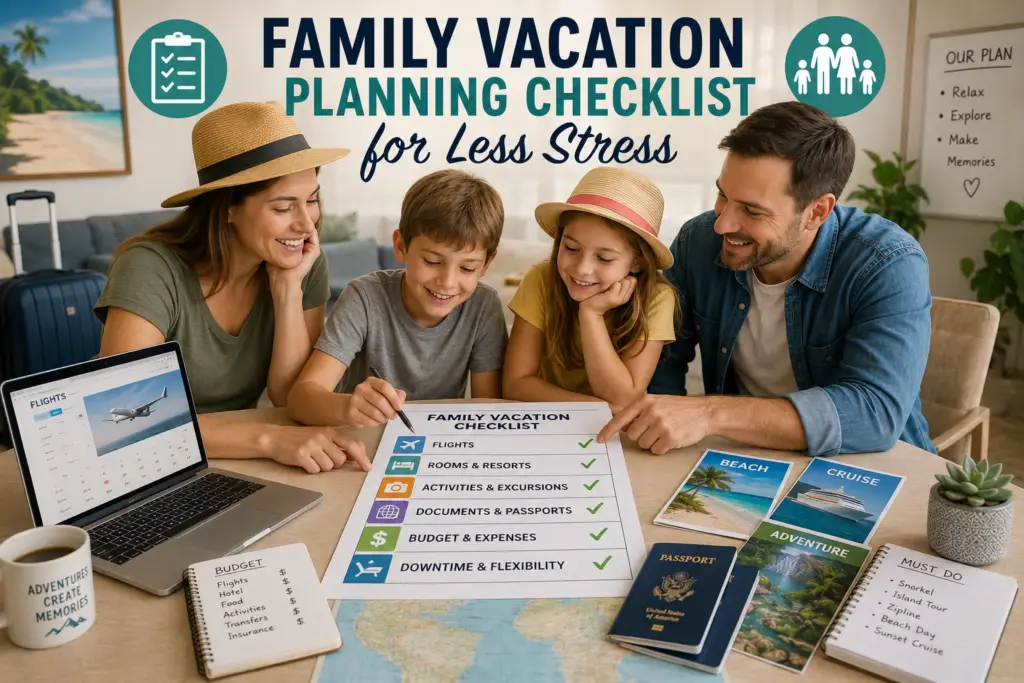
Quick Family Vacation Planning Checklist
Use this overview before researching specific resorts, cruise ships, hotels, or destinations.
| Planning Step | What to Decide | Why It Matters |
|---|---|---|
| Trip Purpose | Relaxation, adventure, education, celebration, family time, or a combination | The purpose helps eliminate trips that look good but do not support the experience you want. |
| Travelers | Ages, interests, mobility, routines, sleeping arrangements, and food needs | A trip must work for the actual family—not just the adults choosing it. |
| Vacation Type | Cruise, resort, beach, theme park, road trip, city, nature, or custom itinerary | Different trip types create different levels of structure, activity, flexibility, and planning. |
| Dates | School, work, sports, holidays, weather, and possible flexibility | Fixed family dates can reduce flight, room, cabin, and destination options. |
| Complete Budget | Transportation, lodging, food, activities, fees, documents, protection, and spending money | The first advertised price rarely represents the entire family vacation. |
| Travel Day | Airport, drive time, flights, connections, baggage, arrival time, and transfers | A difficult travel day can affect the beginning or end of the entire trip. |
| Lodging | Occupancy, beds, bathrooms, location, layout, noise, and family amenities | Sleep, privacy, space, and convenience influence every day of the vacation. |
| Activities | Age limits, interests, physical ability, cost, travel time, and downtime | A packed schedule can produce exhaustion instead of better memories. |
| Documents | Passports, identification, cruise documents, forms, and child-consent considerations | Every traveler—including every child—must have the correct documentation. |
| Final Preparation | Check-in, packing, medications, transportation, reservations, and family expectations | Preparation prevents the final week from becoming unnecessarily chaotic. |
Step 1: Decide What You Want the Family Vacation to Accomplish
Do not begin with a destination.
Begin with the reason you are traveling.
Your family may want to:
- Reconnect after a busy school or work season
- Celebrate a birthday, graduation, or milestone
- Give the children their first international experience
- Relax together without cooking or cleaning
- Explore history, wildlife, culture, or nature
- Spend time with grandparents or extended family
- Experience a cruise, theme park, island, or national park
- Create memories before the children reach another stage of life
This purpose becomes the filter for the rest of the plan.
If the goal is rest, do not build seven exhausting days of early mornings and long excursions. If the goal is adventure, do not choose a property where the family will become restless after the second day.
Ask each family member what would make the trip feel special. Children may provide surprisingly clear answers when the question is simple.
Step 2: Plan for the Family You Have Right Now
Children grow quickly. A vacation that worked two years ago may not fit today.
The planning should reflect your children’s current ages, interests, independence, stamina, and routines.
Families With Babies and Toddlers
Priorities may include:
- Shorter flights or fewer connections
- Cribs and safe sleeping arrangements
- Refrigerator or food-storage needs
- Stroller-friendly layouts
- Car seats or transfer arrangements
- Nap time
- Easy access to meals
- Shorter excursions
- Nearby medical care
The best trip may be the one that reduces transitions and gives parents practical support.
Elementary-Age Children
Children in this age group may value:
- Pools, beaches, slides, and splash areas
- Animals and nature
- Kids clubs
- Interactive museums
- Characters and theme parks
- Shorter tours with visible rewards
- Enough downtime to avoid exhaustion
They may be ready for more adventure while still needing predictable meals, sleep, and breaks.
Tweens and Teenagers
Older children may care more about:
- Wi-Fi and communication
- Sports, water activities, or adventure
- Teen clubs and social spaces
- Food options
- Some independence
- Activities that do not feel designed for small children
- Opportunities to help choose the trip
Giving older children a voice does not mean giving them control of the entire budget. It means involving them enough that the trip feels like a shared family experience.
Step 3: Choose the Right Family Vacation Type
Different vacation types solve different family problems.
| Vacation Type | Why It Can Work for Families | What Requires Attention |
|---|---|---|
| Family Cruise | Dining, entertainment, activities, kids clubs, and several destinations are available without changing hotels. | Ship fit, cabin occupancy, port schedule, packages, flights, and pre-cruise planning. |
| All-Inclusive Resort | Meals, pools, beach time, activities, and entertainment are concentrated in one location. | Room setup, beach conditions, kids-club ages, food, transfer time, and resort atmosphere. |
| Theme Park Vacation | Rides, shows, attractions, and shared entertainment create a clear purpose for the trip. | Walking, crowds, heat, tickets, height rules, transportation, meals, and rest days. |
| Beach or Florida Getaway | Domestic travel can be more flexible and may combine beaches, sports, attractions, or cruising. | Hotel location, rental car, parking, beach access, weather, and daily driving. |
| Nature or Adventure Trip | Wildlife, national parks, Alaska, Hawaii, and Costa Rica can combine education with memorable experiences. | Physical ability, weather, equipment, transportation, tour length, and realistic pacing. |
| Custom Family Itinerary | The trip can be built around specific interests, events, cities, parks, family history, or several destinations. | Flights, hotels, transfers, rental cars, tours, reservation times, and too many hotel changes. |
For family cruise comparisons, use the Family Cruise Guide. Families considering resorts can use the All-Inclusive Resort Planning Guide.
Step 4: Choose Dates and Start Early Enough
Family travel dates are often controlled by school, sports, work, holidays, custody schedules, and summer activities.
That reduces flexibility.
Christmas, New Year’s, spring break, Easter, summer weekends, fall break, and other high-demand periods can affect:
- Flight schedules and prices
- Family suites
- Connecting rooms
- Cruise cabins
- Popular resorts
- Vacation rentals
- Park reservations
- Rental cars
Families often need more specific inventory than two flexible adults. A room must legally accommodate everyone. Flights must work for the children. Activities must match the age range.
Use the guide to When You Should Book a Vacation to match the planning timeline to the trip.
Step 5: Build a Complete Family Vacation Budget
A realistic budget reduces stress before, during, and after the trip.
Include:
- Flights or fuel
- Airport parking
- Baggage and seat selection
- Hotel, resort, rental, or cruise fare
- Taxes and fees
- Transfers or rental car
- Car seats or booster seats
- Meals and drinks not included
- Cruise gratuities or resort fees
- Attractions, tours, and excursions
- Travel documents
- Travel protection
- Snacks, souvenirs, and spending money
- Emergency flexibility
Do not choose a trip based only on the lowest starting price.
A cheaper flight may create an exhausting travel day. A cheaper room may not sleep everyone properly. A cheaper resort may require a longer transfer or offer fewer activities that your children will use.
The best family value is the trip that fits the budget while reducing expensive or frustrating compromises.
Step 6: Plan the Travel Day Around the Children
The travel day is part of the vacation.
Compare the complete experience rather than the airfare alone:
- Drive time to the airport
- Parking and shuttle time
- Departure time
- Number and length of connections
- Seat selection
- Baggage rules
- Meal timing
- Arrival time
- Immigration or customs
- Transfer time after arrival
- How the return schedule affects school or work
For Northwest Ohio families, Detroit, Fort Wayne, Cleveland, Columbus, and Indianapolis may produce different prices and schedules.
The lowest fare from the farthest airport is not automatically the best option after you include driving, parking, fuel, an overnight hotel, or a difficult return.
Family Travel Tip: An extra connection, midnight arrival, or four-hour airport drive may save money on paper while costing the family patience, sleep, and the first day of the vacation.
Step 7: Choose Lodging That Solves Family Problems
Beautiful photos do not tell you whether a room will work for your family.
Before booking, confirm:
- Maximum legal occupancy
- Number and type of beds
- Sofa beds, pull-down beds, or bunks
- Connecting-room availability
- Suite layout
- Number of bathrooms
- Crib or rollaway policies
- Balcony considerations
- Noise and room location
- Distance from elevators, pools, dining, or transportation
- Refrigerator or food-storage needs
- Accessibility and stroller navigation
A larger or better-located room may create more value than a room upgrade based only on the view.
Sleep matters. Privacy matters. A second bathroom may matter more than expected. Those practical details influence every morning and every evening of the trip.
Step 8: Build a Flexible Family Itinerary
One of the fastest ways to make a vacation stressful is to schedule every available minute.
Families need structure, but they also need breathing room.
A practical family rhythm may include:
- One major activity on most days
- Pool, beach, or unstructured time
- A slower day after arrival
- Rest after late evenings
- Meals at reasonable times
- Backup options for rain or extreme heat
- Some activities that are optional
- Permission for family members to separate occasionally
Not everyone needs to do everything.
One parent may take a child snorkeling while another stays with a younger sibling at the pool. Teenagers may enjoy a ship activity while the adults have a quieter meal. Grandparents may skip a long excursion and meet the family later.
That is not a failed family vacation. It is a vacation designed for real people with different energy levels and interests.
Step 9: Plan Meals, Sleep, and Normal Routines
Some of the biggest family conflicts happen when people are hungry, overtired, overheated, or unsure what comes next.
Before traveling, consider:
- Food allergies and dietary restrictions
- Picky eaters
- Restaurant reservation requirements
- Late dining times
- Breakfast availability
- Snacks during travel days
- Nap schedules
- Bedtime differences
- Time-zone changes
- How much recovery time everyone needs
You do not need to preserve every home routine perfectly. However, ignoring every routine can make the vacation harder than necessary.
Step 10: Organize Transportation Before Arrival
Know how the family will move between every major part of the trip.
Confirm:
- Airport-to-hotel or airport-to-resort transfers
- Cruise-port transportation
- Pre-cruise hotel arrangements
- Private versus shared transfers
- Rental-car pickup and return
- Car-seat and booster-seat requirements
- Parking costs
- Toll systems
- Rideshare availability
- Transportation included with excursions
- Luggage capacity
Landing with tired children is not the time to begin figuring out how far the hotel is or whether a vehicle can carry everyone and the luggage.
Step 11: Check Family Travel Documents Early
Every traveler needs the correct documents, including babies and children.
Depending on the trip, review:
- Passports
- Passport expiration dates
- Identification requirements
- Cruise documentation
- Entry forms or travel authorizations
- Visa requirements
- Names matching reservations
- Consent considerations when a child travels with one parent, grandparents, or another adult
- Medical or medication documentation when applicable
Check documents before making major nonrefundable commitments whenever possible.
Requirements can vary by destination, citizenship, itinerary, age, and method of travel. Use the Travel Documents Checklist and confirm current official requirements for the specific trip.
Step 12: Consider Travel Insurance and Supplier Rules
A family vacation may involve more travelers and more prepaid costs. That creates more possible reasons plans could change.
Review:
- Supplier cancellation rules
- Change penalties
- Trip-cancellation coverage
- Trip-interruption coverage
- Travel-delay benefits
- Travel-medical coverage
- Emergency evacuation
- Baggage protection
- Policy exclusions
- Documentation required for a claim
No policy covers every situation. Read the actual terms and understand the difference between a supplier’s cancellation policy and a separate insurance policy.
The guide to Travel Insurance Explained provides a careful overview.
Step 13: Pack for the Actual Family Vacation
Do not pack for every possible event. Pack for the destination, weather, lodging, activities, and transportation.
Family packing may include:
- Travel documents
- Prescription medication
- Essential medical items
- Weather-appropriate clothing
- Comfortable shoes
- Swimwear and sun protection
- Chargers and approved power accessories
- Children’s entertainment for travel days
- Snacks when permitted
- Stroller, car seat, or baby equipment
- Reusable water bottles when practical
- One change of clothes in the carry-on
- Items required immediately after arrival
Keep passports, medication, valuables, and essential items in the carry-on rather than checked luggage.
Families taking a cruise can use the Cruise Packing Guide for embarkation-day and ship-specific planning.
Multigenerational Family Vacations Need More Flexibility
Trips involving grandparents, parents, children, cousins, or extended family can create unforgettable shared memories.
They can also involve different:
- Budgets
- Mobility levels
- Sleeping needs
- Food preferences
- Activity levels
- Departure airports
- Expectations
Set the important expectations before booking.
Clarify:
- Who is financially responsible for each reservation
- Payment deadlines
- Room or cabin arrangements
- Which activities are shared
- Which activities are optional
- How much independent time is acceptable
- Mobility and transportation needs
- How group decisions will be made
Cruises and all-inclusive resorts can work well because they provide a shared home base while allowing different family members to choose different activities.
How to Make Family Travel Educational Without Making It Feel Like School
Travel does not need worksheets or formal lessons to become educational.
Children can learn naturally when they:
- Help locate the destination on a map
- Learn a few words in another language
- Try a local food
- Visit a historic site
- Observe wildlife responsibly
- Learn why the landscape looks different
- Use age-appropriate travel money
- Help navigate an airport or city
- Talk with guides and local residents respectfully
- Keep a journal or select photos from the trip
The experience becomes the lesson.
A child may understand an ecosystem more clearly after seeing a coral reef, glacier, rainforest, desert, or national park. History becomes more memorable when they stand where it happened. Culture becomes real when they experience music, food, architecture, and everyday life outside home.
Common Family Vacation Planning Mistakes
Trying to Create a Perfect Trip
No vacation will satisfy every person every minute. Build a strong plan, but leave room for imperfect moments.
Choosing Only by Price
The cheapest option may create poor flights, inadequate sleeping arrangements, longer transfers, or fewer experiences the family will enjoy.
Planning Too Many Activities
More reservations do not automatically create more memories. Exhausted families often enjoy less of what they paid to experience.
Ignoring the Room Layout
Sleep, privacy, bathrooms, bedding, and room location can affect the entire trip.
Forcing Everyone to Stay Together
Shared family time matters. So does allowing different age groups to enjoy different activities.
Waiting Too Long
Families often require specific dates, rooms, cabins, seats, and amenities. Those options can become limited before the destination sells out completely.
Planning for the Children You Wish You Had
Be honest about stamina, food preferences, patience, swimming ability, mobility, and attention span. The trip should challenge children positively—not make every day a test.
Letting One Parent Carry the Entire Mental Load
Share age-appropriate responsibilities. One adult should not be the only person who knows every confirmation, schedule, document, and deadline.
How Sehlmeyer Travel Helps Families Plan Better Trips
A family vacation has more moving pieces because every choice affects several people.
Matt can help families compare:
- Vacation types and destinations
- Family cruises and cruise ships
- All-inclusive resorts
- Room and cabin arrangements
- Flights and departure airports
- Transfers and transportation
- Activities and realistic pacing
- Package inclusions and expected extras
- Travel-protection options
- Important preparation steps
As a father, Matt understands that the best family vacation is not always the flashiest trip or the one with the longest activity list.
It is the trip that gives parents fewer avoidable problems, gives children experiences that match their ages, and gives the entire family enough space to enjoy being together.
The goal is not to remove the adventure. It is to organize the important details so the family can focus more energy on the experience.
To see how the full planning process works, read Personalized Vacation Planning With Sehlmeyer Travel.
Make the Memories, Not the Planning Stress
Build a Family Vacation Around Your Real Family
Share your travelers, dates, departure airport, budget range, interests, room needs, and concerns. Sehlmeyer Travel can help narrow the family cruises, resorts, destinations, and custom trips that make sense.
Have a quick question first? You can also contact Sehlmeyer Travel.
Final Family Vacation Preparation Timeline
One Month Before Travel
- Review names, dates, reservations, and payment status.
- Confirm passports and required documents.
- Review flights, baggage, seats, and transfers.
- Confirm important tours and dining.
- Review medication and medical needs.
- Begin the destination-specific packing list.
One Week Before Travel
- Check the weather.
- Complete required online check-in steps.
- Download supplier and airline apps.
- Confirm airport transportation or parking.
- Prepare travel documents and copies.
- Discuss the basic schedule with the children.
- Assign age-appropriate family responsibilities.
The Day Before Travel
- Charge devices.
- Pack medications and documents in carry-on bags.
- Confirm flight status and departure time.
- Confirm passports and identification one final time.
- Prepare snacks and travel-day entertainment.
- Set realistic expectations for the first day.
- Get as much sleep as the excitement allows.
Explore More Family Travel Guides
- Family Cruise Guide
- Best Caribbean Islands for Families
- Best Mexico and Central America Destinations for Families
- All-Inclusive Resort Planning Guide
- When Should You Book a Vacation?
- Travel Guide Library
Final Thoughts on Family Vacation Planning
Family vacations can be stressful because families are complicated.
Different ages, routines, budgets, personalities, and expectations all travel together. That does not make family travel a bad idea. It makes thoughtful planning more important.
The goal is not to remove every surprise or build a vacation where no child becomes tired and no plan ever changes.
The goal is to reduce the avoidable stress:
- The wrong room
- The impossible schedule
- The overlooked transfer
- The missing document
- The unrealistic budget
- The overloaded itinerary
- The vacation chosen for a family different from your own
When those details fit, the family has more room to explore, learn, laugh, rest, and make memories together.
Your children will continue growing. The kind of trip that fits them will continue changing.
That is one of the reasons family travel matters so much. You are not only visiting a destination. You are experiencing a stage of life together that will not remain exactly the same forever.
Frequently Asked Questions About Family Vacation Planning
How far ahead should a family plan a vacation?
Many major family vacations benefit from 6 to 12 months of planning. Begin earlier for school breaks, holidays, Alaska, Hawaii, cruises, groups, connecting rooms, family suites, and specific resorts or cabins.
What is the easiest type of family vacation?
Cruises and all-inclusive resorts can reduce daily decisions because lodging, dining, activities, and entertainment are concentrated in one experience. The easiest option still depends on the children’s ages, travel time, room setup, and family interests.
How can I make a family vacation less stressful?
Choose the trip around your actual family, plan the travel days carefully, confirm the room setup, leave downtime in the itinerary, prepare documents early, and avoid trying to schedule every minute.
How many activities should a family schedule each day?
One major activity per day is a practical starting point for many families. Younger children, hot destinations, long travel times, and late nights may require even more downtime.
Should children help choose the vacation?
Children can help identify activities and experiences that interest them. Parents should still control the budget, safety, logistics, and final decision. Involvement often helps older children feel more invested in the trip.
Are cruises good for multigenerational family vacations?
Cruises can work well because several generations share one home base while choosing activities that match their interests and energy levels. Cabin arrangements, mobility, dining, port activities, and flight planning still require careful comparison.
Are all-inclusive resorts good for families?
They can be. Compare the room occupancy, beach, pools, food, kids clubs, teen activities, resort size, transfer time, and what is actually included before choosing a property.
What should families compare before booking flights?
Compare total travel time, airport drive, departure time, connections, baggage, seating, arrival time, transfer length, parking, and how the schedule works for the children.
Do children need passports?
Children generally need passports for international air travel. Cruise and land-border documentation can vary. Check the official requirements for the exact itinerary, citizenship, age, and method of travel before booking.
How can travel teach children?
Travel can make geography, history, nature, culture, language, food, adaptability, patience, and empathy more tangible. The lessons often happen naturally through the experience rather than through formal instruction.
How can Sehlmeyer Travel help plan a family vacation?
Matt can help compare destinations, resorts, cruises, flights, rooms, cabins, transfers, activities, package inclusions, timing, protection options, and preparation steps around the needs of the actual family.