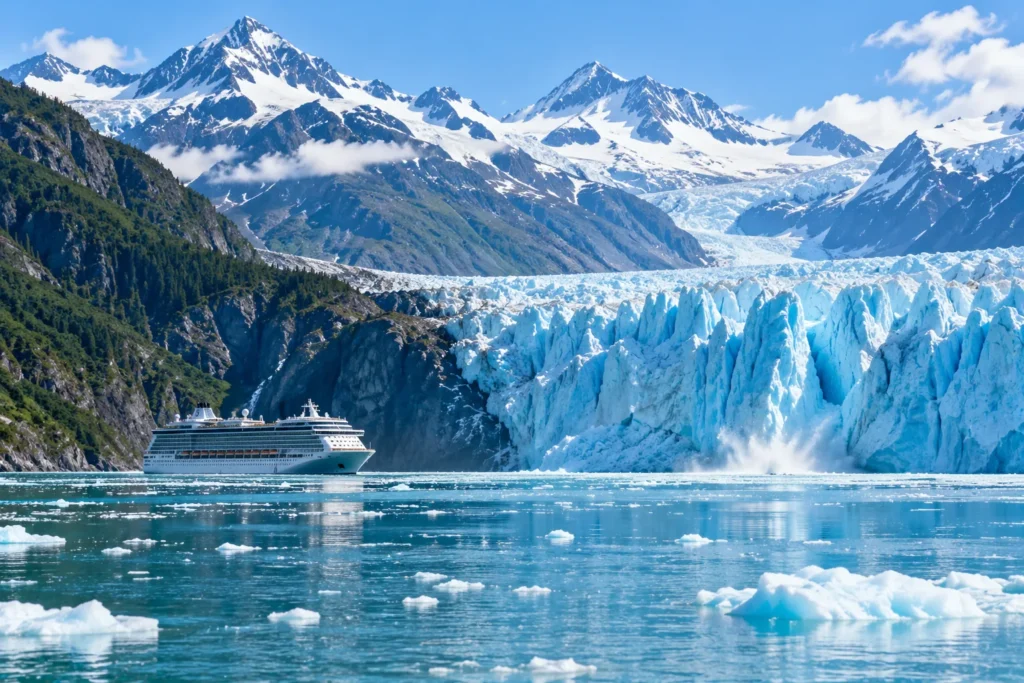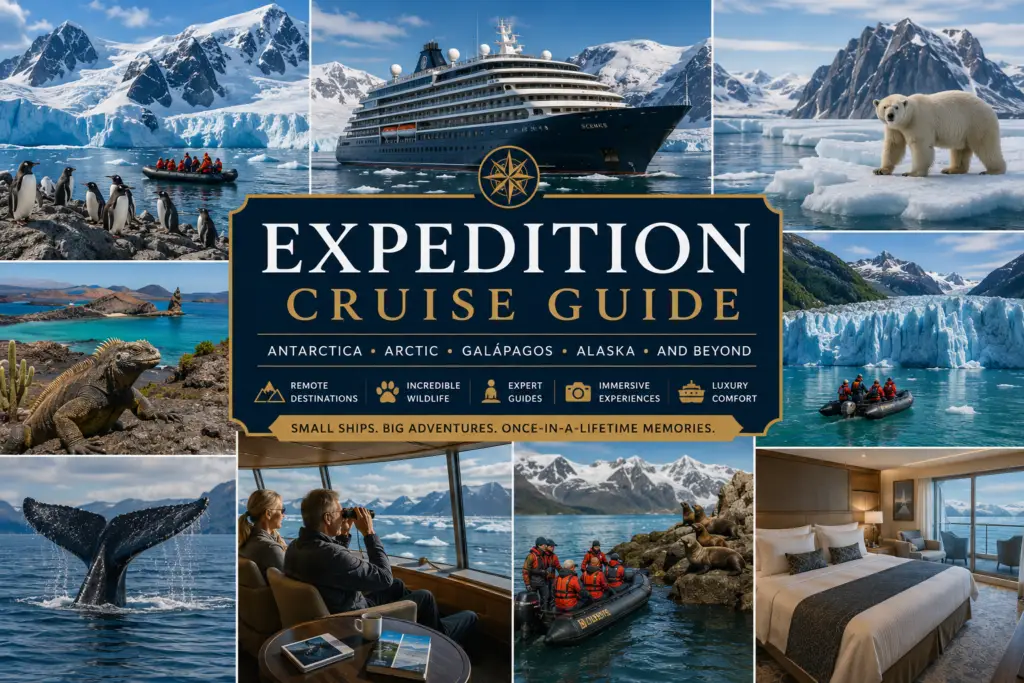
An expedition cruise is not a normal cruise with a more adventurous name. It is a completely different style of travel. Instead of focusing on large ship entertainment, pool decks, nightlife, and packed port schedules, expedition cruises are built around remote destinations, wildlife, expert guides, Zodiac boats, flexible itineraries, and experiences that are often difficult to reach any other way.
For the right traveler, an expedition cruise can be one of the most memorable trips of a lifetime. Antarctica, the Arctic, the Galápagos Islands, Alaska, Greenland, Svalbard, South Georgia, the Kimberley, and other remote regions are not casual vacations. They are bucket-list trips that need careful planning.
This expedition cruise guide will help you understand what expedition cruising is, who it is best for, how it compares to traditional cruising, which destinations to consider, what cruise lines to compare, and what planning mistakes to avoid before investing in this kind of trip.
What Is an Expedition Cruise?
An expedition cruise is a small-ship or purpose-built cruise focused on exploration, nature, wildlife, education, and access to remote destinations. These cruises often use expedition teams, naturalists, scientists, historians, photographers, marine biologists, geologists, and local experts to help travelers understand what they are seeing.
Instead of a traditional cruise director announcing bingo, production shows, and pool games, an expedition cruise may include wildlife briefings, geology talks, photography workshops, Zodiac landings, kayak outings, science programming, cultural visits, and flexible route planning based on weather and conditions.
The ship matters, but the destination and expedition team matter even more. On many expedition cruises, the most important moments happen off the ship: stepping onto Antarctic ice, watching penguins, cruising by Zodiac near glaciers, snorkeling with sea lions in the Galápagos, seeing polar landscapes in the Arctic, or exploring remote coves in Alaska.
Quick Verdict: Who Should Consider an Expedition Cruise?
Expedition cruises are incredible for the right traveler and a poor fit for the wrong traveler. This is not the category to book casually because the investment can be significant and the experience is different from a normal cruise.
| Traveler Type | Fit | Why |
|---|---|---|
| Bucket-List Travelers | Excellent | Antarctica, the Arctic, Galápagos, and remote Alaska are once-in-a-lifetime style destinations. |
| Wildlife Lovers | Excellent | Expedition cruises are often built around animals, ecosystems, and natural habitats. |
| Active Mature Travelers | Very Good | Many trips work well for retirees and mature travelers who are curious, mobile, and comfortable with adventure. |
| Luxury Travelers | Very Good | Luxury expedition lines combine remote access with suites, service, dining, and elevated onboard comfort. |
| Families With Young Kids | Usually Not Ideal | Most expedition cruises are not designed around kids clubs, waterparks, or flexible family entertainment. |
| Travelers Wanting a Relaxed Resort Vacation | Not the Best Fit | Expedition trips can involve early mornings, weather changes, rough seas, landings, gear, and flexible plans. |
Expedition Cruise vs. Traditional Cruise
The biggest mistake travelers make is assuming an expedition cruise will feel like a normal cruise with more scenery. It will not.
A traditional cruise usually focuses on the ship experience: restaurants, entertainment, pools, lounges, nightlife, shopping, casinos, family activities, and scheduled port stops. That can be great for the right trip.
An expedition cruise focuses more on the destination. The ship still matters, especially on higher-end expedition lines, but the main reason to go is what you can experience off the ship and what the expedition team helps you understand.
Traditional Cruises Usually Focus On:
- Large ship amenities
- Entertainment and nightlife
- Family activities
- Multiple restaurants and lounges
- Popular cruise ports
- Beach days, shopping, and organized shore excursions
Expedition Cruises Usually Focus On:
- Remote destinations
- Wildlife and landscapes
- Expert guides and enrichment
- Zodiac rides and landings
- Flexible routes based on conditions
- Smaller ships and fewer passengers
- Nature, science, photography, and cultural understanding
If you want a cruise that feels easy, familiar, and entertainment-heavy, a traditional cruise may be a better fit. If you want a trip that feels rare, educational, rugged, scenic, and deeply connected to place, expedition cruising may be the better lane.
For broader cruise planning context, read Why Take a Cruise? and Cruise Line Guide.
Best Expedition Cruise Destinations
The best expedition cruise depends heavily on the destination. Antarctica, the Arctic, Galápagos, Alaska, and the Kimberley all offer very different experiences.
Antarctica Expedition Cruises
Antarctica is the classic expedition cruise dream. It is remote, dramatic, expensive, weather-dependent, and completely unlike a normal cruise destination.
Most Antarctica cruises operate from South America, usually through Ushuaia, Argentina, though some itineraries use fly-cruise options that reduce or avoid part of the Drake Passage crossing. The experience may include penguins, seals, whales, icebergs, glaciers, Zodiac landings, photography, and lectures from polar experts.
Antarctica Is Best For:
- True bucket-list travelers
- Wildlife and photography lovers
- Active retirees and adventurous couples
- Travelers comfortable with changing weather
- Luxury travelers who want something rare
- People who understand this is an expedition, not a beach vacation
Antarctica Planning Notes
- The season is generally during the Southern Hemisphere summer.
- Sea conditions can be rough, especially when crossing the Drake Passage.
- Landing rules, weather, ice, and wildlife conditions can affect the daily plan.
- Smaller ships can matter because of landing logistics.
- Good travel insurance is extremely important.
- Medical and mobility considerations should be reviewed before booking.
Antarctica is not the kind of trip to book based only on price. Ship size, expedition team, landing opportunities, gear, itinerary length, routing, included flights, pre-cruise hotels, and cancellation protection all matter.
Arctic Expedition Cruises
Arctic expedition cruises can include destinations such as Svalbard, Greenland, Iceland, Arctic Canada, the Northwest Passage, and remote northern regions. These trips are very different from Antarctica because they may include indigenous communities, polar bears, Arctic wildlife, glaciers, fjords, remote settlements, and rugged cultural history.
The Arctic can feel more varied than Antarctica because there may be a mix of wildlife, communities, history, landscapes, and polar exploration themes.
Arctic Cruises Are Best For:
- Polar travelers who want something different from Antarctica
- Wildlife lovers hoping for Arctic species
- Travelers interested in Greenland, Svalbard, Iceland, or the Northwest Passage
- Adventure-minded mature travelers
- Guests who value culture and remote communities
- Photographers and scenery-focused travelers
Arctic Planning Notes
- Wildlife sightings are never guaranteed.
- Routes can change because of ice and weather.
- Some itineraries are more culturally focused, while others are more wildlife-focused.
- The Arctic can involve remote logistics and longer travel days.
- Gear, layers, and waterproof clothing matter.
Arctic cruising is a strong fit for travelers who want wilderness, but it is especially important to match the itinerary to your goals. A Greenland cruise, Svalbard cruise, and Northwest Passage cruise are not interchangeable.
Galápagos Expedition Cruises
The Galápagos Islands are one of the best expedition cruise choices for travelers who want wildlife, nature, and education without needing polar conditions. This destination is ideal for travelers who want close wildlife encounters, volcanic landscapes, snorkeling, naturalist guides, and a protected island experience.
A Galápagos expedition cruise is usually more active than a beach vacation but less extreme than Antarctica or the Arctic. It can work well for couples, families with older kids, active retirees, wildlife lovers, and travelers who want a once-in-a-lifetime nature trip.
Galápagos Cruises Are Best For:
- Wildlife lovers
- Active retirees
- Families with older kids or teens
- Nature-focused couples
- Travelers who enjoy snorkeling and walking
- People who want an educational trip, not a resort vacation
Galápagos Planning Notes
- Ship size and itinerary route matter because island access is regulated.
- Naturalist guides are a major part of the experience.
- Snorkeling, walking, and tender or Zodiac-style transfers may be part of the trip.
- Travelers should compare eastern, western, northern, and southern island routes.
- Pre- and post-cruise nights in Ecuador may be needed.
The Galápagos is a very good expedition cruise for travelers who want something wild and special but do not want polar weather or a long Antarctic-style journey.
Alaska Expedition Cruises
Alaska expedition cruises are different from mainstream Alaska cruises. Instead of focusing mainly on larger ports like Juneau, Ketchikan, and Skagway, Alaska expedition cruises often use smaller ships to explore quieter waterways, wildlife areas, glaciers, fjords, remote coves, and nature-focused routes.
This can be an excellent choice for travelers who want Alaska to feel deeper, more personal, and less crowded.
Alaska Expedition Cruises Are Best For:
- Wildlife lovers
- Active retirees
- Couples wanting a deeper Alaska experience
- Travelers who prefer small ships
- Guests who want kayaking, hiking, skiffs, and remote scenery
- People comparing Alaska cruise versus land tour options
Alaska Expedition Planning Notes
- These trips usually have fewer passengers than large Alaska cruise ships.
- They may include more active excursions and nature-based activities.
- Cabins and amenities can vary widely by operator.
- They may cost more than mainstream Alaska cruises.
- They are often better for travelers who value access over entertainment.
For broader Alaska planning, read the Ultimate Alaska Travel Guide, Alaskan Cruise Guide, and Alaska Cruise vs Land Tour.
South Georgia and Falkland Islands Expedition Cruises
South Georgia and the Falkland Islands are often paired with Antarctica on longer expedition cruises. These itineraries can be exceptional for serious wildlife travelers, especially those interested in king penguins, seabirds, remote islands, polar history, and dramatic landscapes.
These trips are usually longer and more expensive than a basic Antarctica itinerary, but they can be extraordinary for travelers who want a deeper expedition experience.
South Georgia and Falklands Are Best For:
- Serious wildlife travelers
- Photography-focused travelers
- Travelers who want more than the standard Antarctica route
- People interested in polar history
- Guests comfortable with longer itineraries and sea days
This is usually not where I would start for a casual first expedition cruise, but for the right traveler, it can be one of the most rewarding polar routes.
Kimberley Expedition Cruises
The Kimberley region in Australia is a remote expedition cruise destination known for rugged coastlines, dramatic cliffs, waterfalls, Aboriginal culture, tidal phenomena, wildlife, and wilderness landscapes.
This is a strong fit for travelers who want a warm-weather expedition cruise that is not polar and not Galápagos. It can appeal to luxury travelers, nature lovers, and people who have already done more common bucket-list trips.
The Kimberley Is Best For:
- Experienced travelers
- Luxury expedition travelers
- Guests interested in Australia beyond the major cities
- Travelers who want remote coastlines and cultural depth
- People who prefer warm-weather expedition travel
Expedition Cruise Lines to Compare
There are more expedition cruise lines than most travelers realize, and they do not all serve the same type of guest. Some are luxury-first. Some are science-first. Some are polar specialists. Some are more active. Some are better for travelers who want comfort, while others are better for travelers who want rugged immersion.
Silversea Expeditions
Silversea is one of the strongest names for travelers who want luxury expedition cruising. It can be a good fit for Antarctica, the Arctic, Galápagos, the Kimberley, and other remote destinations where travelers want expert-led exploration with elevated onboard comfort.
Silversea Is Best For:
- Luxury expedition travelers
- Couples and active mature travelers
- Antarctica, Arctic, Galápagos, and Kimberley trips
- Travelers who want comfort without giving up destination depth
- Guests comparing expedition cruising with luxury ocean cruising
Lindblad Expeditions / National Geographic
Lindblad Expeditions, in partnership with National Geographic, is one of the most recognized expedition names for travelers who care about education, photography, naturalists, science, and destination interpretation.
This can be a strong fit for travelers who want the expedition team to be a major part of the trip. The ship is important, but the guide quality, lectures, wildlife knowledge, and photography support are often central to the experience.
Lindblad Is Best For:
- Education-focused travelers
- Wildlife and photography lovers
- Galápagos and polar travelers
- Families with older kids interested in nature
- Travelers who value expert interpretation over luxury polish
Quark Expeditions
Quark Expeditions is a polar specialist and is especially relevant for travelers focused on Antarctica, the Arctic, Svalbard, Greenland, and other polar regions.
Quark can be a good comparison for travelers who want a serious expedition feel, strong polar experience, and ships designed around remote exploration.
Quark Is Best For:
- Polar-focused travelers
- Antarctica and Arctic expedition guests
- Adventure-minded travelers
- People who want a more expedition-forward product
- Travelers comparing polar specialists rather than mainstream cruise lines
Ponant
Ponant offers small-ship expedition cruising with a French-inspired luxury style. It can be a good fit for travelers who want remote destinations, culture, nature, and a more European onboard atmosphere.
Ponant is especially worth comparing for Antarctica, the Arctic, French Polynesia, the Kimberley, and other expedition-style regions.
Ponant Is Best For:
- Luxury small-ship travelers
- Guests who like a European atmosphere
- Antarctica, Arctic, and remote cultural itineraries
- Couples and experienced travelers
- Travelers who want boutique expedition cruising
Seabourn Expedition
Seabourn’s expedition ships are a strong fit for travelers who want ultra-luxury service combined with expedition-style destinations. The line can appeal to guests who like the idea of Antarctica, the Arctic, or remote exploration but still want a highly polished onboard environment.
Seabourn Expedition Is Best For:
- Ultra-luxury travelers
- Couples and mature travelers
- Guests who want refined service and adventure together
- Travelers comparing Silversea, Seabourn, Scenic, and Ponant
- People who want expedition cruising without feeling rugged onboard
Viking Expeditions
Viking Expeditions can be a good fit for adults who like Viking’s calm, organized, enrichment-focused style but want expedition destinations such as Antarctica, the Arctic, the Great Lakes, or other nature-rich regions.
Viking Expeditions Is Best For:
- Adults who like Viking’s quiet atmosphere
- Travelers who want enrichment and science programming
- Retirees and mature travelers
- Guests who prefer organized, thoughtful travel
- Travelers considering Antarctica, Great Lakes, or Arctic-style itineraries
For broader Viking planning, read the Viking Cruise Line Guide.
Scenic Eclipse
Scenic Eclipse sits in the ultra-luxury expedition category. It is best for travelers who want high-end suites, polished service, advanced expedition equipment, and remote destinations with a luxury onboard feel.
Scenic Eclipse Is Best For:
- High-end luxury expedition travelers
- Guests who want an elevated onboard experience
- Travelers comparing Antarctica, Arctic, and remote ocean expeditions
- Couples looking for a major bucket-list trip
- Travelers who want expedition access with luxury design
HX Expeditions
HX Expeditions, formerly associated with Hurtigruten Expeditions, is a long-standing expedition brand with a strong focus on polar travel, sustainability, science, and exploration.
HX Is Best For:
- Antarctica and Arctic travelers
- Guests who want a science and sustainability angle
- Adventure-minded travelers
- Travelers who want expedition-first programming
- People comparing polar-focused operators
Atlas Ocean Voyages
Atlas Ocean Voyages can be worth comparing for travelers who want a smaller luxury expedition-style ship, especially in Antarctica and other adventure-focused regions.
Atlas Is Best For:
- Travelers comparing smaller luxury expedition ships
- Antarctica travelers
- Guests who want a more boutique ship feel
- Couples and mature travelers
- Travelers who want comfort and expedition access
Expedition Cruise Line Matchmaker
Here is a practical way to narrow your options based on travel style.
| If You Want… | Start By Comparing… | Why |
|---|---|---|
| Luxury expedition comfort | Silversea, Seabourn, Scenic, Ponant | Strong for travelers who want remote destinations with polished service and elevated onboard comfort. |
| Education, science, and photography | Lindblad / National Geographic | Excellent for travelers who value expert interpretation and naturalist-led experiences. |
| Polar specialist focus | Quark, HX, Ponant, Silversea | Good for Antarctica, Arctic, Greenland, Svalbard, and other serious polar routes. |
| Adult-focused enrichment | Viking Expeditions | A good fit for mature travelers who like calm ships, lectures, science, and organized travel. |
| A less extreme first expedition | Galápagos or Alaska small-ship cruises | Great for travelers who want wildlife and nature without starting with polar conditions. |
Ship Size Matters More Than Most Travelers Realize
Ship size can make or break an expedition cruise. This is especially true in Antarctica, where landing rules and passenger counts matter.
Smaller ships may allow a more intimate experience and smoother landing rotation. Larger ships may offer more amenities, but in some destinations they may have more limits on landings or require passengers to rotate more often.
Questions to Ask About Ship Size
- How many guests are onboard?
- Can the ship make landings in the destination?
- How many passengers can be ashore at one time?
- How many Zodiacs or landing craft does the ship carry?
- How large is the expedition team?
- How are landings organized?
- Are there enough guides for the activities being offered?
A beautiful ship is not enough. The real question is whether the ship is built for the kind of expedition experience you expect.
Luxury Expedition Cruise vs. Rugged Expedition Cruise
Expedition cruises range from comfortable and rugged to ultra-luxury. Neither is automatically better. They simply serve different travelers.
A rugged expedition cruise may focus more on access, science, wildlife, and adventure with simpler onboard amenities. A luxury expedition cruise may add spacious suites, fine dining, butler-style service, spa areas, premium lounges, and more polished design.
Choose Luxury Expedition If You Want:
- Better suites and onboard comfort
- Elevated dining and service
- A more polished ship atmosphere
- Luxury touches between landings
- A bucket-list trip that still feels comfortable
Choose Rugged Expedition If You Want:
- Maximum destination focus
- A science or adventure-first feel
- Less concern about luxury amenities
- A more casual onboard environment
- Potentially stronger value depending on route
For a broader luxury comparison, read the Luxury Cruise Lines Guide and Luxury Travel Guide.
Are Expedition Cruises Good for Retirees?
Yes, expedition cruises can be excellent for retirees and mature travelers, but only when mobility, medical needs, stamina, ship design, and excursion intensity are reviewed carefully.
Many expedition travelers are retirees who finally have the time and budget to take a bucket-list trip. But these trips can include uneven terrain, wet landings, Zodiac boarding, stairs, early mornings, cold weather, heat, humidity, snorkeling, hiking, and changing conditions.
Expedition Cruises Are Best for Retirees Who:
- Are curious and destination-focused
- Have reasonable mobility for the chosen itinerary
- Understand plans may change because of weather
- Enjoy learning from guides and experts
- Value wildlife, scenery, and rare destinations
- Are comfortable investing in a high-value trip
Retirees Should Be Careful If:
- They have significant mobility limitations
- They are uncomfortable boarding Zodiacs or tenders
- They need predictable, low-effort travel days
- They expect a traditional cruise atmosphere
- They do not like cold, heat, rough seas, or flexible schedules
For cruise planning specific to mature travelers, read the Best Cruise Lines for Retirees and Mature Travelers.
Are Expedition Cruises Good for Families?
Expedition cruises can work for some families, but they are usually better for older kids, teens, and families who truly enjoy nature, learning, and active travel.
The Galápagos can be a strong family expedition option. Alaska small-ship trips can also work well for active families. Antarctica and Arctic trips are usually better for older teens or families who already know they enjoy adventure travel.
Families Should Ask:
- What is the minimum age?
- Are there family-focused departures?
- Will kids enjoy lectures and nature-based activities?
- Are excursions physically appropriate?
- Are cabins suitable for family arrangements?
- Is the trip worth the cost for the child’s age and interests?
If the kids need waterslides, kids clubs, arcades, and constant entertainment, a traditional family cruise will probably be better. Start with the Best Family Cruises guide instead.
What Activities Happen on an Expedition Cruise?
Activities vary by destination and operator. Always check the exact sailing because not every activity is available on every route.
Common Expedition Cruise Activities
- Zodiac cruising
- Wildlife viewing
- Guided hikes
- Kayaking
- Snorkeling in warmer destinations
- Photography walks or workshops
- Lectures from naturalists and scientists
- Visits to remote communities
- Beach or shore landings
- Citizen science programs on some ships
Premium or Optional Activities May Include:
- Helicopter flights
- Submersible dives
- Camping in Antarctica
- Special photography programs
- Advanced kayaking programs
- Small-group specialty excursions
Do not assume premium activities are included. Some may cost extra, have limited capacity, require medical clearance, or depend heavily on weather.
How Much Do Expedition Cruises Cost?
Expedition cruises are usually more expensive than mainstream cruises because ships are smaller, routes are remote, logistics are more complicated, expert staffing is higher, and capacity is limited.
Pricing depends on destination, cruise line, ship, cabin, season, itinerary length, inclusions, flights, pre-cruise hotels, insurance, and optional activities.
Costs to Compare
- Cruise fare
- Cabin or suite category
- Charter or internal flights
- International airfare
- Pre- and post-cruise hotels
- Transfers
- Gear rental or included gear
- Travel insurance
- Optional activities
- Gratuities and onboard expenses
The right comparison is not just the lowest fare. It is total trip value, total risk, and whether the experience matches the reason you are going.
Best Time to Book an Expedition Cruise
Expedition cruises should usually be planned early, especially for Antarctica, Galápagos, Arctic, luxury expedition ships, popular suites, solo cabins, and specialty routes.
Small ships mean fewer cabins. If you wait too long, the best cabin locations, preferred dates, and most desirable itineraries may be gone.
Book Early For:
- Antarctica
- Galápagos
- Arctic and Svalbard
- Greenland
- South Georgia and Falklands
- Luxury expedition suites
- Solo space
- Holiday or peak wildlife timing
- Trips needing complicated flight planning
For broader timing advice, read When Should You Book a Vacation?.
What to Pack for an Expedition Cruise
Packing depends heavily on the destination. Antarctica and the Arctic require very different clothing than the Galápagos or the Kimberley.
General Expedition Packing Items
- Comfortable base layers
- Waterproof outer layer
- Good walking shoes or hiking shoes
- Sun protection
- Binoculars
- Camera or phone with extra storage
- Backup battery
- Motion sickness support if needed
- Medications in your carry-on
- Travel documents and insurance information
Polar Cruise Packing Notes
- Layering is essential.
- Waterproof pants are often important.
- Some cruise lines provide parkas or boots, but policies vary.
- Gloves, hats, neck gaiters, and wool socks matter.
- Camera protection and waterproof bags can be useful.
Warm-Weather Expedition Packing Notes
- Lightweight breathable clothing is important.
- Reef-safe sunscreen may be required or recommended.
- Water shoes or sturdy sandals may help for landings.
- Snorkeling gear may be provided, but confirm before packing.
- Sun hats and bug protection can matter depending on region.
For a broader cruise packing foundation, read the Cruise Packing Guide.
Travel Insurance for Expedition Cruises
Travel insurance is not an afterthought for expedition cruises. It should be part of the planning conversation from the beginning.
These trips can involve expensive deposits, remote destinations, medical concerns, charter flights, weather delays, strict cancellation terms, and complicated logistics. Some operators may also require certain medical forms or insurance coverage depending on destination.
Review Coverage For:
- Trip cancellation
- Trip interruption
- Emergency medical care
- Emergency evacuation
- Missed connections
- Travel delays
- Pre-existing condition terms
- Adventure activity exclusions
- Weather or expedition-related disruptions
Before booking, review Travel Insurance Explained.
Travel Documents and Medical Requirements
Expedition cruises can involve more paperwork than a standard cruise. Passports, visas, health forms, park permits, medical forms, vaccination guidance, and special entry requirements may all apply depending on destination.
Before Booking, Confirm:
- Passport validity
- Visa or entry requirements
- Required medical forms
- Vaccination or health guidance
- Travel insurance requirements
- Emergency contact information
- Gear requirements
- Fitness or mobility expectations
For a simple starting point, read the Travel Documents Checklist.
Planning Mistakes to Avoid
Expedition cruises are too expensive and too special to plan casually. These are the biggest mistakes to avoid.
Choosing Based Only on Price
The cheapest expedition cruise may not be the best value if it has fewer landings, weaker guides, poorer routing, less included gear, fewer activities, or a ship that does not fit your expectations.
Ignoring Ship Size
Ship size affects landings, atmosphere, activity rotation, and the overall feel of the expedition. Smaller ships often create a more personal experience, especially in polar regions.
Assuming Landings Are Guaranteed
Expedition cruising depends on weather, ice, wildlife, sea conditions, permits, and safety. Plans can change. That flexibility is part of expedition travel.
Underestimating Physical Demands
You do not need to be an elite athlete, but you should understand the mobility requirements. Zodiac boarding, uneven landings, stairs, wet terrain, heat, cold, and long days can matter.
Skipping Pre- and Post-Cruise Planning
Many expedition cruises require long flights, overnight connections, charter flights, or hotel stays before and after the cruise. The cruise is only one piece of the total trip.
Not Matching the Destination to the Traveler
Antarctica, Galápagos, Arctic, Alaska, and the Kimberley are all very different. Do not choose the most famous destination if another one fits your style better.
Waiting Too Long
Expedition ships are small. The best cabins, best dates, and best routes can sell early. Waiting can limit your options quickly.
Need Help Planning an Expedition Cruise?
Expedition cruises are not one-size-fits-all. Antarctica, the Arctic, Galápagos, Alaska, and other remote destinations each require a different planning approach.
Sehlmeyer Travel can help you compare expedition cruise lines, ship size, cabin options, mobility needs, flights, hotels, insurance, gear, timing, and the total value of the trip before you commit.
Start Planning Your Expedition Cruise
Have a quick question first? Contact Sehlmeyer Travel.
Helpful Sehlmeyer Travel Planning Resources
If you are comparing expedition, luxury, or bucket-list cruise options, these guides can help:
- Luxury Cruise Lines Guide
- Cruise Line Guide
- Best Cruise Lines for Retirees and Mature Travelers
- U.S. River and Coastal Cruises Guide
- Ultimate Alaska Travel Guide
- Alaskan Cruise Guide
- Luxury Travel Guide
- Dream Destinations Travel Guide
- Travel Insurance Explained
- Travel Documents Checklist
- Travel Advisor vs Booking Online
Final Thoughts on Expedition Cruises
Expedition cruising is not for everyone. It can be expensive, weather-dependent, active, remote, and very different from a traditional cruise. But for the right traveler, that is exactly why it is so powerful.
Antarctica is the ultimate polar bucket-list trip. The Arctic offers wildlife, culture, and remote northern landscapes. The Galápagos is one of the best nature-focused expedition trips in the world. Alaska expedition cruising gives travelers a deeper and more intimate way to experience glaciers, wildlife, and wilderness. South Georgia, the Kimberley, Greenland, and other remote regions can take the experience even further.
The best expedition cruise is not the one with the flashiest ship or the lowest price. It is the one that matches your destination goals, comfort level, mobility, budget, timing, and sense of adventure.
For travelers who want something rare, meaningful, and genuinely memorable, an expedition cruise may be one of the best trips they ever take.
Frequently Asked Questions About Expedition Cruises
What is an expedition cruise?
An expedition cruise is a small-ship cruise focused on remote destinations, wildlife, landscapes, education, and expert-guided exploration. It often includes expedition teams, Zodiac rides, landings, lectures, photography, and flexible itineraries based on weather and conditions.
Are expedition cruises worth it?
Expedition cruises can be worth it for travelers who value rare destinations, wildlife, expert guides, small ships, and meaningful bucket-list experiences. They are usually not the best choice for travelers who mainly want entertainment, nightlife, beaches, or the lowest cruise fare.
What are the best expedition cruise destinations?
Top expedition cruise destinations include Antarctica, the Arctic, Galápagos Islands, Alaska small-ship routes, South Georgia, the Falkland Islands, Greenland, Svalbard, the Kimberley, and other remote coastal or polar regions.
Which cruise lines offer expedition cruises?
Major expedition cruise lines to compare include Silversea, Lindblad Expeditions / National Geographic, Quark Expeditions, Ponant, Seabourn Expedition, Viking Expeditions, Scenic Eclipse, HX Expeditions, Atlas Ocean Voyages, and other small-ship expedition operators.
What is the best expedition cruise for first-timers?
The best first expedition cruise depends on the traveler. Galápagos and Alaska small-ship cruises can be good starting points for wildlife and nature without polar conditions. Antarctica can be an incredible first expedition cruise for travelers ready for a major bucket-list trip.
Are expedition cruises good for retirees?
Expedition cruises can be excellent for retirees who are curious, reasonably mobile, and comfortable with flexible schedules, remote destinations, and active outings. Mobility, medical needs, travel insurance, and excursion intensity should be reviewed carefully before booking.
Do expedition cruises have landings?
Many expedition cruises include landings, but not all do. Antarctica, Arctic, Galápagos, Alaska, and other routes may involve landings or Zodiac operations depending on ship size, rules, permits, weather, and safety conditions.
What is the difference between an expedition cruise and a luxury cruise?
A luxury cruise focuses on elevated service, dining, suites, and onboard comfort. An expedition cruise focuses on remote destinations, wildlife, expert guides, and exploration. Luxury expedition cruises combine both, but the destination remains a major part of the experience.
Are Antarctica cruises expedition cruises?
Many Antarctica cruises are expedition cruises, especially those on smaller ships that make landings and use expedition teams. Larger ships may offer scenic cruising without landings, which is a very different experience.
How far in advance should you book an expedition cruise?
It is smart to book expedition cruises early, especially for Antarctica, Galápagos, Arctic routes, luxury expedition ships, solo cabins, suites, and peak wildlife seasons. Small ships have limited inventory, and the best options can sell out faster than travelers expect.